
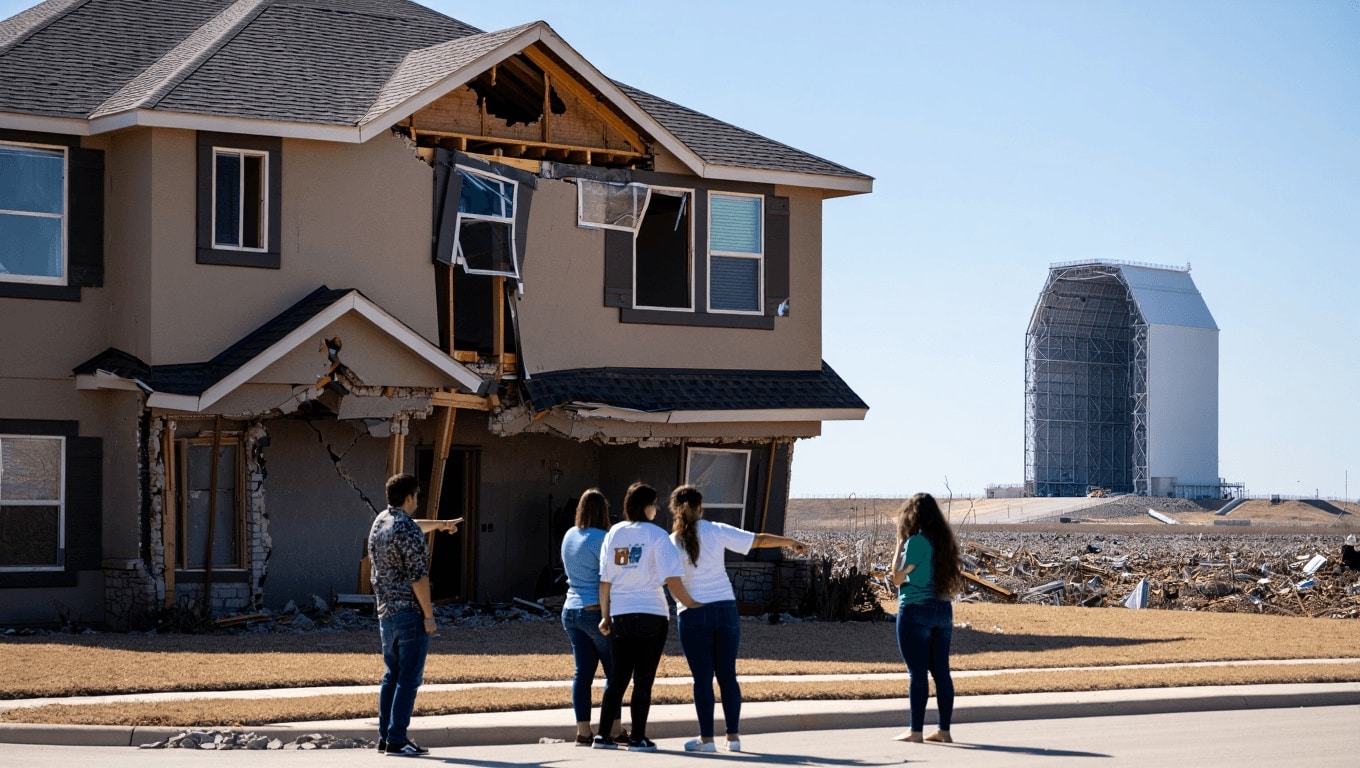
Nearly 80 Central Texas residents have taken SpaceX to court, saying rocket tests near their homes have rattled foundations and caused other damage. The suits, filed recently in state and federal courts, allege that repetitive booms and ground shocks from engine testing have harmed property and safety in towns surrounding the company’s McGregor facility.
What residents say happened
Homeowners in McGregor, Moody, Crawford and Oglesby describe repeated episodes of loud detonations, windows shuddering and household items rattling. Several plaintiffs say the forces were strong enough to crack walls, split concrete and leave parts of their houses structurally compromised.
Local reporting by Waco’s KWTX first highlighted the wave of filings. The complaints accuse SpaceX of negligence, trespass and indifference to the dangers posed by the tests, and seek more than $1 million in combined damages.
At issue is how the company conducts tests for its Starship program. The rocket uses dozens of high-thrust engines that generate intense acoustic and seismic energy during ground runs. When engines are tested bolted to the pad, that energy can travel horizontally into nearby neighborhoods rather than dissipating upward, residents say.
Legal claims and immediate stakes
- Claims: Negligence, trespass and alleged conscious indifference to risk.
- Who filed: About 80 residents from multiple towns near the McGregor test site.
- Relief sought: More than $1 million in damages and, implicitly, remedies to prevent future damage.
- Courts involved: Cases are pending in both state and federal venues, which could affect scope and timing.
The suits could force courts to weigh property rights and public safety against a private company’s testing schedule. For residents, the immediate concern is getting repairs and protection from what they say are repeated, preventable impacts. For SpaceX, the lawsuits add legal risk and could spur more scrutiny from regulators or local officials.
Why this matters now
SpaceX is ramping up activity tied to its long-term launch cadence; continued testing and more frequent flights are part of the company’s near-term plans. That increases the chances of additional disturbances and heightens the urgency for a legal resolution or operational changes.
Even without a court order, the litigation could prompt operational adjustments, monitoring requirements or restrictions on test procedures — outcomes that would affect both the company’s timelines and the lives of residents living nearest the facility.
There are broader implications too: how courts balance technological development with local impacts may set precedents for other communities hosting high-intensity aerospace testing. If plaintiffs prevail, it could lead to tighter controls on test siting, buffer zones, or mitigation measures.
What to watch next
Key developments to follow include whether courts consolidate the cases, any requests for preliminary injunctions to limit testing while suits proceed, and whether local or federal agencies open formal reviews. Plaintiffs will need evidence linking specific tests to the alleged damage, and SpaceX will likely present expert testimony about engineering controls and safety practices.
For residents and observers, the outcome will clarify how communities can seek redress for industrial impacts that fall short of catastrophic accidents but still cause persistent harm.
Similar Posts
- ExxonMobil leaves New Jersey after 140 years: tax strategy and headquarters clout at stake
- Man arrested after allegedly using self-amputation to set neighbor’s garage on fire
- NASA cancels Artemis III moon landing: astronauts won’t return as planned
- SpaceX now in retirement funds: savers could own shares without knowing
- Elon Musk faces recruiting crisis: married engineers balk at moving to Starbase near the border

Miles Harper focuses on optimizing your daily life. He shares practical strategies to improve your time management, well-being, and consumption habits, turning your routine into lasting success.