
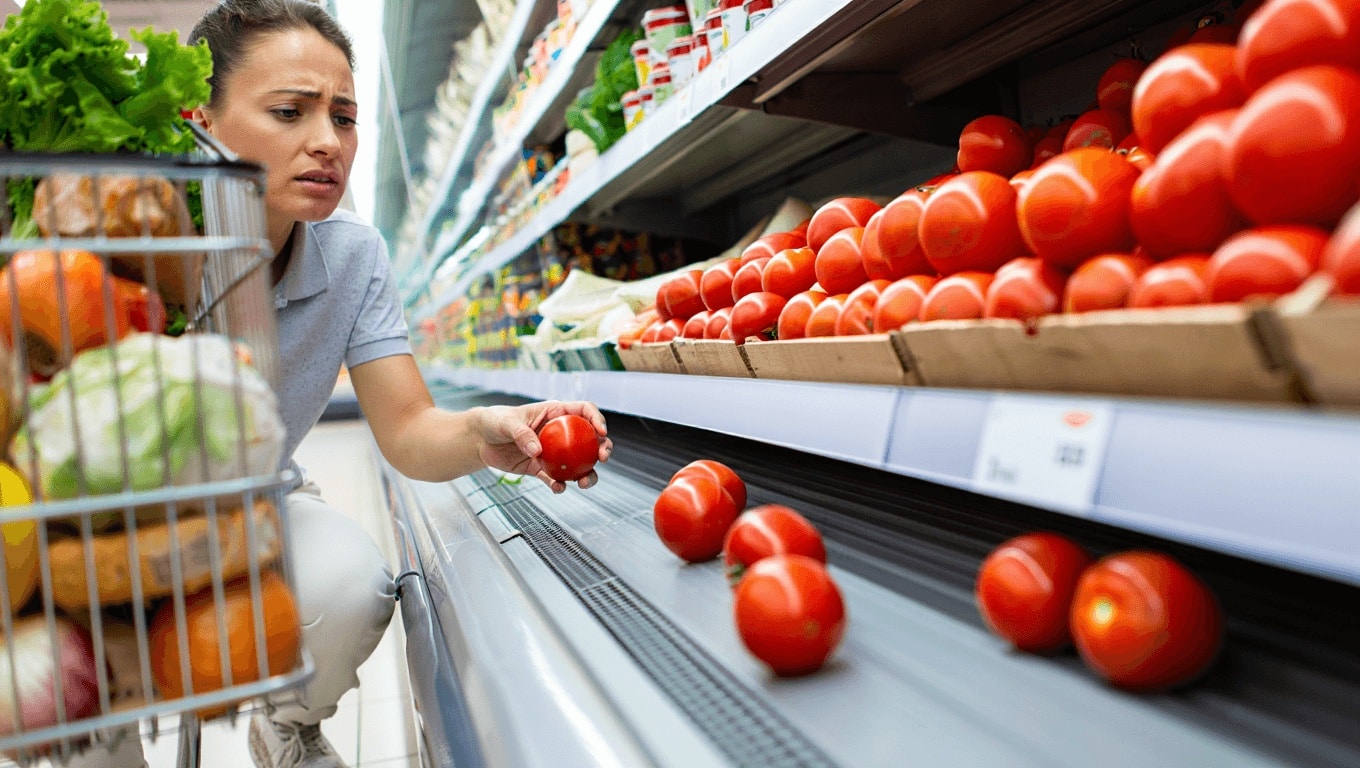
Fresh tomatoes have become noticeably more expensive at grocery stores, and consumers are already feeling the pinch. Recent government data show prices climbing sharply in March, and agricultural economists say a mix of trade policies, weather and rising fuel costs means the strain could continue.
What’s driving the surge
Retail prices for field-grown tomatoes rose to about $2.26 per pound in March — the highest level in over eight years, according to the U.S. Bureau of Labor Statistics. The Consumer Price Index shows a roughly 15% jump in tomato prices in March alone after a 6% increase in February, leaving fresh tomato prices about 23% higher than a year earlier.
Experts point to several intersecting pressures. The most significant are:
- Tariffs on imported fresh tomatoes, which economists say have pushed up costs for supermarket produce.
- Weather-related supply shocks that damaged key domestic crop regions and trimmed yields abroad.
- Higher energy costs, driven by the conflict in the Middle East, which raised diesel and transportation expenses for perishable goods.
“I expect more pain on the horizon for tomato prices,” said Ricky Volpe, an agribusiness professor at California Polytechnic State University, summarizing the consensus among supply-chain specialists.
Imports, tariffs and why Mexico matters
The U.S. relies heavily on foreign-grown tomatoes, with estimates that about 70% of the fresh tomatoes consumed here are imported. Mexico supplies the vast majority of those imports — often cited as around 90% — so policies affecting Mexican shipments have outsized effects on U.S. supermarket shelves.
Last year, the government imposed roughly 17% duties on fresh tomato imports. Officials at the time framed the step as protecting domestic growers from unfair pricing. Economists say those tariffs mainly affect tomatoes sold in the fresh-produce section, rather than canned or processed products.
For a while, some retailers absorbed the added import costs instead of passing them to shoppers. That buffer has mostly vanished now that tariffs, combined with other cost pressures, are squeezing margins.
Domestic production hit by winter weather
Florida and California are the largest U.S. suppliers of fresh tomatoes. But severe freezes and winter storms in Florida during December and January sharply reduced plantings and spring yields, according to industry analysts.
In many parts of the country, field-grown tomatoes are simply seasonal — harvested only in the warm months — so disruptions during the spring transition window can quickly tighten supply. Mexico, which typically ramps up shipments in winter and spring, also faced weather and disease challenges this season that cut yields below normal.
Processed tomato products — the pastes, sauces and canned tomatoes made largely in California — are less exposed to fresh-tomato tariffs and the seasonal import cycle. Still, processing and packaging costs have risen because of tariffs on metals used in cans and higher energy expenses, pushing canned-fruit-and-vegetable prices up roughly 6% year over year, CPI figures show.
Fuel prices are amplifying the impact
Tomatoes are highly perishable and rely on fast truck transport from field to store, making them sensitive to fuel prices. Since the Middle East conflict pushed Brent crude from about $70 per barrel to near $95, costs for diesel and other transport-related fuels have risen — a cost that eventually shows up in grocery prices.
Economic models and industry voices suggest energy-driven increases typically take a month or two to fully reach retail prices, meaning more upward pressure may still be moving through the system.
What shoppers can expect
Price relief is likely to be gradual and uneven by tomato type. Industry analysts expect prices for large round tomatoes to stabilize sooner, while smaller varieties such as cherry and grape tomatoes could stay elevated longer because of differing growing seasons and supply dynamics.
- Short term: continued volatility, with possible additional monthly CPI spikes for fresh produce.
- Medium term: some easing as planting cycles complete and retailers adjust sourcing, but relief won’t be immediate.
- Processed goods: less volatile but facing higher canning and packaging costs that keep prices elevated relative to recent years.
For now, shoppers should be prepared for higher sticker prices on fresh tomatoes and limited relief in the coming months, unless trade policies change or weather and fuel markets shift significantly.
Similar Posts
- August 2026 inflation hits households: chart reveals biggest price jumps
- Tariff Shock: Discover Which Products Are Now 25% More Expensive!
- February 2026 inflation: chart shows which costs soared and where relief arrived
- June 2026 inflation: chart reveals top price drivers affecting your wallet
- Interest rates jump: bond market moves are driving up some loan rates

Jordan Keller specializes in analyzing the US financial markets. With concrete recommendations, he helps you secure and boost your investments by providing strategies that adapt to market fluctuations.