
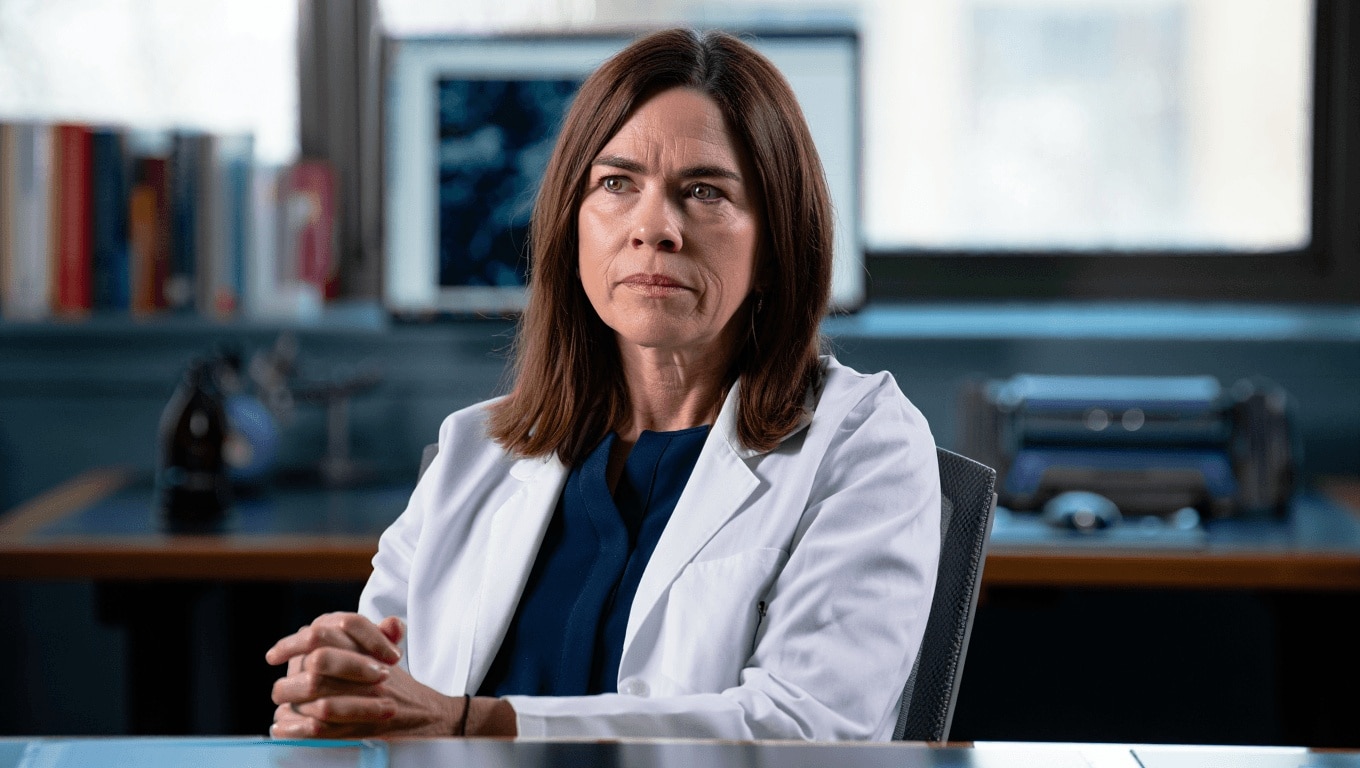
Ingrid Honkala, a marine scientist who has worked with NASA and the U.S. Navy, says she has experienced clinical death three times and returned with a radically different view of consciousness. Her account, now detailed in a new book, has reignited questions about what near-death episodes might reveal about the brain — and whether science and spirituality are looking at the same phenomenon from different angles.
Honkala traces the first episode to age two, when she nearly drowned in an icy water tank at home. She says she left her body, saw her mother walking away and somehow signaled that something was wrong — a detail her mother later confirmed. That early memory, Honkala says, set the stage for two later episodes: a motorcycle crash at 25 and a surgical episode at 52 when dangerously low blood pressure brought her close to death.
Three episodes, one consistent report
Across each event, Honkala describes a similar sequence: fear dissolves, the physical self recedes and what remains is an expansive, aware presence she identifies as pure consciousness. The experiences led her to write Dying To See The Light and to frame her work as an attempt to reconcile empirical inquiry with firsthand spiritual experience.
| Age | Circumstance | Honkala’s account |
|---|---|---|
| 2 | Drowned in a cold water tank; revived by mother | Perceived herself outside the body and communicated urgency; details later matched mother’s report |
| 25 | Motorcycle accident | Lost bodily awareness, experienced a vast, interconnected state of awareness |
| 52 | Surgery with critical drop in blood pressure | Again reported the same nonphysical awareness and lack of fear |
Honkala, who now lives in Bogotá, Colombia, and is in her mid-50s, frames these episodes not as a rejection of scientific method but as the motivation for deeper inquiry. She told Jam Press — in reporting later picked up by the New York Post — that the experiences pushed her toward scientific training and a desire to study reality through observation.
Why this matters now
Accounts like Honkala’s matter because they blur lines between anecdote and data in a field that’s attracting growing scientific interest. Studies of near-death experiences and consciousness are expanding, and a credible professional background — PhD-level training and work with institutions such as NASA and the Navy — makes her narrative harder to dismiss as mere fantasy.
At the same time, mainstream neuroscience offers well-established alternative explanations: some researchers argue that near-death phenomena can be produced by brain chemistry, oxygen deprivation, or neural shutdown processes. Those explanations remain plausible and testable.
Honkala’s strongest claim is a specific, verifiable detail from her earliest episode: the description a toddler gave of her mother’s actions, later confirmed by that same mother. If accurate, corroboration of that kind raises questions that neither simple dismissal nor easy explanations fully address.
What experts say — and what we still don’t know
Researchers urge caution. Controlled, repeatable evidence remains limited, and most work to date cannot definitively separate perceptual phenomena produced by the dying brain from experiences that might reflect consciousness beyond clinical death.
- Scientific position: Many scientists view NDEs as neurophysiological events tied to stress, drugs, or hypoxia.
- Experiential position: Firsthand accounts frequently describe unity, clarity and an absence of fear — elements difficult to reduce to single brain mechanisms.
- Evidence gap: Verifiable corroboration, longitudinal studies and controlled clinical data are still scarce.
Honkala’s story will interest readers for different reasons: it offers a personal account that intersects with institutional credibility, it presents a case of apparent external corroboration, and it underscores the continuing debate about what consciousness is and where it comes from.
Whether one reads her account as spiritual testimony, a puzzle for neuroscience, or both, it highlights a practical question for researchers and clinicians: how to design studies that can test competing explanations without dismissing the lived experiences of those who report them. For now, Honkala’s experiences add a carefully told voice to a debate that is becoming more prominent in both scientific and public conversations.
Similar Posts
- Overworking Alert: Shocking Effects on Your Brain Revealed!
- Better sleep linked to specific dream type: study finds
- Shocking Trend: Americans Drinking Bleach for Health – Here’s Why You Shouldn’t!
- New COVID variant Cicada could blunt vaccine protection, officials warn
- Autism risk tied to everyday medications in new study: acetaminophen not to blame

Miles Harper focuses on optimizing your daily life. He shares practical strategies to improve your time management, well-being, and consumption habits, turning your routine into lasting success.