
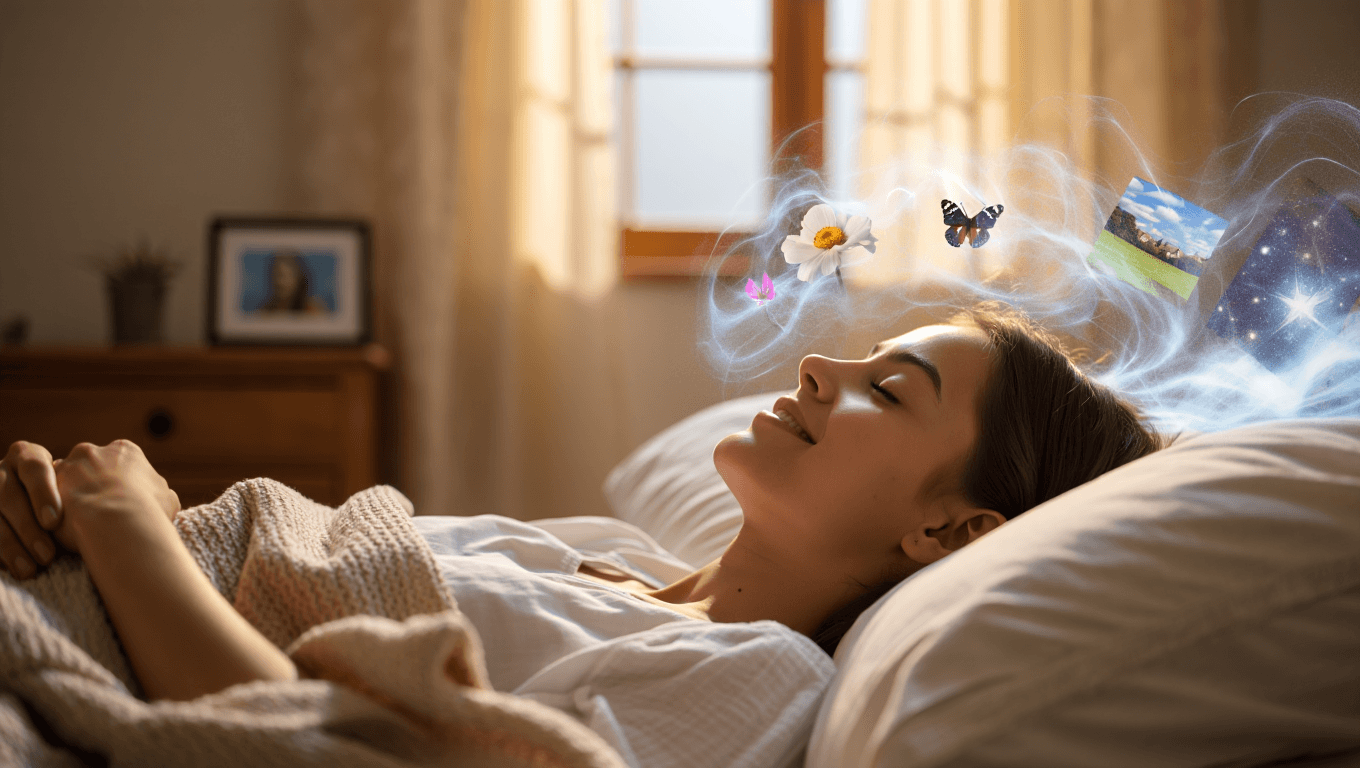
A recent laboratory study from Italy suggests that the content of our dreams — not just how long we sleep — can shape how rested we feel in the morning. That finding could help explain why some people wake refreshed after fragmented sleep while others feel exhausted despite meeting recommended sleep hours.
Researchers at the IMT School for Advanced Studies Lucca observed 44 adults over 196 nights in a controlled sleep laboratory, interrupting sleep during light non-REM phases to record participants’ immediate experiences and their reported sense of rest. Their results point to a surprising pattern: two very different sleep experiences are tied to stronger feelings of recovery, while a nebulous, semi-aware state is linked to the worst morning sensations.
What the experiment measured and why it matters
The team concentrated on stage 2 NREM sleep, the phase that occupies a large portion of the night. Participants were awakened at various points and asked two simple questions: what were you experiencing just before the awakening, and how rested do you feel right now?
Analyses compared subjective reports with EEG readings. Researchers noticed that when dreaming was highly immersive — vivid, narrative-like experiences that felt “cinematic” — volunteers often reported feeling as refreshed as those who had no recall at all on awakening. By contrast, people who described a half-dream, half-wake limbo consistently rated their restfulness lowest.
- Vivid dreaming: Associated with stronger feelings of being rested, even when brain activity resembled wakefulness more than deep sleep.
- Complete unawareness: Waking with no memory of mental content also correlated with higher rest scores.
- Hypnagogic limbo: Partial awareness or fragmented dreamlike activity tended to produce the poorest subjective rest.
How dreaming might influence the sense of sleep depth
Investigators propose that immersive dreams could act like a psychological buffer, masking neural signs of lighter sleep and giving the brain the impression it has been in a deeper restorative state. Near morning, when the body’s need for sleep naturally wanes, dreams often become more vivid — a timing that lines up with higher self-reported restfulness in the study.
This mechanism helps untangle a persistent puzzle in sleep science: standard objective measures (total sleep time, sleep-stage percentages) sometimes fail to predict how refreshed someone feels. If the phenomenology of sleep — the lived experience of dreaming — matters independently of conventional metrics, clinicians may need to widen what they assess in patients who complain of nonrestorative sleep.
Practical implications and next steps
Lead authors suggest the result opens several applied avenues: sensory stimulation, behavioral techniques, or carefully targeted medications might be developed to enhance the immersive quality of dreams and, by extension, subjective recovery. But the study’s laboratory setting and modest sample size mean these ideas are preliminary.
Giulio Bernardi of IMT, one of the researchers, told Science Daily that the findings underscore how “not all mental activity during sleep is experienced the same way” and that the quality of the experience—how immersive it feels—appears central to whether people wake up feeling restored.
Before this line of work can influence clinical practice, larger studies in home settings and among people with chronic insomnia are needed. For now, the study reframes an old question: improving how we measure sleep may require paying as much attention to what people remember from the night as to how many minutes they spent in each sleep stage.
Similar Posts
- 5 Sleep Tips That Could Worsen Your Insomnia: Here’s What to Avoid!
- Early risers see gains from 5 a.m. schedules: most people do not
- See ghosts more often: psychologist points to 3 factors that raise your odds
- Teeth grinding: 3 sneaky signs dentists warn could be wrecking your sleep
- Soft Clubbing Takes Over: The New Rave Revolution!

Miles Harper focuses on optimizing your daily life. He shares practical strategies to improve your time management, well-being, and consumption habits, turning your routine into lasting success.