
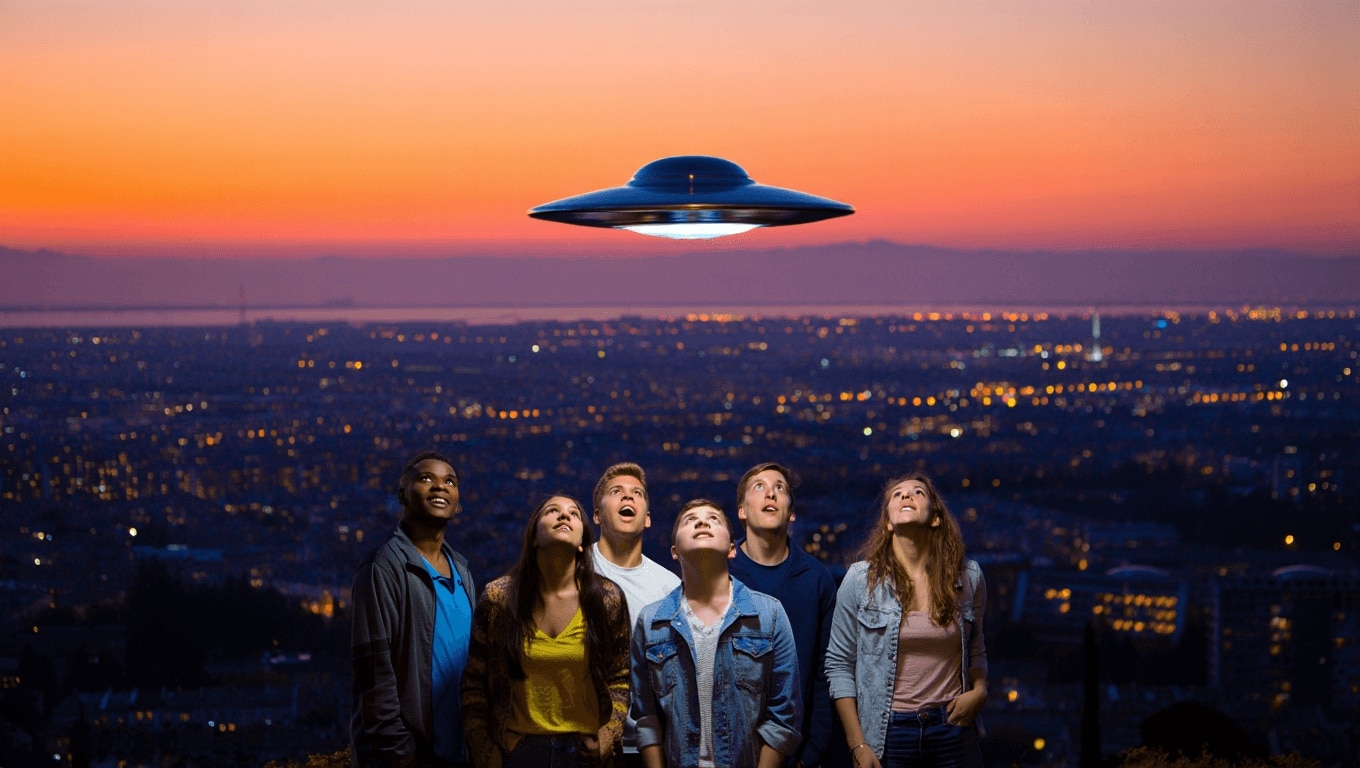
Unexplained aerial sightings have moved from the margins into mainstream conversation as government disclosures and broad public interest push the topic into daily news cycles. A recent analysis of reports logged since 2015 highlights where Americans have most often reported strange lights and objects overhead — and suggests simple patterns travelers and curious observers can use tonight.
What the data covers
Researchers reviewed incident reports filed with the National UFO Reporting Center from 2015 onward. The analysis counts submitted sightings, not confirmed identifications, so figures track public reports rather than verified events.
Why this matters now: federal attention to unidentified aerial phenomena has reduced stigma around reporting, which may increase the number of accounts and make local clusters easier to spot. For residents and journalists alike, the numbers point to where sightings are clustered and when they most often occur.
At-a-glance findings
- Peak time: 9 p.m. is the most commonly reported hour.
- Peak month: November records the most reports nationwide.
- Source: Analysis of NUFORC reports compiled and summarized by BetUS.
- Limitations: Reporting rates vary with local culture, light pollution and population; more reports do not equal verified phenomena.
Top cities for reported sightings
The table below shows the ten U.S. cities with the highest number of reports since 2015, along with the month noted most often in the analysis when available.
| Rank | City | State | Reports (since 2015) | Peak month |
|---|---|---|---|---|
| 1 | Phoenix | AZ | 272 | November |
| 2 | New York | NY | 266 | July |
| 3 | Las Vegas | NV | 250 | July |
| 4 | Portland | OR | 218 | July |
| 5 | Los Angeles | CA | 211 | November |
| 6 | Boise | ID | 210 | — |
| 7 | Albuquerque | NM | 162 | — |
| 8 | Chicago | IL | 148 | — |
| 9 | Seattle | WA | 147 | — |
| 10 | Denver | CO | 143 | — |
City snapshots
Some patterns behind the numbers are practical. Wide-open skies and low light pollution make places like Phoenix and the Nevada desert around Las Vegas easier to scan, while cities with active reporting cultures — Portland is a good example — tend to generate more entries even if the phenomena are similar elsewhere.
New York and Los Angeles rank highly despite heavy urban light because population density produces more potential witnesses. The result: big cities can appear frequently on reporting lists even when visibility conditions are poorer.
How to interpret these reports
The raw count of reports is a useful indicator of public attention and local reporting behavior, but it is not proof of unidentified craft. Agencies and researchers treat these reports as starting points for investigation.
For casual observers: stepping outside around 9 p.m. in November increases the chance of witnessing something unusual simply because those are common reporting windows. If you plan to look up at the sky, bring a friend, a pair of binoculars and a healthy skepticism.
BetUS’s published analysis includes a top-20 list and an interactive map for state-by-state exploration for readers who want to dig into the full dataset.
The broader takeaway is less about definitive sightings than about changing norms: as official attention grows and barriers to reporting fall, these public logs become a clearer mirror of where and when people notice something they can’t immediately explain.
Similar Posts
- Fall foliage 2026: where to catch peak colors across the U.S.
- Aliens Could Be Communicating Like Fireflies in Space: What We Know!
- SSA’s Thanksgiving Bonanza: $5,108 Payments to Hit Eligible Americans in Just 4 Days!
- Student pilot safely lands plane after instructor jumps from cockpit midflight
- Mysterious ‘Darkwaves’: How They Blanket the Ocean in Darkness for Months!

Miles Harper focuses on optimizing your daily life. He shares practical strategies to improve your time management, well-being, and consumption habits, turning your routine into lasting success.