
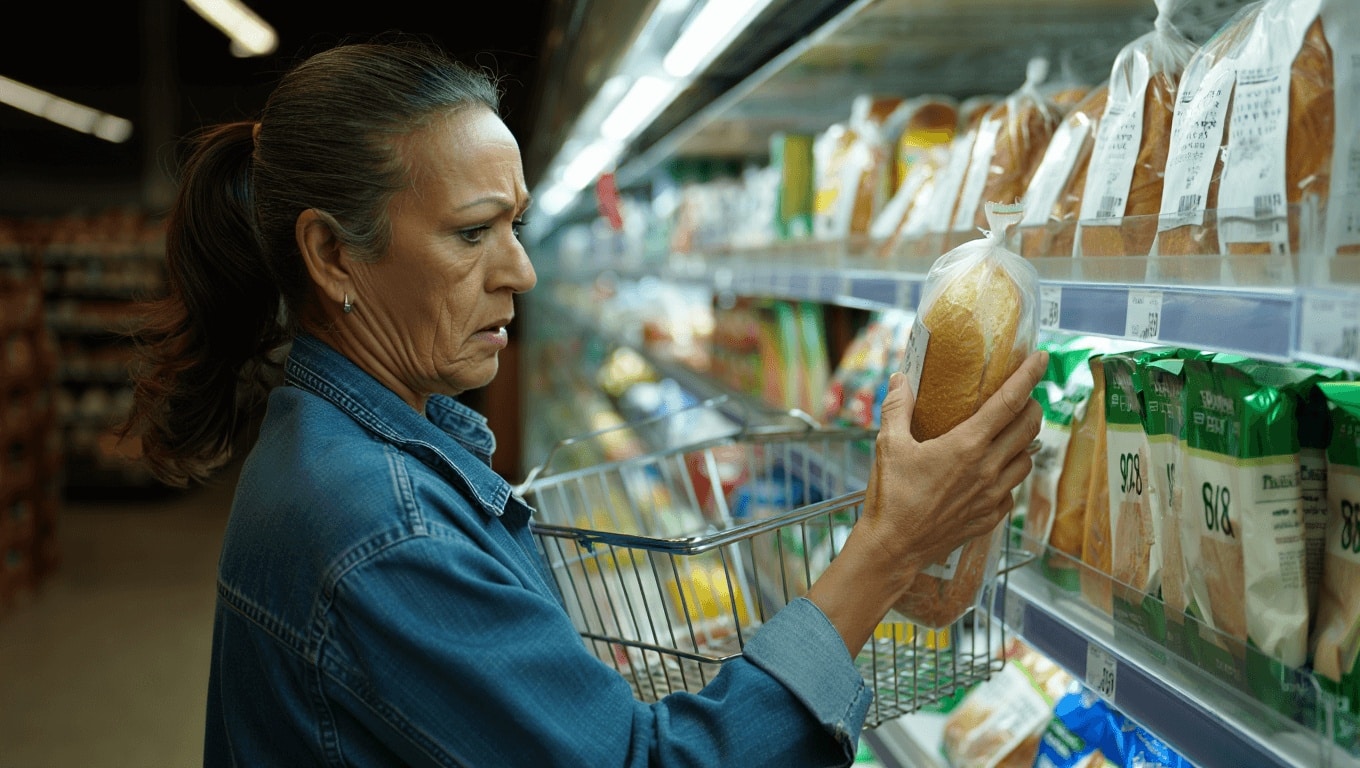
A new national survey and follow-up studies show that rising grocery bills are now the central strain on American households, eclipsing even housing and health care in everyday worries. The trend has real consequences for family budgets and could reshape consumer behavior and public debate as fresh inflation data arrive this month.
The McKinsey Institute for Economic Mobility and the W.K. Kellogg Foundation polled roughly 30,000 U.S. adults and found a striking consensus: concerns about food costs are widespread. About 90% of respondents identified groceries as a leading expense worry, a larger share than those flagging rent, mortgages or medical bills.
John‑Paul Julien, a partner at McKinsey and co‑founder of the institute, summed up the takeaway as a shared squeeze on household finances: people may experience the economy differently, but many feel rising prices are making it harder to move forward.
Official inflation readings have offered a mixed picture. Overall consumer prices eased in June, yet measures tied to groceries continued to climb — pushing annual food inflation to about 3% year‑over‑year and lifting the cost of food purchased for home consumption.
The Bureau of Labor Statistics is scheduled to publish the next CPI update, covering July, on August 12, a release market watchers and policymakers will watch for further signs of pressure on household budgets.
How Americans are covering grocery bills
Separate research from the Urban Institute paints a detailed view of how families handle rising grocery costs. Its December 2025 Well‑Being and Basic Needs Survey of more than 10,000 adults shows a mix of strategies — some short‑term fixes that can add long‑term fragility.
- 35% charged groceries to a credit card and paid the balance in full at month’s end.
- 20% used credit cards but paid less than the full balance while still making the minimum payment.
- 8.7% reported they did not always make the minimum payment on their cards.
- About 1 in 10 adults relied on buy‑now, pay‑later (BNPL) for groceries; among BNPL users, roughly 35% missed a payment.
| Payment method | Share of adults |
|---|---|
| Credit card — paid in full | 35% |
| Credit card — partial payment (min. made) | 20% |
| Sometimes miss minimum payments | 8.7% |
| Buy now, pay later (BNPL) | ~10% |
Analysts caution the funding choices matter: cardholders who settle balances monthly avoid interest charges and can capture rewards, but revolving balances typically carry high annual rates — generally above 20% — making debt far more costly over time.
Credit strain, BNPL growth and broader effects
Marshall Lux, a visiting fellow at Georgetown’s Psaros Center for Financial Markets and Policy, noted the picture is complex. Grocery spending is often bundled with other purchases, which makes it hard to draw a straight causal line from food prices to missed payments. Still, he said, elevated reliance on short‑term credit options is a clear warning sign.
Use of BNPL for everyday needs has risen sharply. A March LendingTree survey found 29% of BNPL users had used the service to buy groceries — double the share reported two years earlier — and missed BNPL payments can trigger late fees, deferred interest or other penalties depending on the lender.
Kassandra Martinchek, a co‑author of the Urban Institute study, pointed to the cumulative effect of sustained grocery inflation. With food‑at‑home prices up roughly 25% over five years, many families feel the burden building over time, leading to heavier debt loads that are harder to reduce.
While lower‑ and moderate‑income households show the most pronounced repayment difficulties, the strain is not limited to those groups: some higher‑income adults also reported trouble keeping up with payments, suggesting the problem spans a wide economic swath.
That widening strain has practical implications. Households that turn to high‑cost credit or delay bill payments risk longer‑term financial instability, which can reduce spending on other essentials, increase defaults, and complicate economic recovery for vulnerable communities.
Policymakers and market participants will be watching the upcoming CPI release and other indicators for signs that grocery inflation is cooling or, conversely, continuing to push families toward risky credit solutions. For consumers, experts say understanding the cost of different credit options — and the long‑term consequences of revolving debt or missed BNPL payments — is critical as prices remain elevated.
Similar Posts
- Buy now, pay later for essentials surges: missed payments and debt risk climb
- Credit card debt falls to $1.25 trillion: recovery remains split between rich and poor
- K-shaped economy: finance experts say the split between winners and losers is narrowing
- Fed pause expected: new leadership could reshape borrowing costs and your savings
- Paychecks squeezed by rising costs: how workers can protect income

Jordan Keller specializes in analyzing the US financial markets. With concrete recommendations, he helps you secure and boost your investments by providing strategies that adapt to market fluctuations.