
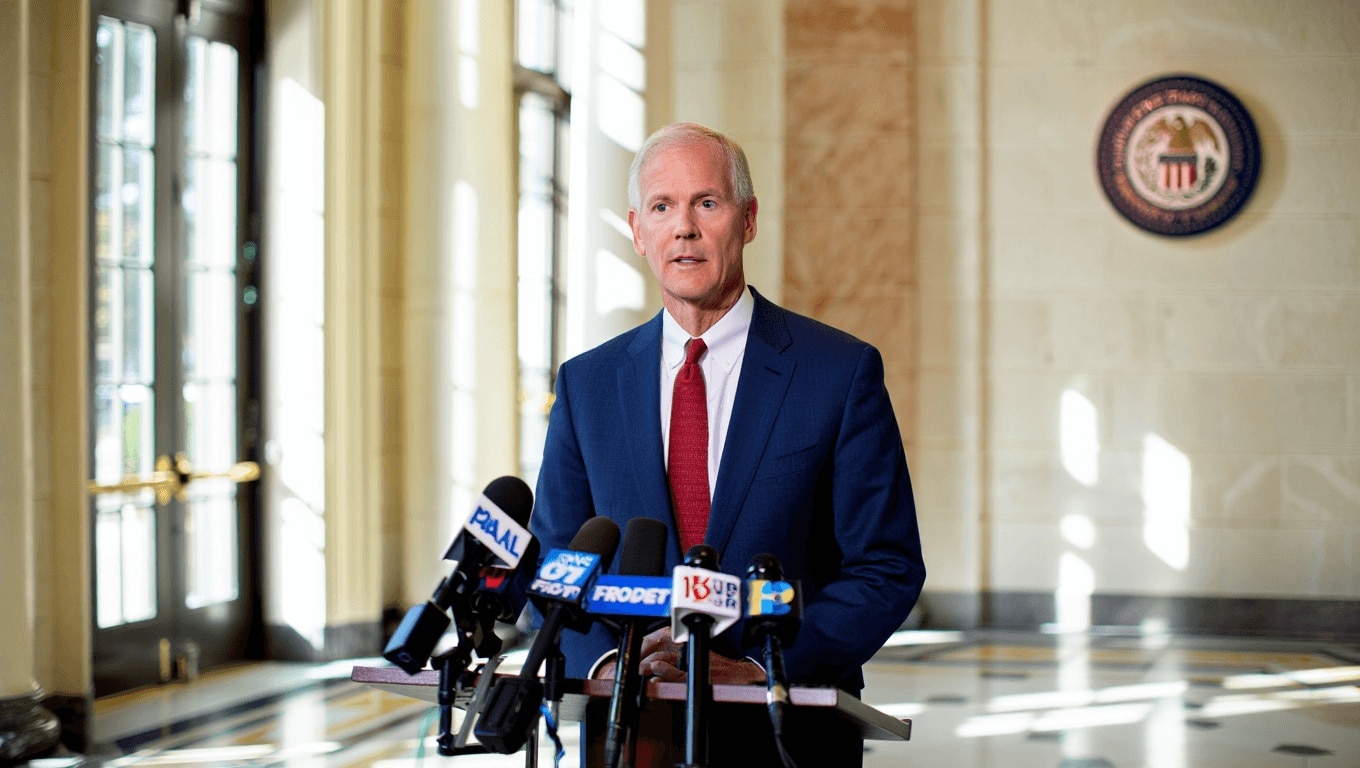
The Federal Reserve is widely expected to pause on interest-rate changes at this week’s policy meeting, the first led by new Chair Kevin Warsh — a decision with immediate consequences for household budgets already strained by rising prices. With inflation running at roughly twice the Fed’s long-term goal, officials face pressure from both consumers and policymakers over which path to take next.
Warsh, nominated by President Donald Trump, has signaled openness to alternate measures of price pressures, and at times suggested rate cuts could be considered. Still, current data and market pricing make a near-term cut unlikely: futures tracked by CME’s FedWatch show little chance of a rate reduction in June, while some analysts say higher rates remain on the table if inflation persists.
Different ways to read inflation
Policymakers often focus on core inflation — headline inflation excluding volatile energy and food components — to judge the trend in prices. Warsh, however, has expressed a preference for the trimmed mean approach, which removes the categories with the largest month‑to‑month swings, up or down, to reveal underlying momentum.
The logic behind trimmed averages is that extreme monthly moves in a few categories are more likely to be temporary, not indicative of broad-based inflation. Mark Zandi, Moody’s chief economist, said he finds the measure useful but cautioned that items assumed to be transitory can sometimes prove persistent.
Right now the two measures are diverging: core inflation has been drifting upward, while the trimmed mean has edged down — a split that gives policymakers conflicting signals and creates room for debate inside the Fed about how quickly to tighten or ease policy.
| Measure | What it excludes | Recent signal | Policy implication |
|---|---|---|---|
| Core inflation (CPI excluding food & energy) | Food and energy | Trending higher | Supports tighter policy to cool prices |
| Trimmed mean | Most extreme monthly movers | Drifting lower | Could justify a more dovish stance |
How Fed moves filter into everyday finances
The Fed sets the Fed funds rate, the rate banks use for overnight lending; that benchmark cascades through the financial system and influences many consumer rates. When the Fed raises its policy rate, borrowing costs for households and businesses generally go up and saving returns can improve slightly. Conversely, rate cuts typically lower borrowing costs but can lift inflation.
- Credit cards and adjustable-rate loans: Often move quickly with Fed decisions, so payments can rise soon after hikes.
- Mortgages: Longer-term rates respond to broader inflation expectations and market forces; they don’t always move in lockstep with short-term policy.
- Savings accounts and short-term deposits: May offer better yields when the Fed keeps rates high, but banks can be slow to pass increases through to customers.
- Auto and personal loans: Lenders typically price products with current short-term funding costs in mind, making new credit more expensive after rate increases.
Who is most exposed
Household finances are unevenly affected. TransUnion’s Michele Raneri notes that rising essentials — especially energy costs — are widening the gap between those who are coping and those who are falling behind. That pattern has been described as a “K-shaped” divergence: higher-income households tend to recover or even improve, while lower-income families face mounting pressure.
Economic shocks can further squeeze budgets. An estimate from the U.S. Congress Joint Economic Committee (Minority) argued that tariffs and conflict in the Middle East added more than $3,100 in costs per household from 2025 through May 2026 — an illustration of how geopolitics and trade policy can translate into higher bills at the pump and the grocery store.
Analysts warn that both persistent inflation and elevated interest rates are painful for consumers. Matt Schulz, chief credit analyst at LendingTree, says Americans should be prepared for borrowing costs to stay higher than many would prefer for the near term. For the Fed, the immediate task remains delicate: tighten enough to bring inflation down, but not so far or fast that it unduly harms households already stretched thin.
Similar Posts
- Fed pause leaves rates unchanged: what it means for credit cards, savings, mortgages and auto loans
- Iran war drives up living costs: Fed unlikely to step in to ease squeeze, analyst says
- Trump urges Fed to cut rates: experts warn a hike could help consumers
- Interest rates steady after Fed decision: how it affects your borrowing and savings
- Interest rates jump: bond market moves are driving up some loan rates

Jordan Keller specializes in analyzing the US financial markets. With concrete recommendations, he helps you secure and boost your investments by providing strategies that adapt to market fluctuations.