
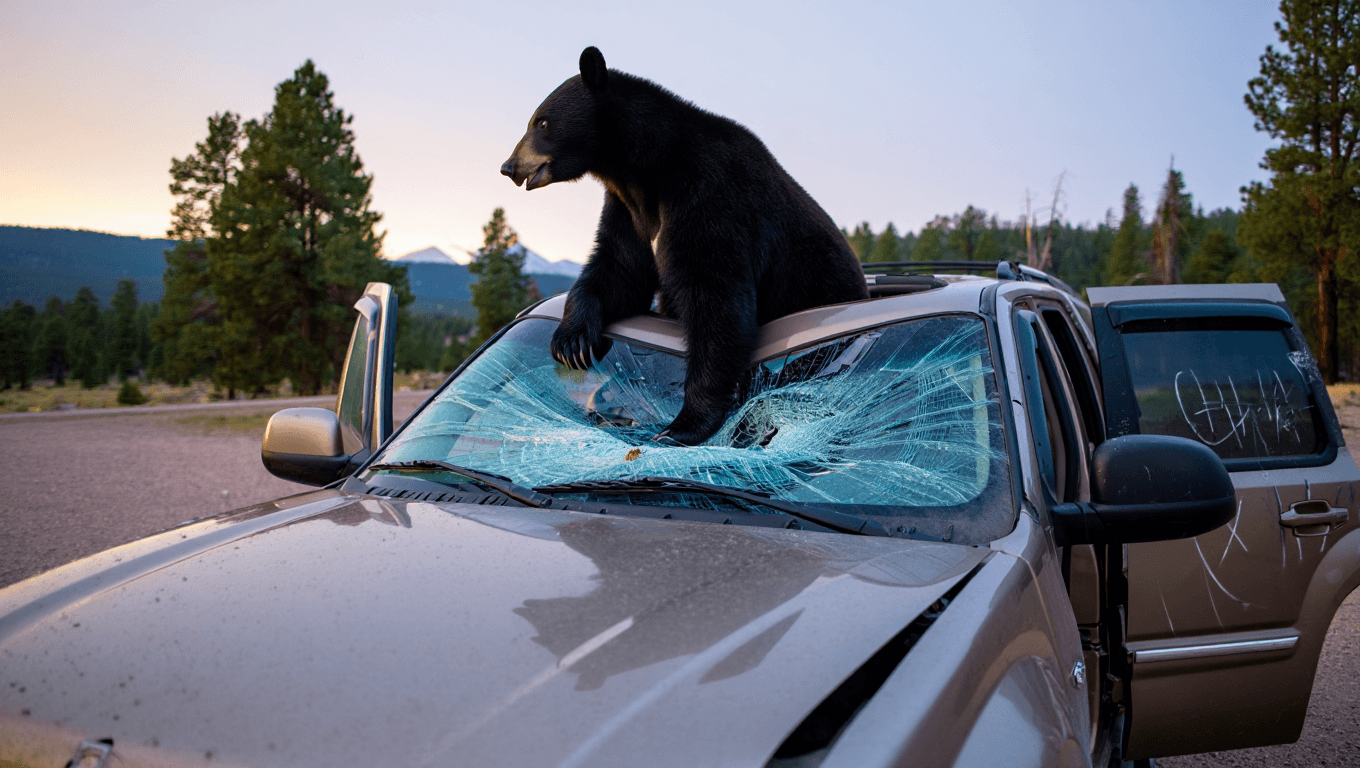
A black bear in Colorado spent the night locked inside an unlocked SUV, repeatedly setting off the horn and leaving the vehicle badly damaged when it finally escaped at dawn — a reminder that wild animals are increasingly turning cars into targets when food or scents are available. The episode, reported by KYMA, underlines a growing pattern of bears entering vehicles across the U.S., with consequences that range from costly repairs to real public-safety concerns.
Neighbors in Gold Hill woke to the persistent sound of a horn and, at daybreak, discovered the source: a bear that had climbed into an unlocked SUV and somehow closed the door behind it. Residents pulled the driver’s door open with a long rope from a safe distance and the animal fled. Officers later documented torn upholstery, dented panels and a deployed driver’s airbag — signs the animal had been panicked and active inside the cabin.
This is not an isolated, quirky headline. Wildlife agencies and local news outlets have recorded similar incidents across multiple states over the past decade, suggesting a recurring problem where bears investigate vehicles for food and then become trapped or cause significant damage.
Recent notable cases
Here are some documented examples that show how common these encounters have become:
- Colorado, 2016 — Deputies freed a bear from a parked Subaru after it had shredded the interior.
- North Carolina, 2017 — A homeowner was told by deputies that a bear had wrecked the seats and airbags of his car, although odd remnants of food were left behind.
- South Lake Tahoe, California, 2023 — Police opened a vehicle to release a bear that had been dismantling the interior; a local group, The Bear League, said bears open vehicles frequently in the Tahoe area, a figure wildlife managers call alarming.
- Winsted, Connecticut, 2023 — An adult bear and a cub were found inside a car while another cub waited outside, and the trapped pair demolished the interior before authorities intervened.
Wildlife experts point to a few clear drivers behind these episodes. Bear populations in many regions are adapting to human landscapes, and easily available food — groceries, trash, unattended coolers, or even scented personal items left in cars — attracts them. Bears are intelligent and dexterous enough to manipulate latches, pull down visors or pry doors, especially when motivated by hunger.
Why this matters now: as more people live and recreate near wild habitats, the frequency of bear–vehicle interactions rises. Beyond vehicle damage, these encounters can escalate into dangerous situations for people and animals, increase the likelihood of bears being euthanized, and strain local wildlife management resources.
What to do if you encounter a bear in or near a vehicle
Approach the situation cautiously and prioritize safety. Do not try to coax or corner the animal.
- Stay back: Keep a wide distance and do not attempt to open doors or windows.
- Call professionals: Contact local animal control or wildlife authorities to handle a bear that’s trapped or acting aggressively.
- Keep people and pets away: Prevent bystanders from approaching; even a frightened bear can be dangerous.
- Do not feed or bait: Never try to tempt a bear out with food — that reinforces risky behavior.
Preventive steps are straightforward and effective. Lock vehicle doors, remove all food and scented items from sight, and secure trash in bear-resistant containers. In areas with frequent bear activity, consider using enclosed parking or carrying bear spray and making noise while moving through parking areas at night.
Wildlife officials emphasize coexistence strategies: better waste management, public education and enforcing simple precautions can reduce these incidents. For residents and visitors in bear country, the costs of a few common-sense habits are small compared with the risk of property loss, injury or harm to wildlife.
As the Gold Hill case shows, a moment’s inattention — an unlocked door, a forgotten snack — can turn a parked car into a hazard. The takeaway is clear: in communities near bear habitat, vigilance with vehicles and food storage matters not just for convenience, but for public safety and wildlife preservation.
Similar Posts
- Black Bear Crashes California Zoo: Finds Companionship with Resident Bears!
- Fat Bear Week Returns: Alaska’s Brown Bears Chonkier Than Ever!
- South Korea Bans Bear Bile Farming: 200 Moon Bears Seek New Homes
- Bison Attack in Yellowstone: Florida Man Gored in Shocking Encounter!
- Waymo alerts police after teens drank and fired toy guns in its autonomous vehicle

Miles Harper focuses on optimizing your daily life. He shares practical strategies to improve your time management, well-being, and consumption habits, turning your routine into lasting success.