
A team of researchers says it can now place Vincent van Gogh’s The Starry Night to a particular dawn: July 22, 1889. Published in Scientific Reports and led by astronomer Elijah Jeong-hyun Kim, the study combines archival records, field measurements and astronomical modeling to argue that the painting’s celestial layout matches a late-July sky over Saint-Rémy-de-Provence.
The claim matters because it applies a measurable, testable approach to a famously enigmatic work, showing how modern tools can add new layers of historical context to masterpieces that have long been described in purely aesthetic or psychological terms.
Matching art to a real sky
The researchers did not rely on visual speculation alone. They compared the painting’s arrangement — a crescent moon, a bright planet and the distinctive V-shaped star cluster — against astronomical positions for 1889, then checked that pattern against contemporaneous weather and Van Gogh’s own correspondence.
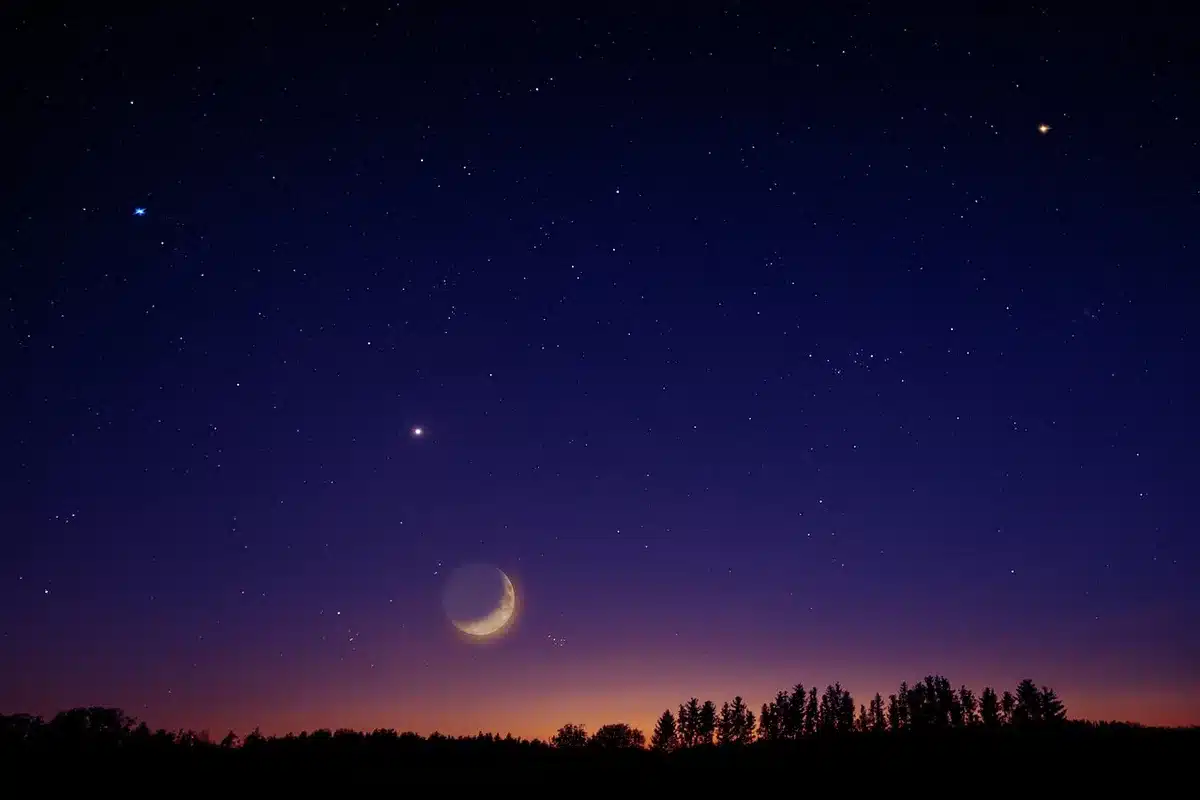
Their conclusion: the depiction of a crescent moon together with a bright planet consistent with Venus and the location of the Hyades cluster fits the pre-dawn sky in late July more convincingly than the previously suggested June timeframe.
What the team used to reach July 22
On-site observations at Saint-Rémy were paired with digital sky simulations to recreate how the heavens would have appeared from Van Gogh’s asylum window. The researchers also reviewed daily weather logs and letters in which Van Gogh referenced summer insects and seasonal conditions — small, contextual clues that supported a July scene.
- Archival weather records indicating clear skies in late July 1889
- Van Gogh’s letters mentioning cicadas and summertime details
- Astronomical reconstruction of the moon, Venus and the Hyades cluster
- Field measurements taken at the asylum site to match sightlines
Those elements together created a consistent, dateable snapshot rather than a single definitive night. The lead author acknowledges the likelihood that Van Gogh blended observations across multiple mornings into the final composition.
The Van Gogh Museum in Amsterdam has responded cautiously, emphasizing that Van Gogh’s intense emotional state that summer — including a severe breakdown around July 22 that left him unable to work for about a month — complicates any straightforward reading of the painting as a literal record of a single moment.
That caveat underscores an important point: art can be anchored in real phenomena while still being an invented, expressive scene. Scientific dating like this doesn’t eliminate the painting’s imaginative power; it simply gives curators, historians and viewers a tighter historical frame for interpreting the work.
Why this finding matters now
Beyond satisfying curiosity, the study illustrates a broader trend: interdisciplinary methods are reshaping art history. Astronomy, archival science and on-site verification offer concrete tools for dating and contextualizing visual culture — especially when artists reference the natural world.
For museums and educators, a more precise date can inform exhibition narratives, conservation priorities and public programming. For scholars, it opens new lines of inquiry about how Van Gogh observed and recorded the world during a turbulent period of his life.
At the same time, the result is not a final verdict. Van Gogh’s process was inventive and layered; the new date is best read as a well-supported hypothesis that enhances our understanding while leaving room for the painting’s mystery.
Whether or not July 22 becomes a date on calendars, the study is a reminder that fresh research can make even the most familiar works feel newly observed — and that science and art can inform each other in surprising ways.
Similar Posts
- NASA’s Hera Mission Captures Exclusive Images of Mars’ Elusive Mini Moon
- Stunning Lunar Update: Discover the Moon’s Phase for October 23, 2025!
- Asteroid Threatens Moon with Massive Crater in 2032: City-Killer Impact Looms
- Jupiter Outshines All Stars This Weekend: Best Tips to Witness the Spectacle
- Tonight’s Moon Phase Revealed: What to Expect on October 10, 2025

Miles Harper focuses on optimizing your daily life. He shares practical strategies to improve your time management, well-being, and consumption habits, turning your routine into lasting success.