
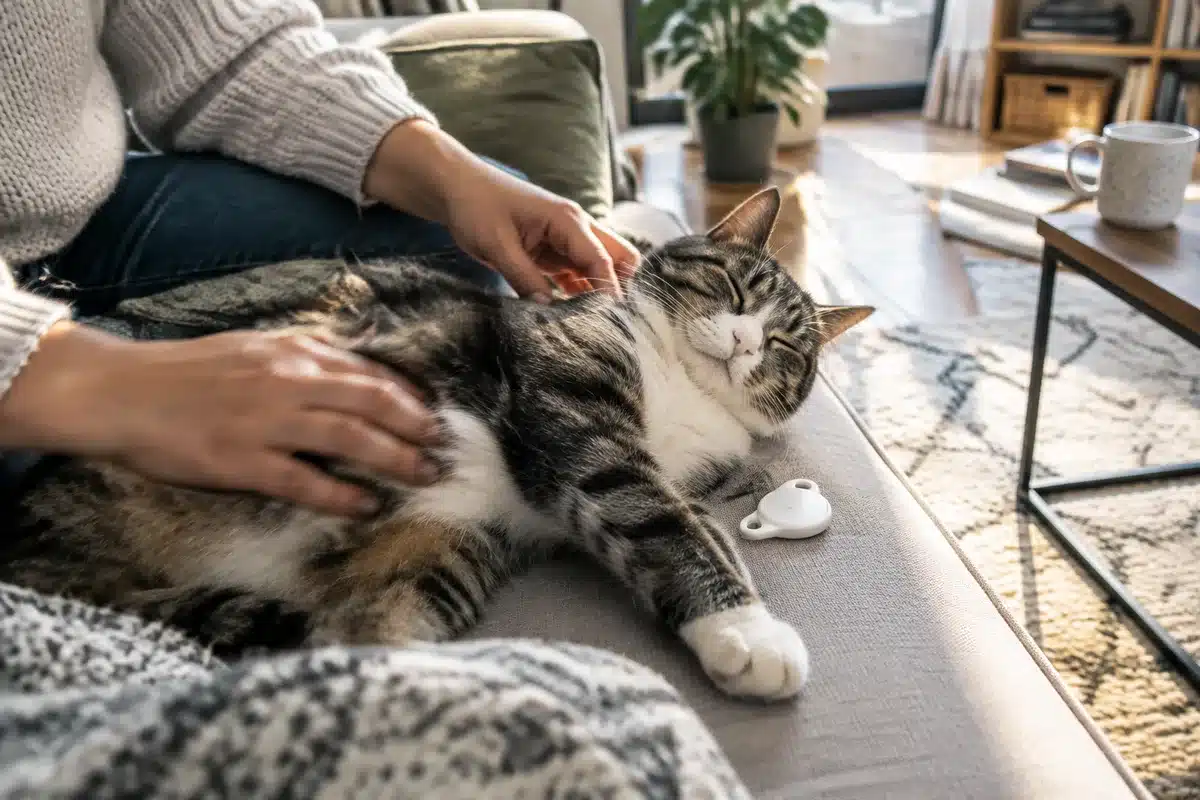
A recent study from Kyoto University, published in iScience, suggests the emotional chemistry between cats and their owners may be more intertwined than previously thought — and that close physical contact appears key. For the millions of Americans who live with cats, the finding could reshape how we think about pets and everyday stress relief.
Previous research has clearly linked dog ownership to lasting health benefits, but studies on cats have produced uneven results. To probe why, researchers followed 19 cat-and-owner pairs for a month, combining behavioral tracking with biological sampling to look for real-time connections.
What the researchers measured
The team used small Bluetooth trackers to record how often owners and cats were near each other, and they analyzed urine samples to measure hormone levels. Specifically, they focused on oxytocin — a hormone tied to bonding — in cats, and cortisol — the body’s stress hormone — in humans. They also collected basic mood data from the owners to compare against the biological markers.

It’s a compact study: only 19 pairs were monitored, and the researchers stress the results are correlational rather than definitive proof of cause and effect.
Key findings and what they mean
Despite the small sample, the pattern was consistent. When a cat’s oxytocin levels were higher, the owner’s cortisol levels tended to be lower and self-reported negative mood slipped as well. Crucially, those links were strongest when the person and the cat spent time in close physical proximity.
In some cases, a cat’s oxytocin appeared to reflect shifts in an owner’s mood even more closely than the owner’s own hormone readings did — hinting at a tightly coupled, bidirectional relationship between pet and person.
- Physical closeness matters: The hormonal association showed up mainly when owner and cat were near each other, suggesting casual ownership isn’t enough to produce measurable effects.
- Not proof of causation: The study demonstrates correlation. It doesn’t show that a cat’s hormones directly reduce human stress.
- Short-term snapshot: The research tracked pairs for one month, so long-term impacts remain unknown.
- Individual variability: Cats and owners differed widely, so any benefit will likely vary from household to household.
The practical takeaway for pet owners is modest but actionable: spending uninterrupted, close time with your cat — quiet petting, sitting together — may be where any emotional payoff is found, rather than occasional interaction from across the room.
Experts caution against overreading the result. Larger, more diverse studies are needed to confirm the effect, understand the mechanisms involved, and determine whether these hormonal links translate into lasting improvements in health or wellbeing.
Still, the study adds evidence to a growing view of pets as active participants in emotional life, not just passive companions. For now, if you enjoy curling up with your cat, there may be a little biology on both sides reinforcing why it feels good — even if scientists are still untangling exactly how much good it does.
Similar Posts
- Discover How Pets Deliver Joy Comparable to Spouses: New Study Reveals
- PMS Transformation Explained: Why You Feel Like a Different Person Every Month
- Vet Reveals: 5 Surprising Signs Your Pet Is Super Stressed!
- Secrets Unveiled: Why Orange Cats Boast Their Vibrant Coats!
- Gen Z pet ownership surges: data shows growing numbers opting out of parenthood

Miles Harper focuses on optimizing your daily life. He shares practical strategies to improve your time management, well-being, and consumption habits, turning your routine into lasting success.