
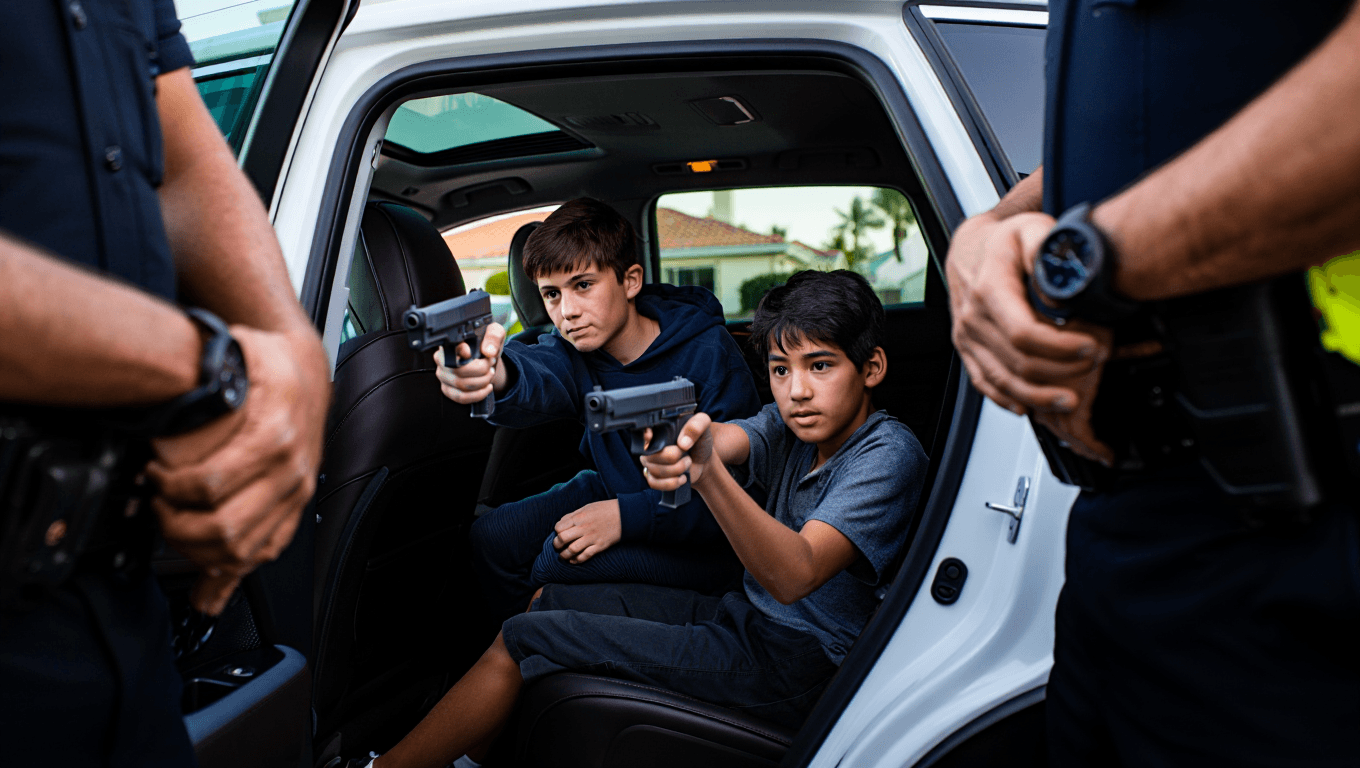
A recent incident in Northern California underscores how autonomous vehicles can still be supervised remotely: police say two 15-year-olds were arrested after a Waymo detected dangerous behavior inside one of its driverless cars. The episode, first reported by the Associated Press, highlights both safety tools built into these vehicles and the privacy questions that follow.
San Mateo police say the company contacted officers while the ride was still underway after interior sensors recorded the teens leaning out of windows and firing water gel pellets into the street. A Waymo vehicle was then steered to a nearby parking lot where officers were waiting.
Company alerted authorities; vehicle brought to officers
According to the police report, a Waymo representative notified law enforcement during the trip. The car was remotely guided to a spot where waiting officers could intervene. The teens were not physically prevented from leaving the vehicle, but they remained in the car and were subsequently detained.
Officers reported the youth had been drinking and were discharging small gel beads commonly known as Orbeez. Police used a K‑9 unit to assist with a search of the vehicle before taking the teens into custody.
While this may sound like a straightforward enforcement response, the incident raises broader questions about how much oversight companies exert over passenger behavior and how recorded footage is used after the fact.
What sensors and staff can do — and what they usually do
Waymo and other autonomous vehicle operators use an array of sensors and cameras, including inward-facing systems, primarily for safety and operational reasons. Companies say these tools help in situations such as locating lost items, responding to emergency requests, and checking vehicle condition after a ride.
However, the same capabilities can enable remote staff to monitor passenger activity in real time and to contact law enforcement when they judge a situation to be dangerous or illegal. That capability was central to how this incident unfolded.
- Timeline (summary): Interior cameras capture misconduct → company alerts police → vehicle directed to parking lot → officers arrive and detain occupants.
- Safety tools involved: inward-facing cameras, remote vehicle control, and company communication with law enforcement.
- Immediate consequence: two minors taken into custody; vehicle searched with K‑9 assistance.
- Wider implications: privacy concerns, footage retention and access, and how firms balance passenger privacy with public safety.
As autonomous fleets grow, incidents like this will likely prompt closer attention from regulators, privacy advocates and the public. Policymakers may want clearer rules on when and how companies can monitor passengers, how long footage is kept, and the circumstances that justify notifying authorities.
For riders, the takeaway is simple: even without a human driver aboard, autonomous vehicles are not a private, unsupervised space. The systems that keep these cars operational can also produce records and trigger outside intervention when behavior becomes hazardous or unlawful.
Similar Posts
- Waymo Robotaxis Collide: Confusion Leads to Third Taxi Incident, Street Blocked!
- Man sought in backyard break-in after kissing rubber duck
- Florida Man’s Naked Rampage: Chaos Unleashed in Quiet Neighborhood
- Man Fakes Car Theft to Dodge Shopping Trip With Wife: Police Uncover Bizarre Escape Plan!
- Cruise Nightmare: Passenger Trapped in Waterslide 150 Feet Over the Ocean!

Miles Harper focuses on optimizing your daily life. He shares practical strategies to improve your time management, well-being, and consumption habits, turning your routine into lasting success.