
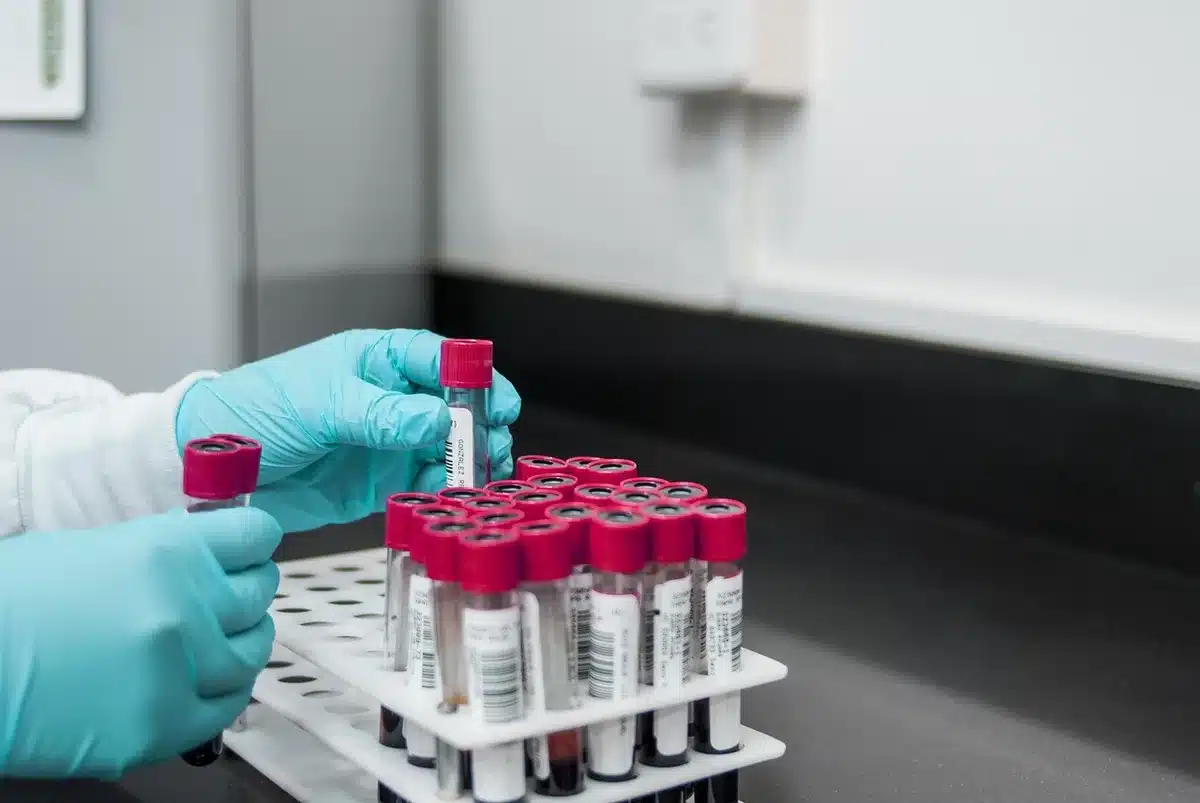
A team of paleontologists reports chemical traces inside a 115‑million‑year‑old dinosaur bone that could change how scientists study ancient physiology. The finding — traces of the oxygen‑carrying component of blood preserved inside bone microstructures — opens a new way to probe how dinosaurs lived, breathed and moved without reviving them.
The research, published this week in Proceedings of the National Academy of Sciences, examines a juvenile Aratasaurus museunacionali recovered in Brazil. Inside the dinosaur’s leg bone, investigators identified tiny, oval features in the vascular canals containing chemical signatures consistent with heme, the iron-containing ring found in hemoglobin.
How soft chemistry survived 115 million years
Normally, soft tissues decay quickly after death. In this case, conditions at the burial site appear to have halted that process. The animal was buried rapidly in low‑oxygen sediment, which greatly slowed microbial breakdown. Later, a manganese oxide mineral—identified as hausmannite—infused the remains and helped lock in microscopic structures and some protein fragments.
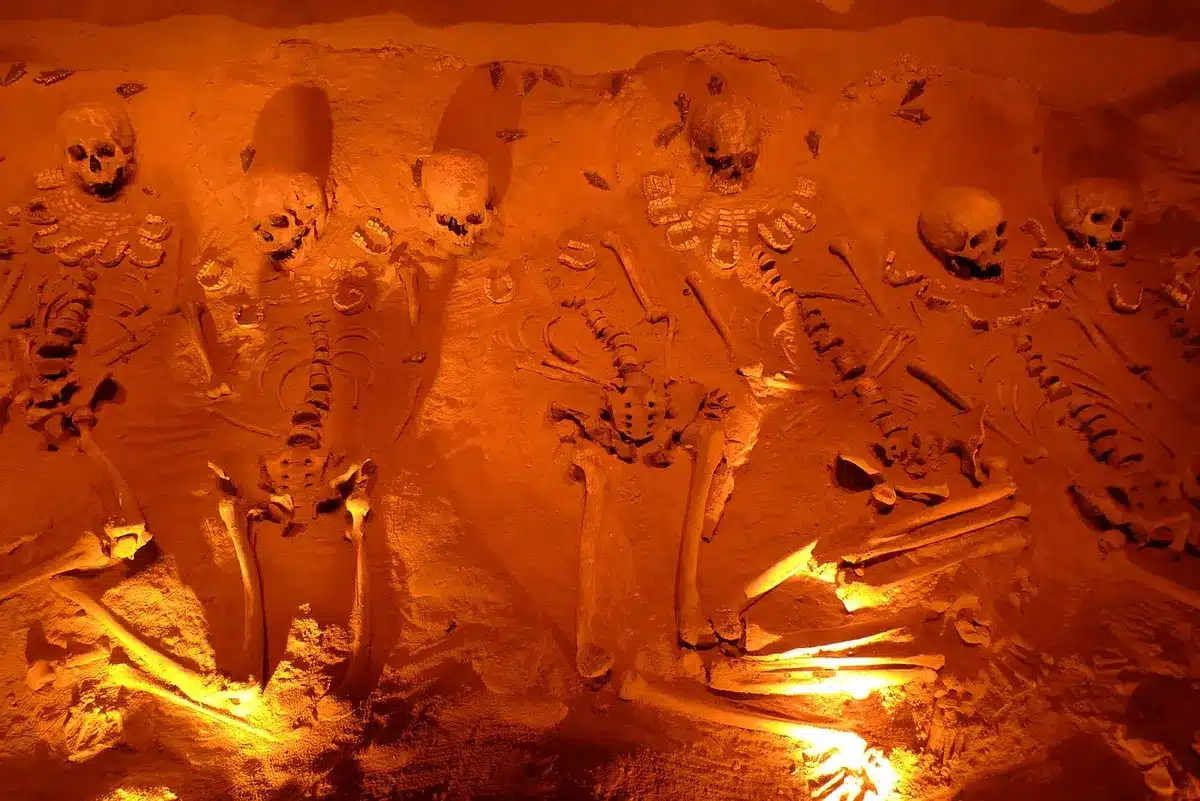
That mineralization acted like a stabilizing seal, preserving the cellular frameworks long enough for the chemical traces to survive into the present.
What the team actually found — and what they didn’t
The discovery marks the first time researchers have reported heme‑like chemistry inside structures within dinosaur bone. But this is not a return of intact blood cells or living tissue in the cinematic sense: the study does not claim recoverable DNA or a viable cell.
Lead author Kliti Grice and colleagues emphasize their goal is scientific: to use the chemical fingerprints to infer aspects of dinosaur biology — metabolism, oxygen transport, and likely activity patterns — rather than any effort at de‑extinction.
- Specimen: Juvenile Aratasaurus museunacionali, ~10 feet long, from Brazil.
- What was detected: Oval microstructures in vascular canals showing heme‑related chemistry.
- Preservation mechanism: Rapid burial in low‑oxygen mud followed by encrustation with hausmannite.
- Not recovered: Intact genomes or living cells; the evidence is chemical and structural, not genetic recovery.
Why this matters now
For paleontology, the result shifts the needle from purely morphological reconstructions to direct chemical windows on physiology. If heme remnants can survive under certain burial conditions, similar clues might exist in other museum collections or new digs — offering a way to test hypotheses about dinosaur metabolism and behavior with empirical chemical data.
That potential makes field methods and museum curation more significant: identifying and targeting bones with the right taphonomic history could yield more molecular signals, changing which fossils researchers prioritize for high‑resolution analysis.
Limits and next steps
Researchers are cautious. Chemical traces can be altered over geologic time and contamination remains a concern, so additional specimens and independent confirmation are essential. The team plans to apply their analytic approach to other fossils and refine techniques that distinguish original biomolecules from later mineral or environmental signatures.
Ultimately, the study offers a pragmatic advance: it provides new tools to explore dinosaur biology without sensational claims about cloning or revival. The immediate payoff is better data on how these animals lived and moved — and the chance that several overlooked fossils may still hold biochemical stories waiting to be read.
Similar Posts
- Shark fossils in Arkansas turn the state into a skeleton hotspot
- Dinosaur Mating Battles Unlock Gender Secrets: Discover How!
- Oldest octopus record overturned: specimen isn’t an octopus
- Ancient humans habitually sucked nuts 25,000 years ago: dental evidence
- Scientists Discover Youngest Mammoth Bones Ever: They Turned Out to Be Whales!

Miles Harper focuses on optimizing your daily life. He shares practical strategies to improve your time management, well-being, and consumption habits, turning your routine into lasting success.