
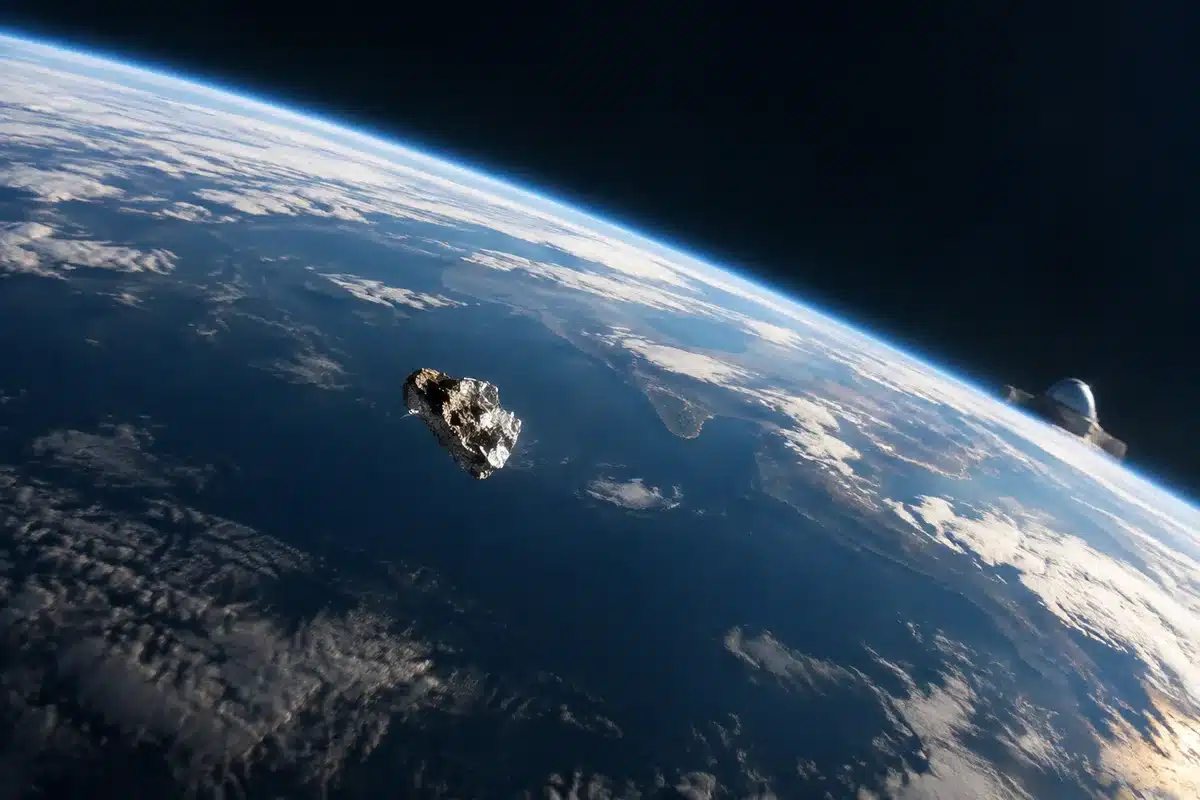
Earth has briefly picked up a new, very small companion: an asteroid roughly the length of a skateboard that slipped into our gravitational reach earlier this year. Scientists formalized the find on Oct. 29, 2026, and say the object presents no danger but offers a rare, short-lived chance to study an ultra-small near-Earth body up close.
The object, cataloged as 2026 QQ8, was first spotted by Hungarian astronomer Krisztián Sárneczky in August after it drifted closer than usual to our planet in April. Initial assumptions that the detection was space debris were overturned when follow-up observations at the Lowell Discovery Telescope and the University of Hawai‘i’s 2.2-meter telescope confirmed its natural asteroid origin.
Small, temporary, and scientifically useful
At roughly three feet (about one meter) across, 2026 QQ8 is far too small to survive passage through Earth’s atmosphere intact; if it did enter, it would largely disintegrate and produce only a meteor streak. It is, however, big enough to be cataloged and tracked while it remains bound to Earth’s gravity.
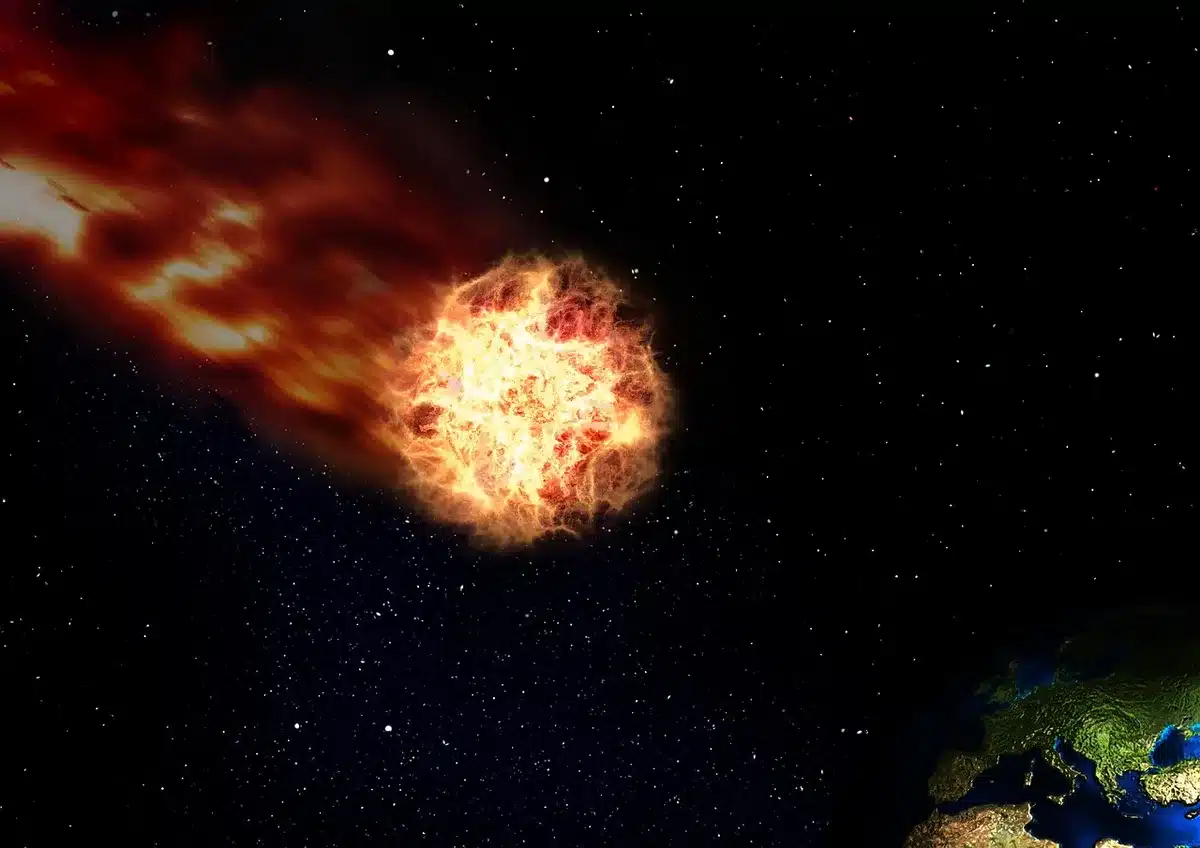
Researchers say the object was captured when it moved into Earth’s Hill sphere—the zone where our planet’s gravity can dominate over the Sun’s—allowing it to complete a looping path around Earth. That trajectory is unusually irregular, described by some models as a kidney-bean-shaped loop, with its closest approach roughly one-and-a-half times the distance to the Moon.
- Size: ~3 feet (≈1 meter) across
- Discovery timeline: pulled into Earth’s reach in April, first seen in August, announced Oct. 29, 2026
- Provenance: natural asteroid (not human-made debris), confirmed by multiple observatories
- Orbit: temporary capture; expected to leave Earth’s gravity and return to a solar orbit by December 2026
- Risk: negligible—too small to cause surface damage
Why this matters now
Although tiny, 2026 QQ8 matters for a few practical reasons. First, these transient captures demonstrate that Earth occasionally scoops up small asteroids, providing natural test cases for observing how such bodies behave when temporarily bound to a planet.
Second, tracking these mini-moons improves our catalog of near-Earth objects and refines orbital prediction techniques. That helps both routine space situational awareness and long-term planetary defense strategies, even if the object itself poses no immediate threat.
Finally, brief captures like this are valuable opportunities for telescopic characterization and, potentially, targeted missions in the future—missions aimed at studying the composition and spin of very small asteroids without the complexity of deep-space rendezvous.
What comes next
Models indicate 2026 QQ8 will not remain Earth-bound. By December 2026 it should escape our gravitational clutch and resume a typical orbit around the Sun, where it will likely continue passing by Earth roughly once every decade. For now, astronomers will keep monitoring its motion to refine predictions and to gather whatever spectral and photometric data they can while the window remains open.
Reports of the find were circulated through the Minor Planet Center and noted in coverage by EarthSky and science outlets. The brief arrival of 2026 QQ8 is a reminder that even tiny, ephemeral visitors can yield useful scientific returns when telescopes and observers are ready to follow them.
Similar Posts
- Asteroid Threatens Moon with Massive Crater in 2032: City-Killer Impact Looms
- Asteroid skims past Earth after late detection: scientists caught off guard
- Mysterious Interstellar Object Nears Earth: Scientists Baffled by Odd ‘Heartbeat’ Pulse!
- Near-Earth objects that could end life: how close they’ve come to striking Earth
- Mysterious Glowing Object Spotted in Our Solar System: Could It Be Interstellar?

Miles Harper focuses on optimizing your daily life. He shares practical strategies to improve your time management, well-being, and consumption habits, turning your routine into lasting success.