
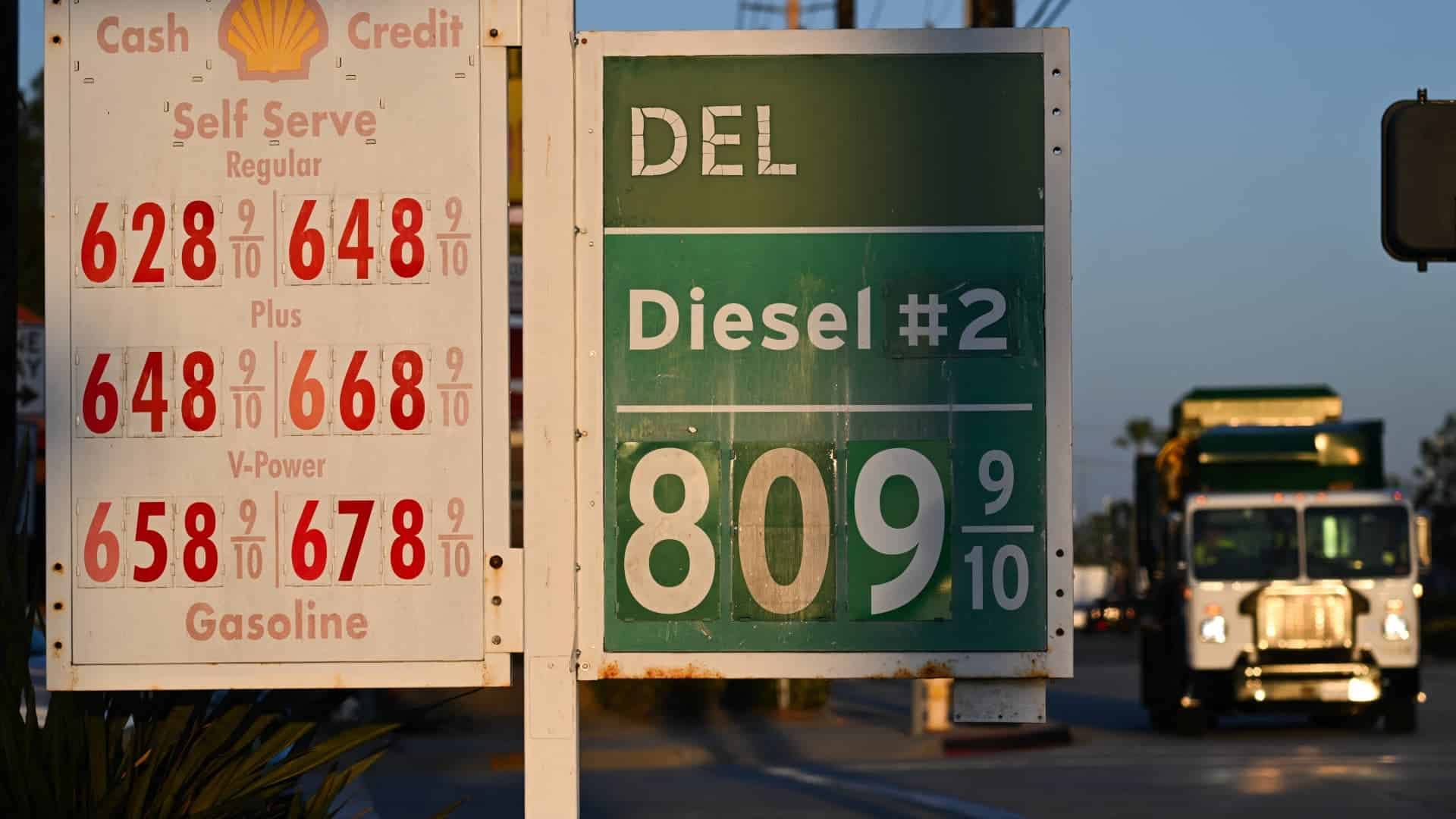
Diesel prices have jumped sharply since the outbreak of the Iran war, and economists warn that rise could quietly nudge consumer prices higher across grocery aisles and retail shelves. Because diesel fuels freight, farming and some industrial processes, the higher cost may filter into everyday purchases even if drivers see only modest changes at the pump.
How steep is the increase?
According to AAA data, the national average for diesel climbed to about $6.32 per gallon recently, up from roughly $3.76 on Feb. 27 — the day before the U.S. and Israel struck targets in Iran. That represents an increase of roughly 68% since the conflict began, and September marked the first time diesel averaged above $6 nationwide.
The rise has prompted international and domestic responses: the Group of Seven agreed to release strategic diesel reserves, and the White House temporarily authorized broader use of cheaper red-dyed diesel usually reserved for agricultural use. Still, analysts say those steps are unlikely to erase the upward pressure on fuel costs.
Why diesel matters differently than gasoline
Most consumers notice gasoline price swings immediately when they fill up. Diesel’s effect is subtler but more far-reaching. Trucks, trains and ships primarily use diesel to move goods; farmers and many manufacturers also rely on it for equipment and heating.
Because diesel is embedded in transportation and production costs, businesses tend to pass those increases on to buyers rather than absorbing them. That means the impact shows up as higher prices for food, delivered packages and many physical goods rather than a single line item at the pump.
- Grocery costs: Investment bank analysis says diesel represents roughly 5%–10% of input costs for many crops; higher fuel during harvest can lift food prices.
- Freight and retail: Everything moved by truck or rail — from household goods to online orders — becomes more expensive to distribute.
- Industrial and heating use: Some manufacturing processes and heating systems also use diesel, adding to production and operating expenses.
“Higher diesel prices act like a tax on transported goods,” said Michael Reid, head of U.S. economics at the Royal Bank of Canada, noting lower- and middle-income households typically feel the squeeze most acutely. Mark Zandi, chief economist at Moody’s, described the effect as indirect: consumers don’t see it at the gas pump, but it appears on the receipt.
How much could inflation rise?
Economists estimate the transmission can take months to fully materialize — often six to 12 months — as contracts roll over and inventories turn. As a rough guide, Moody’s analysis suggests a sustained $1-per-gallon jump in diesel can add about 0.1 percentage point to headline inflation measures.
Diesel has risen by roughly $2.50 per gallon since the conflict began, which would translate to an increase of about 0.25 percentage points in the PCE price index if sustained, Zandi said. The PCE index is the Federal Reserve’s favored inflation gauge; it ran at a 3.4% annual pace in August.
Goldman Sachs projected that higher diesel could raise food prices by 0.2 to 0.4 percentage points cumulatively in the coming months, and the bank expects elevated diesel costs to persist into 2027.
“The effect on goods can be gradual — a steady upward drift rather than a single jump,” Reid added. “Consumers may not notice one big change, but they’ll feel prices ticking up over time.”
What’s driving diesel higher?
The conflict in Iran has disrupted Middle East oil flows and damaged regional refining capacity that turns crude into diesel and other fuels. At the same time, war-related strikes on refineries in and around Ukraine and Russian export curbs have tightened diesel availability globally.
Those supply-side constraints, combined with sustained global demand, are the core reasons analysts point to for the recent surge. Short-term policy moves — reserve releases or expanded use of dyed diesel — may offer temporary relief but don’t erase structural supply pressures, many economists say.
Looking ahead, the main risk is persistence: the longer fuel prices stay high, the greater the chance that broad-based consumer prices will follow.
Bottom line: A spike in diesel matters because it raises the cost of moving and producing goods across the economy. Even if drivers don’t see the full effect at the pump, households are likely to face higher grocery and retail prices over the next year if diesel remains elevated.
Similar Posts
- September 2026 inflation: what climbed and dropped in one chart
- April 2026 inflation: what rose and what fell in a single chart
- March 2026 inflation: see which prices jumped and which fell in one chart
- February 2026 inflation: chart shows which costs soared and where relief arrived
- August 2026 inflation hits households: chart reveals biggest price jumps

Jordan Keller specializes in analyzing the US financial markets. With concrete recommendations, he helps you secure and boost your investments by providing strategies that adapt to market fluctuations.