
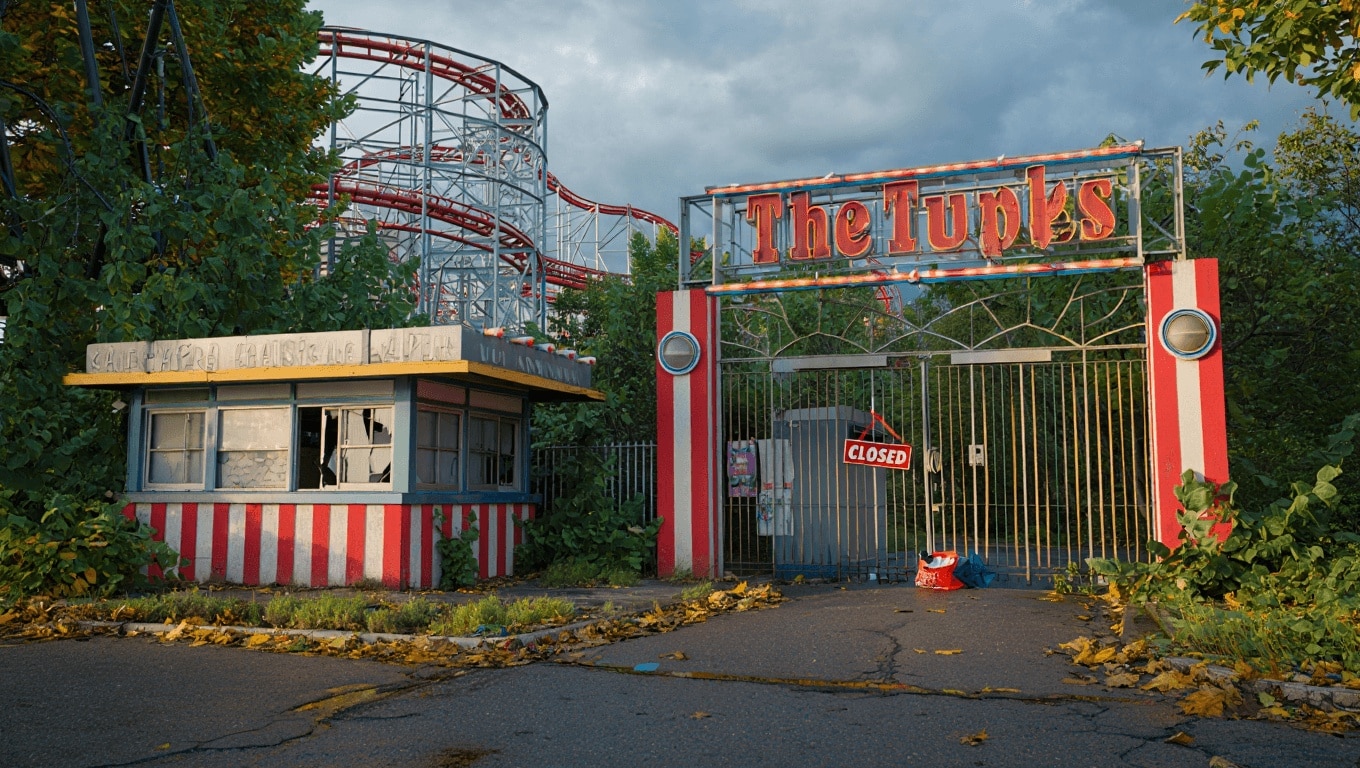
A wave of permanent theme-park closures and insolvency filings has surfaced in recent weeks, and the ripple effects go beyond shuttered rides. For communities, workers and lenders, these failures underscore deeper shifts in the economics of live entertainment that are starting to reshape local tourism and real-estate markets.
Why this matters now
The immediate consequence is clear: thousands of seasonal jobs and millions in local tax revenue are at risk. But the broader concern is structural. Smaller, regional parks that once relied on steady summer crowds are facing rising costs, weaker post-pandemic attendance and tighter financing—conditions that threaten a wider consolidation of the industry.
What’s driving the recent closures
Industry analysts point to several converging pressures. Higher energy and maintenance costs eat into slim margins. Insurance premiums for amusement rides have climbed, making risk management significantly more expensive. Meanwhile, consumer spending habits have shifted: households are spending more on streaming and at-home experiences, and discretionary travel budgets remain uneven.
Access to capital is another fault line. Lenders and private investors are increasingly cautious about backing parks with seasonal revenue streams and large, specialized assets. When interest rates rise, debt service becomes harder to sustain and refinancing options narrow.
Immediate local impacts
When a park announces it will close “forever,” the consequences are tangible and fast-moving. Local businesses that depend on park visitors—hotels, restaurants, tour operators—see an abrupt drop in customers. Municipal budgets can also suffer when expected sales and tourism taxes vanish.
Employees face job losses at the busiest time of year for seasonal work, and retraining or redeployment programs are often limited in small towns whose economies were built around the attraction.
| Stakeholder | Short-term impact | Longer-term risk |
|---|---|---|
| Workers | Immediate layoffs, lost seasonal income | Fewer local employment options; wage pressure |
| Local businesses | Drop in foot traffic and sales | Possible closures, business relocations |
| Municipalities | Lost tax revenue, vacant property concerns | Long-term decline in tourism tax base |
| Creditors & investors | Asset sales, legal claims | Potential write-downs, risk reassessment |
Common patterns in recent filings
Bankruptcy and closure announcements typically follow a recognizably similar arc: an operator reports mounting losses, attempts to cut costs or find new financing, then either files for court protection or opts to liquidate assets. That sequence raises legal and financial questions about land reuse, outstanding employee claims and the fate of attractions that can’t easily be repurposed.
- Debt pressure: Existing loans become unsupportable when attendance drops.
- Rising operational costs: Energy, repairs and staffing are increasingly expensive.
- Insurance and liability: Higher premiums and stricter underwriting narrow options.
- Shifting demand: Consumers favor larger, branded parks or digital entertainment.
What officials and communities are doing
Some towns are trying quick fixes—temporary events, pop-up attractions or marketing campaigns—to blunt the immediate economic shock. Others are exploring longer-term strategies: redeveloping properties for mixed use, offering incentives for new operators, or seeking state and federal grants to bridge the gap while they plan a transition.
These efforts can work, but success depends on location, scale and existing infrastructure. A park adjacent to major transport links may attract buyers; a remote site will likely need significant reimagining.
What to watch next
Keep an eye on a few signals that indicate broader risk to the sector:
- New insolvency filings or public statements from other small and mid-size operators.
- Renewed increases in liability or property insurance costs.
- Local government reports on tourism tax receipts and employment trends.
- Announcements from lenders or investors about restructuring or asset sales.
For residents and local leaders, the key questions are practical: how quickly can affected workers be rehired or retrained, what short-term relief exists for small businesses, and how feasible is a long-term plan to repurpose large, highly specialized parcels of land.
Outlook: consolidation and adaptation
Expect consolidation in the near term: larger, well-capitalized operators will selectively acquire assets, while smaller parks will either reinvent themselves or be redeveloped. That will likely leave fewer independent operators serving niche markets.
At the same time, opportunities remain. Properties in the right locations can be converted into year-round attractions, logistics hubs or residential developments. But those outcomes require investment and planning—luxuries many small towns do not have.
In short, recent closures are more than isolated business failures; they reflect a shifting landscape in post-pandemic leisure spending and finance. For communities that have long relied on park-driven tourism, the coming months will be decisive.
Similar Posts
- Virginia law could bankrupt decades-old mountain wineries
- Debt crisis: three countries owe more than 120% of GDP in 2025
- Chicago candy factory files bankruptcy: century-old maker at risk after massive losses
- Non-citizen loans targeted in 2026 measure: immigrant entrepreneurs face funding crunch
- Oil prices surge could push mortgage rates higher: what homebuyers need to know

Calvin Baxter is an economic analyst specializing in the evolving US labor market. He leverages real data to provide you with concrete recommendations and help you adjust your professional strategies.