
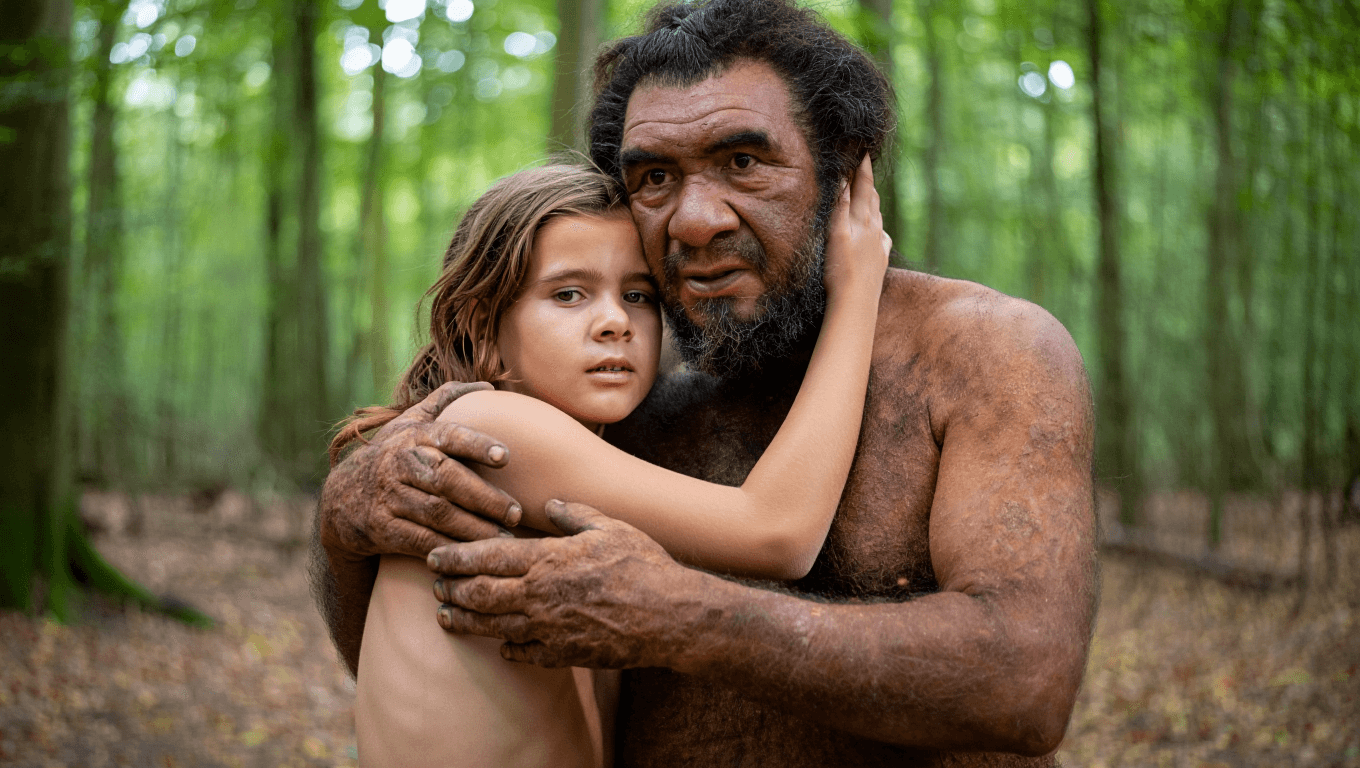
A recent study in Science suggests a consistent pattern in how Neanderthals and early modern humans mixed: the genetic record points to more pairings between Neanderthal males and human females than the reverse. That asymmetry changes how researchers interpret human–Neanderthal contact and the forces that shaped the genomes of people living today.
Researchers at the University of Pennsylvania examined ancient genomes and report a surprising imbalance on the sex chromosome that points toward sex-specific gene flow during multiple interbreeding events.
What the genetic evidence shows
By comparing sequences across the Neanderthal genome, the team found the Neanderthal X chromosome carries roughly a 62 percent greater relative contribution from modern humans than do the Neanderthals’ other chromosomes. In practical terms, that pattern is most easily explained if gene flow was skewed toward matings involving Neanderthal men and human women.
The authors tested several alternative explanations — including differences in population size and genetic incompatibilities — using a bespoke statistical framework. Their analysis indicates that a lasting sex bias in interbreeding better fits the observed data than those other scenarios.
Key implications
- Sex-specific migration: Human females appear to have contributed disproportionately to Neanderthal X-chromosome ancestry.
- Repeated events: The signal is consistent across multiple admixture episodes separated by up to about 200,000 years.
- Explains genomic patterns: The finding helps account for previously reported “Neanderthal deserts” — stretches of the human genome, especially on the X, that lack Neanderthal-derived sequences.
- Limits of inference: The conclusion rests on models and a small set of ancient genomes rather than direct, contemporaneous DNA samples from immediately after admixture.
The study advances an explanation grounded in behavior and social dynamics rather than invoking only neutral demographic processes or unavoidable genetic incompatibilities. That does not prove motive or social conditions, but it does suggest that who paired with whom shaped the flow of genes between groups.
Why this matters now
Understanding the directionality of ancient gene flow refines our picture of early human history and the mechanisms behind the genetic legacy inherited by non‑African populations today. Neanderthal DNA influences traits ranging from immune response to skin and hair characteristics, so knowing how those fragments entered our lineage matters for evolutionary biology and medical genetics.
At the same time, the authors are cautious. Ancient DNA remains sparse, and none of the available Neanderthal genomes were sampled from the immediate aftermath of the admixture events. As a result, statistical modeling carries uncertainty and further sequencing of additional remains will be necessary to confirm the pattern.
Still, the research shifts the conversation: rather than viewing interbreeding as strictly a product of population dynamics or genetic incompatibility, it highlights that social and behavioral factors likely played a measurable role in shaping our genomes.
Future ancient-genome discoveries and improved modeling approaches will test whether this sex-biased pattern holds across other regions and time periods, and will help place these genetic signals into a richer archaeological and anthropological context.
Similar Posts
- Neanderthals: inbreeding likely not the reason they vanished, large study concludes
- DNA reveals two unknown human ancestors still in our genomes
- Y Chromosome Vanishing: What Does This Shocking Revelation Mean for Us?
- Neanderthal tooth uncovers gruesome reality of prehistoric dental work
- Secrets Unveiled: Why Orange Cats Boast Their Vibrant Coats!

Miles Harper focuses on optimizing your daily life. He shares practical strategies to improve your time management, well-being, and consumption habits, turning your routine into lasting success.