
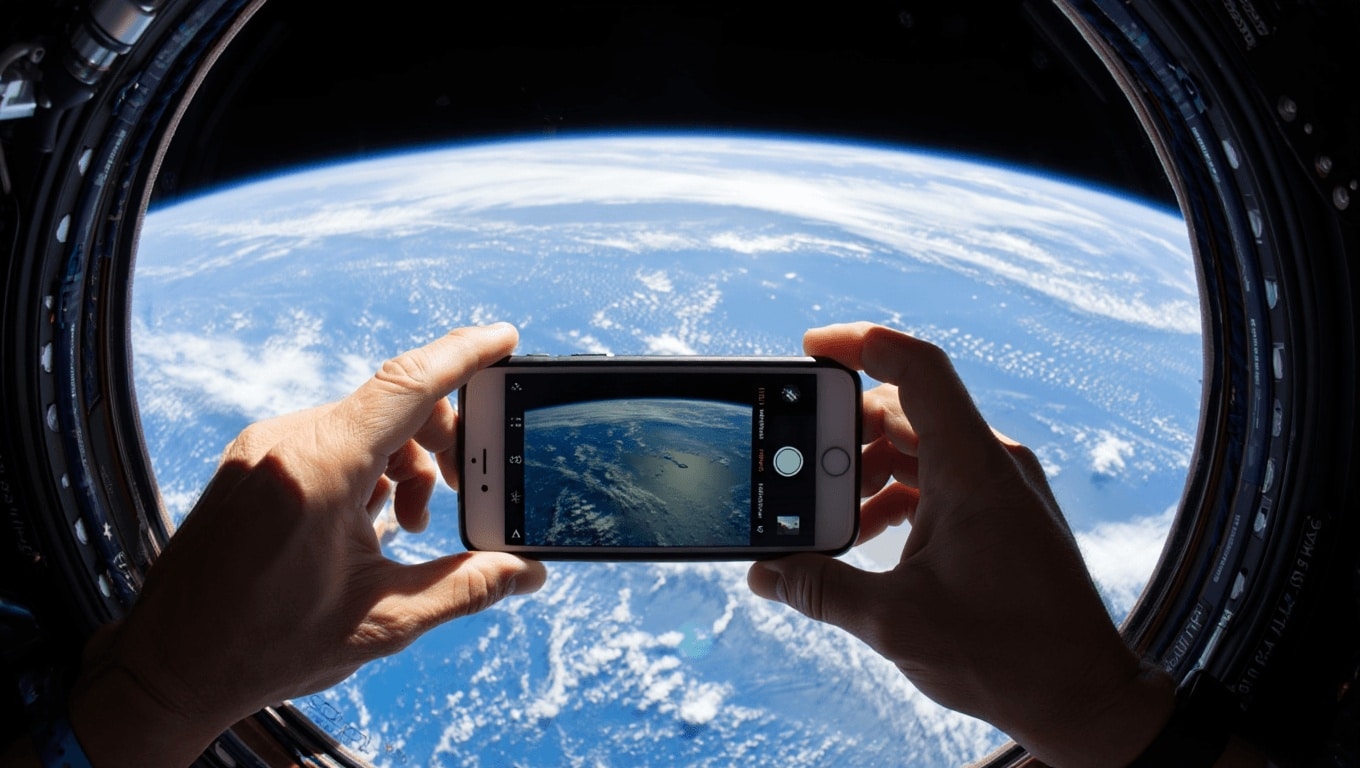
Commander Reid Wiseman of Artemis II recently recorded a striking sequence as the crew looped around the Moon: Earth slowly sliding out of view, captured on an ordinary smartphone. That unedited clip—shot through an Orion window on a handheld iPhone—matters today because it’s authentic, public-facing space footage at a moment when convincing synthetic imagery is proliferating online.
Everyday tech, extraordinary view
The short video shows what astronauts call an Earthset—the planet setting behind the lunar horizon, the natural counterpart to the famous Earthrise images from Apollo. Wiseman’s clip was not enhanced or composited; it was filmed, zoomed modestly to match a human vantage, and released to the public without special effects.
That simplicity is part of its appeal. In a media landscape crowded with AI-generated “deepfake” visuals, footage taken by crew members on commercially available devices feels immediately verifiable and relatable. It also underscores how consumer technology now reaches beyond Earth for routine documentation.
Why the footage matters beyond the awe
Artemis II astronauts have been recording a range of phenomena during the transit, including brief flashes that indicate meteorite impacts on the lunar surface. Those flashes—captured on multiple devices—offer practical data for mission planners assessing micrometeoroid risks for future crewed stays and habitats.
- Visibility: The Earthset clip provides a real-time, human-scale perspective of our planet from behind the Moon.
- Verification: Unedited smartphone footage is easier for journalists, researchers and the public to validate against claims of synthetic fabrication.
- Science: Meteorite flashes logged during the flight can inform models of lunar surface hazards.
- Engagement: Informal images and short videos like this tend to resonate broadly, helping sustain public interest in Artemis-era exploration.
Snapshot details
| Item | Details |
|---|---|
| Mission | Artemis II |
| Camera | Commercial smartphone (iPhone) |
| View | Earthset — Earth disappearing behind the Moon |
| Processing | Unedited, minimal zoom |
| Additional observations | Meteorite impact flashes recorded during transit |
Beyond the immediate visual impact, this material plays a defensive role in the fight against misinformation. When spectacular planetary or lunar footage appears online, skepticism is increasingly warranted: AI and image manipulation tools can create convincing but false scenes. Authentic clips from named astronauts help anchor public understanding in verifiable fact.
Operationally, the recordings also have value. Monitoring transient flashes on the lunar surface helps engineers estimate impact frequency and energy—information that could influence shielding requirements for future landers and lunar habitats. Even a few seconds of video can feed into larger risk-assessment efforts.
Finally, there’s the cultural side. Casual images taken on everyday devices bridge the divide between professional mission photography and the public’s experience. They make space exploration feel accessible, not just something seen in curated press galleries.
In an era when fabricated spectacle is cheap and fast, the simple act of filming from a spacecraft window—by a named, accountable crew member—carries both symbolic weight and practical utility. That combination helps explain why a short, handheld clip of Earth slipping behind the Moon is getting attention well beyond space enthusiasts.
Similar Posts
- NASA cancels Artemis III moon landing: astronauts won’t return as planned
- NASA’s Historic 2026 Moon Mission: First Crewed Lunar Journey in 50 Years!
- Stunning Lunar Update: Discover the Moon’s Phase for October 23, 2025!
- Tonight’s Moon Phase Unveiled: See What’s Special on September 15, 2025!
- Artemis II sparks hope: skeptics warn about the moon’s uncertain future

Miles Harper focuses on optimizing your daily life. He shares practical strategies to improve your time management, well-being, and consumption habits, turning your routine into lasting success.