
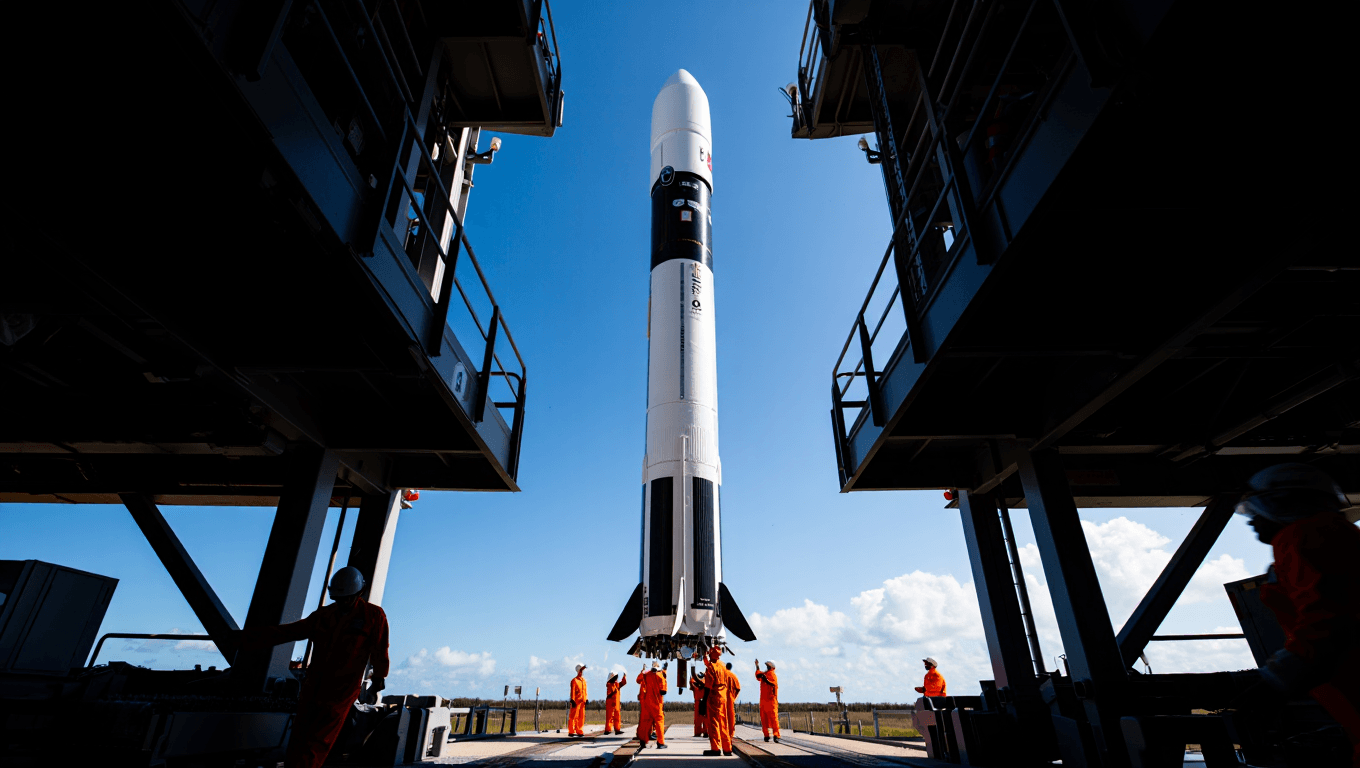
The Artemis II mission has given the public a rare stretch of collective awe — a reminder of what global cooperation can deliver in space — even as its timing exposes fresh geopolitical and legal questions about who controls the moon’s future. With the crew due to splash down April 10, the mission’s technical success matters not just for science but for how nations and companies will try to turn lunar access into influence and profit.
The flight felt, briefly, like a shared national achievement: precise, well-rehearsed, and quietly impressive. Watching humans orbit the moon again rekindled a sense of possibility that can be rare in an era dominated by partisan politics and international rivalry.
Why return now?
Exploration is an enduring reason: studying the moon helps scientists unlock the solar system’s history and develop technologies for deeper space missions. But the renewed push toward lunar operations is also driven by strategic and economic calculations. Water ice, rare minerals and the potential for in-situ resource use make the moon an attractive target beyond pure curiosity.
That mix — scientific goals alongside geopolitical and commercial aims — reframes Artemis II. Its success signals capability, yet it also marks the opening act for a stage where national competition and corporate investment will shape policy and access.
International law has not entirely caught up. The 1967 Outer Space Treaty set a peace-first principle and said celestial bodies cannot be appropriated by national sovereignty. But its broad language leaves room for interpretation about extracting resources, installing infrastructure, or establishing long-term operations on the lunar surface.
The practical stakes
Practical realities will force decisions. Mining a satellite-sized deposit of water or helium would require sustained logistics, equipment, and permanent or semi-permanent bases. Those installations will inevitably carry national symbols and corporate logos, even if planting a flag isn’t legally equivalent to claiming territory.
- Legal ambiguity: The treaty’s general wording leaves open who can extract what — and under what rules.
- Strategic positioning: Long-term bases could serve both scientific and military-support roles, raising regional and global security questions.
- Commercial interests: Private companies are investing in lunar services and infrastructure; their incentives may not align with public-interest science.
- Environmental and ethical considerations: How we treat celestial environments and shared resources will set precedents for future exploration.
These points are not theoretical. China has signaled plans for human lunar landings before 2030, and other nations and private actors are accelerating programs. What happens on and around the moon will shape decades of space governance.
From inspiration to policy test
The emotional high of Artemis II need not be overshadowed by geopolitics. The mission illustrates what coordinated engineering and science can achieve, and it could serve as a template for collaborative frameworks that prevent a scramble for resources.
Yet the risk of repeating terrestrial patterns — where strategic advantage and resource competition drive outcomes — is real. If states and companies prioritize short-term advantage, the promise of peaceful, cooperative exploration could give way to contested operations and conflicting claims.
That doesn’t mean conflict is inevitable. The post-1960s space regime has endured because cooperation provided mutual benefits. But now, with tangible value on the line, older agreements will face stress tests they were not originally designed to handle.
Artemis II is a reminder and a challenge: we can achieve technically demanding, inspiring missions, but we also must decide how to govern what we find. The choices made now — on legal interpretation, international coordination, and commercial rules — will determine whether lunar activity becomes a shared scientific triumph or a new theater for rivalry.
For readers: the mission’s return underscores an immediate policy question with concrete consequences for national security, industry strategy, and scientific access. How governments and organizations respond in the coming months will shape not just the next decade in space, but the norms that guide humanity’s presence beyond Earth.
Similar Posts
- NASA cancels Artemis III moon landing: astronauts won’t return as planned
- NASA’s Historic 2026 Moon Mission: First Crewed Lunar Journey in 50 Years!
- Trillion-Dollar Treasure: Could the Moon Really Hold a Fortune in Platinum?
- Astronaut phone video shows Earth sliding below horizon: viral clip confirms human spaceflight
- Stunning Lunar Update: Discover the Moon’s Phase for October 23, 2025!

Miles Harper focuses on optimizing your daily life. He shares practical strategies to improve your time management, well-being, and consumption habits, turning your routine into lasting success.