
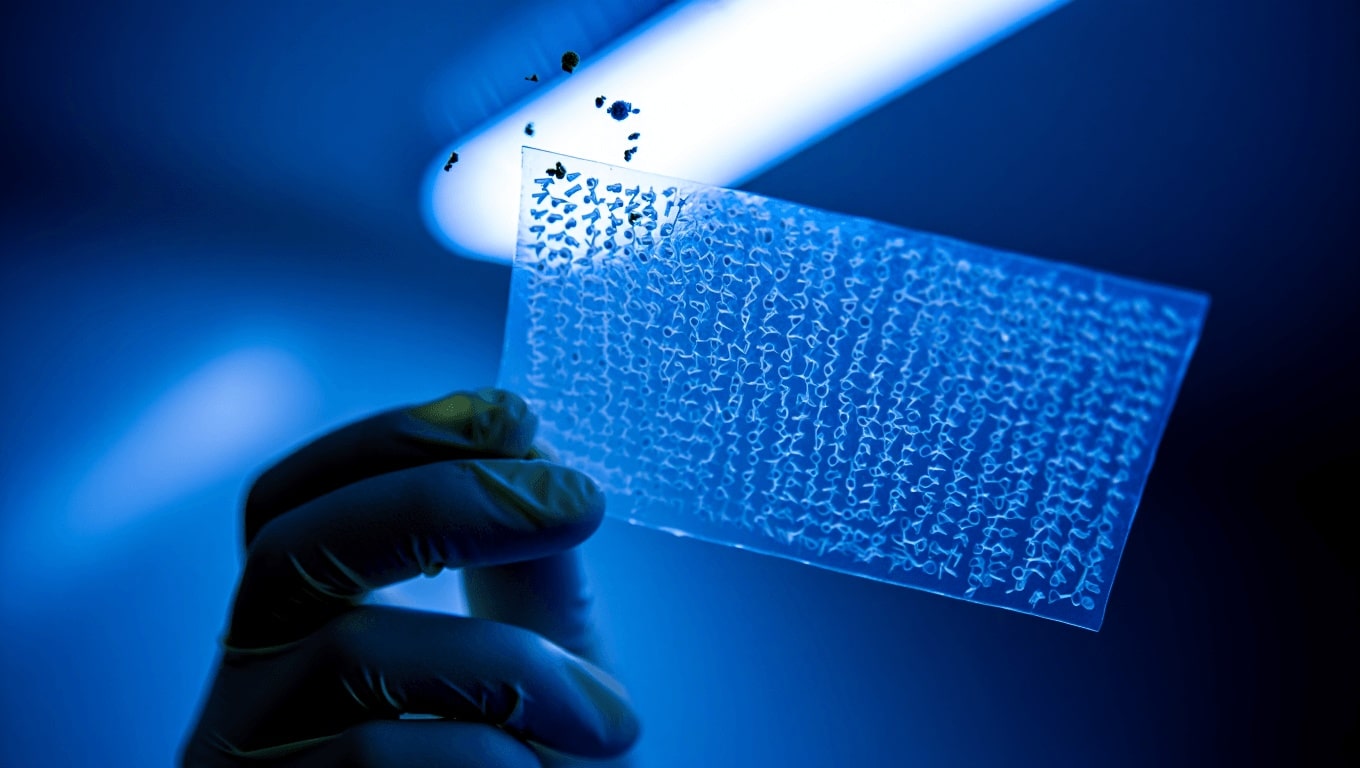
A new study suggests a simple, chemical-free way to neutralize viruses on contact: a flexible plastic film patterned with dense arrays of microscopic pillars that physically rupture viral particles. If the approach scales beyond the lab, it could offer a durable alternative to disinfectant chemicals and help reduce the environmental and public‑health costs of widespread antimicrobial use.
The research, published in Advanced Science, describes an acrylic sheet textured with closely spaced nanopillars — each separation around 60 nanometers, roughly a thousand times narrower than a human hair. When an enveloped virus lands on the surface, it is drawn over several pillars at once and the membrane is torn apart, stopping the particle from infecting cells without relying on any chemical agent.
How the surface stops viruses
Tests in the lab targeted human parainfluenza virus type 3. Within an hour, roughly 94 percent of viral particles that contacted the patterned film were neutralized. Importantly, the viral genome remained intact, which indicates the mechanism is physical tearing — not a chemical reaction or denaturation.
This method depends less on pillar height and more on their spacing. When nanopillars are packed tightly enough, multiple contact points exert combined mechanical stress on the virus’s outer envelope, producing rupture. That mechanical action is being framed as an alternative to biocidal coatings that rely on toxic or reactive compounds.
The material can be produced with established manufacturing techniques and is both inexpensive and flexible, making it technically feasible to coat or laminate onto common items — from touchscreens to medical devices and transit interiors.
- Key findings: Dense nanopillar arrays can physically disrupt enveloped viruses; lab tests showed ~94% neutralization of one virus within an hour.
- Potential applications: Phone and tablet screens, hospital tools, door handles, seating and other high‑touch surfaces in public transit.
- Manufacturing note: The film is acrylic, flexible and compatible with existing production processes, which could speed adoption if performance holds up outside the lab.
Beyond the practical appeal, the approach addresses a pressing concern: repeated use of chemical disinfectants contributes to environmental harm and can drive antimicrobial resistance. A contact‑based, nonchemical barrier could reduce reliance on those agents, lowering ecological impact and toxic exposures.
What remains uncertain
Laboratory results are an important first step but not the final word. The team has so far tested a single virus under controlled conditions. Real‑world surfaces face dirt, oils, wear, repeated touch, humidity changes and other variables that can blunt physical effects or foul the textured surface.
Researchers will need to demonstrate effectiveness across a wider range of viruses — including non‑enveloped types that have tougher shells — and run field trials that simulate everyday use. Durability and cleaning protocols for the patterned film are also open questions: will repeated wiping or abrasion remove the nanopattern or reduce its viral activity?
Regulatory approval and standards would follow successful trials. For facilities managers and product designers, the technology offers an intriguing option, but one that will require independent validation before being relied on for infection control.
In short, the study points to a promising, low‑chemical strategy for passive viral control on surfaces, but it is an early-stage result. If further testing confirms broad effectiveness and long-term durability, patterned nanopillar films could become a practical layer of protection in public spaces and healthcare settings — helping to reduce dependence on harsh disinfectants and the problems they create.
Similar Posts
- Scientists Spread the Flu to Learn How to Stop It: Breakthrough Findings Revealed!
- Brazilian wax risk: hidden irritation many salons don’t warn you about
- Ancient humans habitually sucked nuts 25,000 years ago: dental evidence
- Octopus mating: males risk death with extreme reproductive tactics
- Utah earthquakes explained: researchers pinpoint cause after decades

Miles Harper focuses on optimizing your daily life. He shares practical strategies to improve your time management, well-being, and consumption habits, turning your routine into lasting success.