
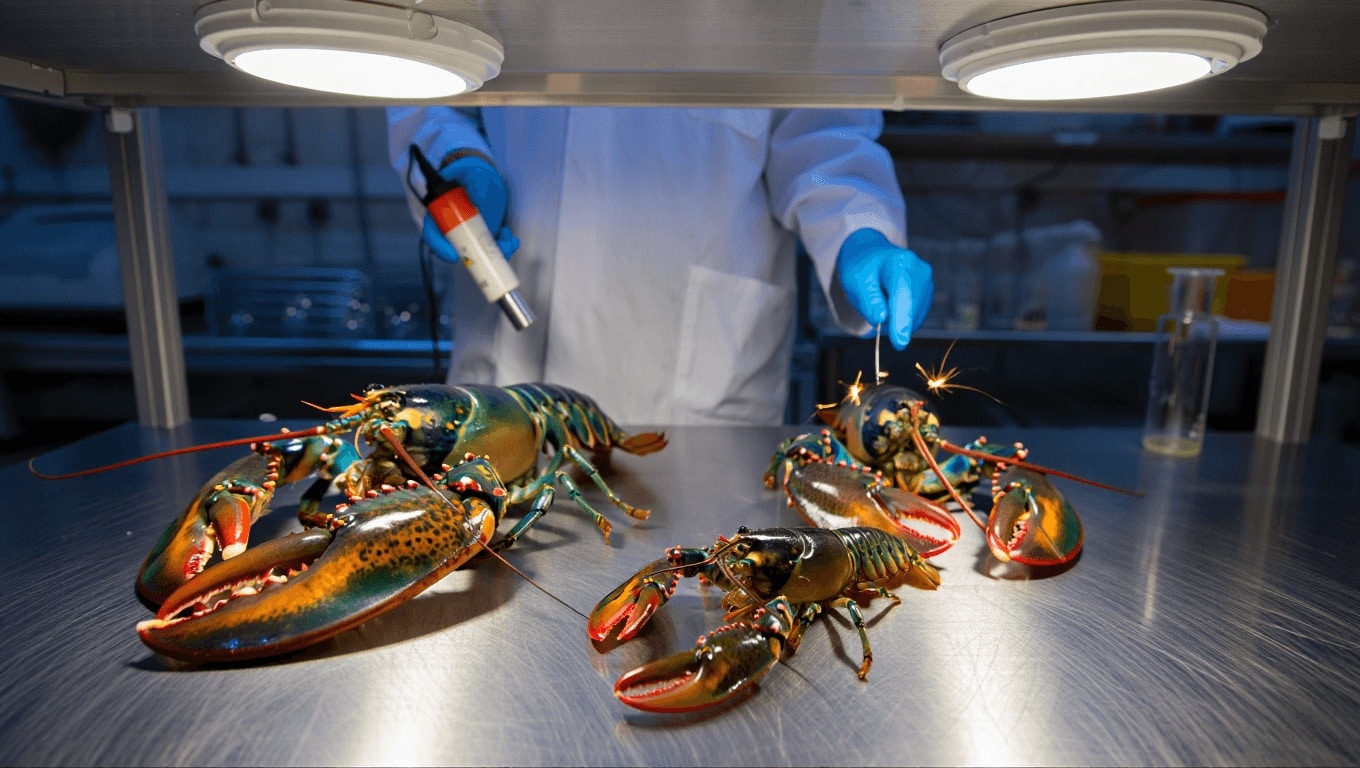
A recent study in Scientific Reports finds that common painkillers blunt Norway lobsters’ reactions to harmful stimuli, adding new evidence to a long-running debate over whether these animals feel pain. That matters now because the findings could influence how seafood is handled, regulated and prepared in kitchens and fisheries worldwide.
Researchers delivered brief electric shocks to Norway lobsters and tracked both their behavior and physiological responses. The animals normally produced a rapid escape motion — a vigorous tail‑flip response — but when given drugs such as aspirin or lidocaine beforehand, that reflex weakened or disappeared.
What the experiment showed
The pattern is straightforward but telling: blocking pain pathways with known human analgesics altered how the lobsters behaved and how their bodies reacted at the molecular level. In addition to changes in movement, the team measured shifts in stress-related chemicals and in gene activity tied to nervous-system signaling.
Scientists do not rely on a single test to draw conclusions about animal experience. Instead they combine behavioral cues with physiological markers. In this case, both lines of evidence moved in the same direction — suggesting that the animals’ responses were not mere reflexes but involved processes that analgesics can modify.
That overlap between human and crustacean responses does not prove the subjective experience of pain in the way humans feel it, but it strengthens the argument that lobsters possess biologically relevant mechanisms for detecting and reacting to harmful stimuli.
- Methods: Brief electrical shocks paired with behavioral observation and molecular measurements.
- Drugs tested: Common analgesics including aspirin and local anesthetics such as lidocaine.
- Main finding: Analgesics dampened escape behaviors and altered stress and gene-activity markers.
- Implications: Results feed into policy debates over animal welfare, food preparation practices, and humane slaughter techniques.
Some governments have already begun responding to similar evidence. The United Kingdom, for example, recognizes certain cephalopods and decapod crustaceans in animal‑welfare law, and a few regions restrict or regulate the practice of boiling crustaceans alive.
For restaurants, fishers and consumers, the takeaway is practical as well as ethical. If lobsters can mount stress or pain‑related responses, chefs and suppliers may need to adopt different handling methods — such as humane stunning — to comply with evolving standards and public expectations.
Still, widespread change is unlikely to be instantaneous. Eating preferences and culinary traditions are resilient. But the study adds scientific weight to conversations about humane treatment, and it could accelerate regulatory reviews or inspire industry shifts toward less controversial processing methods.
Broader consequences
Beyond cooking, the research highlights a bigger trend in animal welfare science: treating invertebrates as subjects worthy of careful study rather than assuming they lack meaningful internal states. That shift influences laboratory practice, food‑industry protocols, and legal frameworks.
At minimum, the new findings give consumers and policymakers clearer information to weigh. At most, they could reshape how we think about commonly consumed sea creatures — not simply as ingredients, but as animals with biologically measurable responses to harm.
Similar Posts
- Cows may recognize human faces: research could make summer grilling awkward
- Warning: Venting About Your Problems Could Make Things Worse!
- South Korea Bans Bear Bile Farming: 200 Moon Bears Seek New Homes
- Amsterdam’s New Tiny Staircases: A Lifeline for Stray Cats in Iconic Canals!
- Disabled parrot takes over circus: rescued bird now leads the troupe

Miles Harper focuses on optimizing your daily life. He shares practical strategies to improve your time management, well-being, and consumption habits, turning your routine into lasting success.