
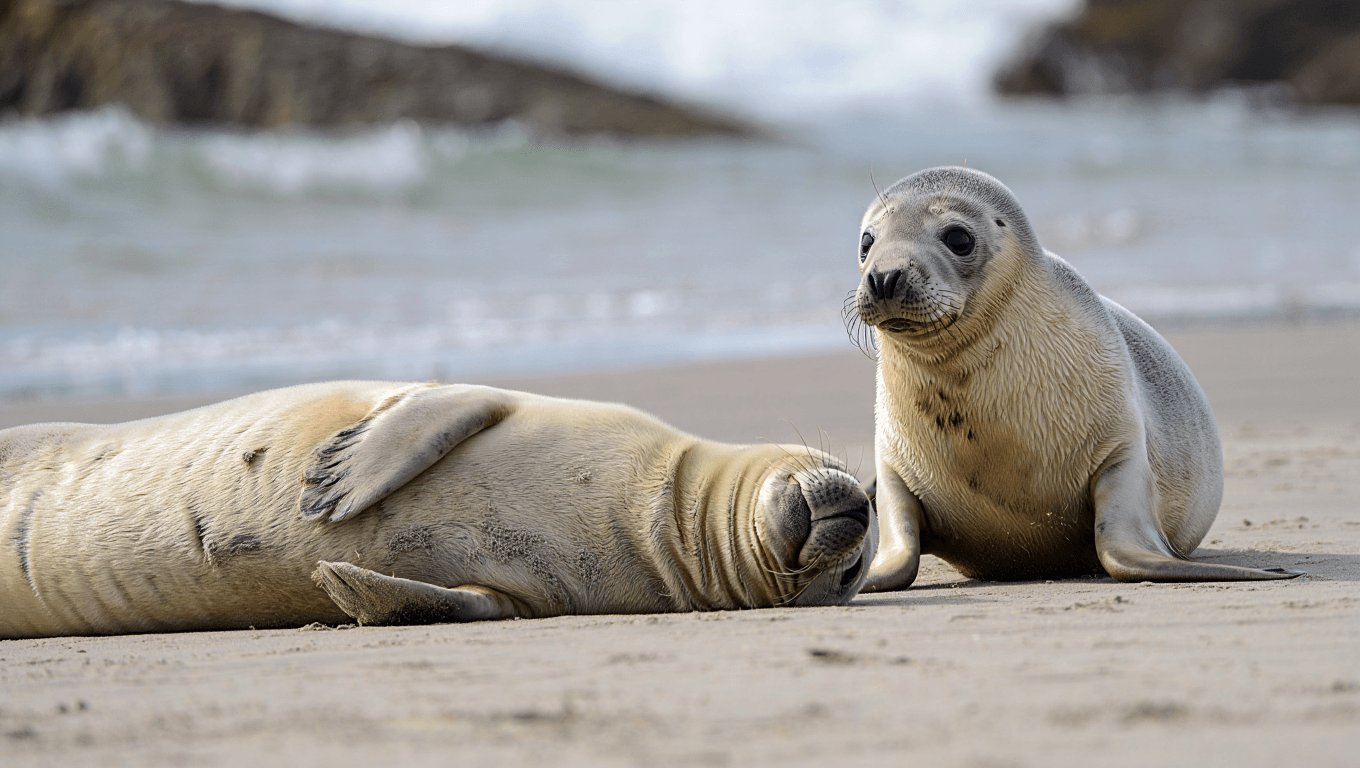
Researchers now say the long-unsolved deaths of newborn seals on a remote Atlantic sandbar were not the work of people or sharks but of adult males of the same species — a finding that reframes a decades-old mystery and raises fresh concerns for wildlife managers. The study links a distinctive pattern of wounds on pups to attacks during the mating period, suggesting a behavioral shift with direct consequences for the colony.
How the mystery was cracked
For years, bodies of newborn gray seals washed ashore with unusual, spiral-shaped lacerations running from the snout toward the chest. Early theories pointed to boat strikes or large predators, but field observations and forensic exams led researchers to a different conclusion.
Marine ecologists working on Sable Island, which hosts one of the largest colonies of gray seals in the world, documented adult males actively assaulting pups during the peak of the reproductive period. Detailed inspections of hundreds of carcasses revealed deep bite wounds and scrape marks consistent with attacks by large male seals rather than external agents.
Numbers that stand out
The team reported worrying totals from recent surveys: 765 pups with matching wounds recorded in 2024, and a single survey day in 2025 that found 359 carcasses showing the same injury pattern. Those counts, collected as part of the study published in Marine Mammal Science and highlighted by Science magazine, suggest the behavior is frequent and concentrated in time and place.
The lead field researcher from the University of St. Andrews directly observed at least one adult male attacking a pup, and comparative analyses of wound morphology supported the conclusion that these were intraspecies attacks carried out primarily by males.
- Timing: Incidents cluster during the breeding season, when males are engaged in territory defense and mate competition.
- Injury pattern: Deep, helical cuts with canine punctures and flipper abrasion — not consistent with boat or shark trauma.
- Frequency: Hundreds of affected pups recorded across recent seasons, indicating a repeated behavior rather than isolated events.
Observers note this pattern is largely confined to adult males and to the weeks when males fast while establishing and holding positions to attract mates. That energetic strain has led researchers to propose a functional explanation: some males may be opportunistically feeding on pups as a convenient, high-calorie food source during extended fasts.
Implications and unanswered questions
The finding is unsettling because it reflects an emergent behavior with potential population-level effects. Newborn mortality at scale can reduce recruitment and alter colony dynamics, particularly if the trend persists or spreads to other sites.
There are unresolved drivers to investigate. Changes in prey availability, competition, shifting climate conditions, or social learning among males could all play roles. The study does not rule out multiple contributing factors, and scientists emphasize the need for continued monitoring and targeted research to understand whether this is a novel strategy that emerged recently or a previously under-recorded behavior.
For wildlife managers and conservationists, the immediate priorities are clearer surveillance during breeding peaks, careful necropsy protocols to track wound signatures, and studies of male foraging ecology in the weeks before and during breeding. Understanding whether this behavior is driven by short-term food stress or longer-term ecological shifts will determine what, if any, interventions are possible or necessary.
In short, the answer to a decades-old mystery is now known: adult male gray seals are responsible for many of the lethal attacks on pups at Sable Island. But the discovery opens a new set of questions about why the behavior is happening and how it might influence the future of the colony — concerns scientists say deserve immediate attention.
Similar Posts
- Animal reproduction: 9 species with shocking breeding tactics
- Octopus mating: males risk death with extreme reproductive tactics
- Y Chromosome Vanishing: What Does This Shocking Revelation Mean for Us?
- Cuttlefish males flash dazzling skin displays to woo females
- Fish reproduces asexually without genetic flaws: study upends cloning concerns

Miles Harper focuses on optimizing your daily life. He shares practical strategies to improve your time management, well-being, and consumption habits, turning your routine into lasting success.