
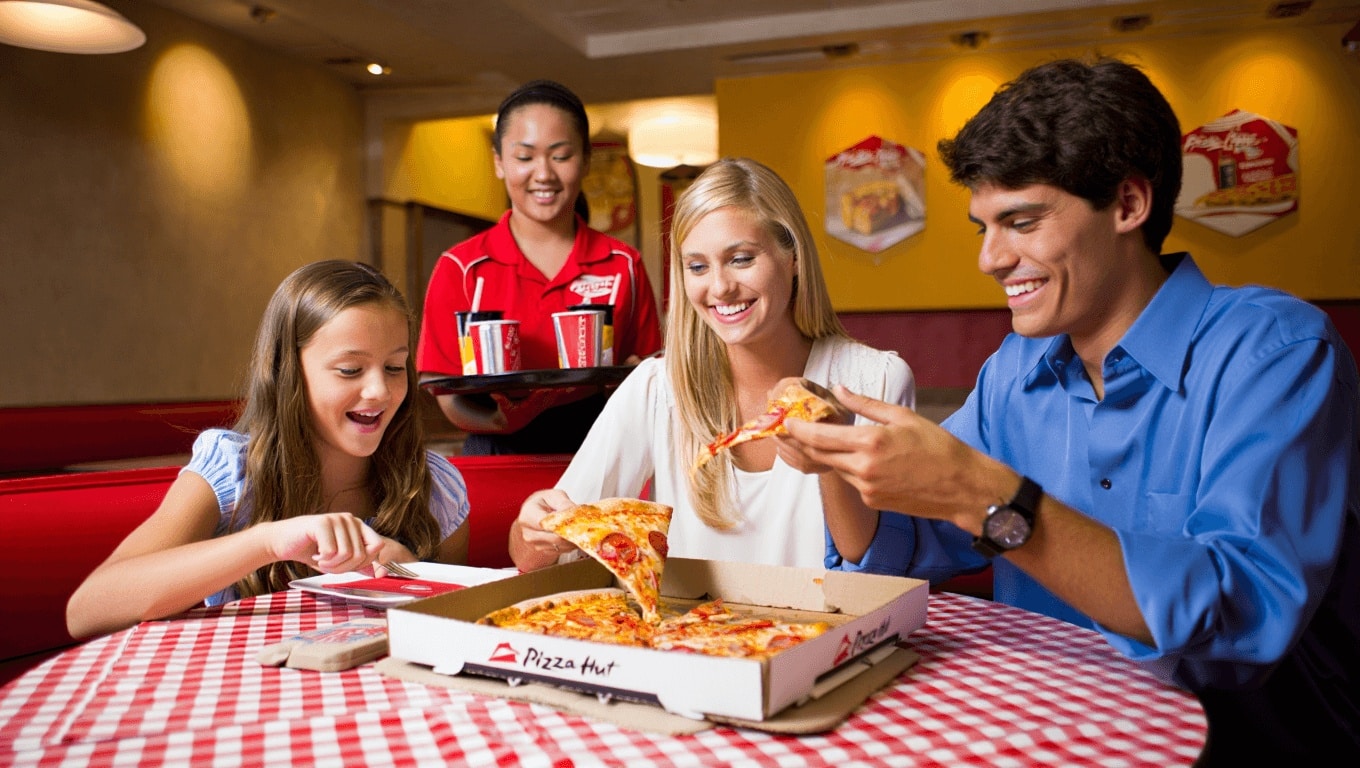
A Pizza Hut franchisee is betting that a return to the chain’s 1990s dining room could be the catalyst for a broader turnaround — and the idea is gaining attention at a moment when restaurants are rethinking how to compete with the delivery economy. If it works, the experiment could reshape how legacy brands balance in-person experience with online sales.
Tim Sparks, president of Deland Corporation, oversees nearly a hundred Pizza Hut locations and has begun converting a large share into what he calls Pizza Hut Classics. The remodeled restaurants recreate familiar elements from the brand’s heyday — booth seating, checkered tablecloths and even a throwback salad bar — aiming to recapture the family-dining atmosphere many customers remember. According to Inc., Sparks owns 93 Pizza Hut franchises and has already converted 38 into Classic-format restaurants.
What the “Classic” makeover includes
The reimagined outlets emphasize nostalgia and in-store comfort rather than speed and off-premise convenience. Typical features include:
- Vinyl booths and checkerboard decor that echo the chain’s 1990s look
- Stained-glass style lighting and warm, retro finishes
- Traditional salad bars and dine-in-focused layouts
- Decorative nods to Pizza Hut programs such as Book It!
Those elements are more than design choices: they signal a deliberate shift back toward a sit-down model that most national quick-service brands have largely abandoned in favor of streamlined takeaway and app-first delivery operations.
Why this matters now
Consumer habits around food have been reshaped in recent years by delivery platforms and mobile ordering. But there’s a countervailing trend: many families seek an occasional sit-down meal that feels communal and nostalgic. Restaurateurs and franchisors watching Sparks’ experiment see it as a test of whether a curated, retro experience can translate into steady foot traffic and repeat visits.
For franchisees, the potential upside is straightforward: differentiated in-store appeal could encourage longer stays, higher check averages and stronger loyalty among adults who grew up with the brand. But there are tradeoffs. Dine-in concepts typically require more staff, higher overhead and a floor plan that prioritizes seating over carryout capacity.
Potential industry ripple effects
If Sparks’ conversions perform well over the next year, other franchise owners and brand teams may reconsider similar investments. The outcome could influence several strategic decisions across the sector:
- Franchise design choices — whether to allocate space for dining versus pickup lanes
- Menu engineering — bringing back or reinventing items suited to in-person dining
- Marketing focus — leaning into nostalgia as a growth lever rather than purely digital acquisition
- Labor planning — balancing service expectations with cost pressures
Yet success is not guaranteed. A retro overhaul must attract enough new and returning customers to justify capital expenses and ongoing operating costs. External pressures — from rising ingredient prices to intense competition from delivery-centric brands — remain in play.
At its core, the Pizza Hut Classics strategy tests a simple question: can a familiar, comfort-driven experience still draw people out to eat together in a market that rewards convenience? For many who remember the brand’s communal dining rooms, the answer feels obvious. For the broader industry, Sparks’ move provides a timely case study in how legacy chains might adapt to today’s evolving dining landscape without surrendering what originally made them distinctive.
Similar Posts
- Top 5 Best and Worst States for Food in America: See Who Made the List!
- Fast food now fuels U.S. meals: convenience, cost and time squeeze consumers
- Healthy fast-food options to choose today: 10 top picks with a hidden downside
- Celebrating the Intricate Artistry of Ecstasy Pills: A Visual Journey
- Top 5 Unsafe Foods to Skip at Restaurants: Safety Experts Advise

Miles Harper focuses on optimizing your daily life. He shares practical strategies to improve your time management, well-being, and consumption habits, turning your routine into lasting success.