
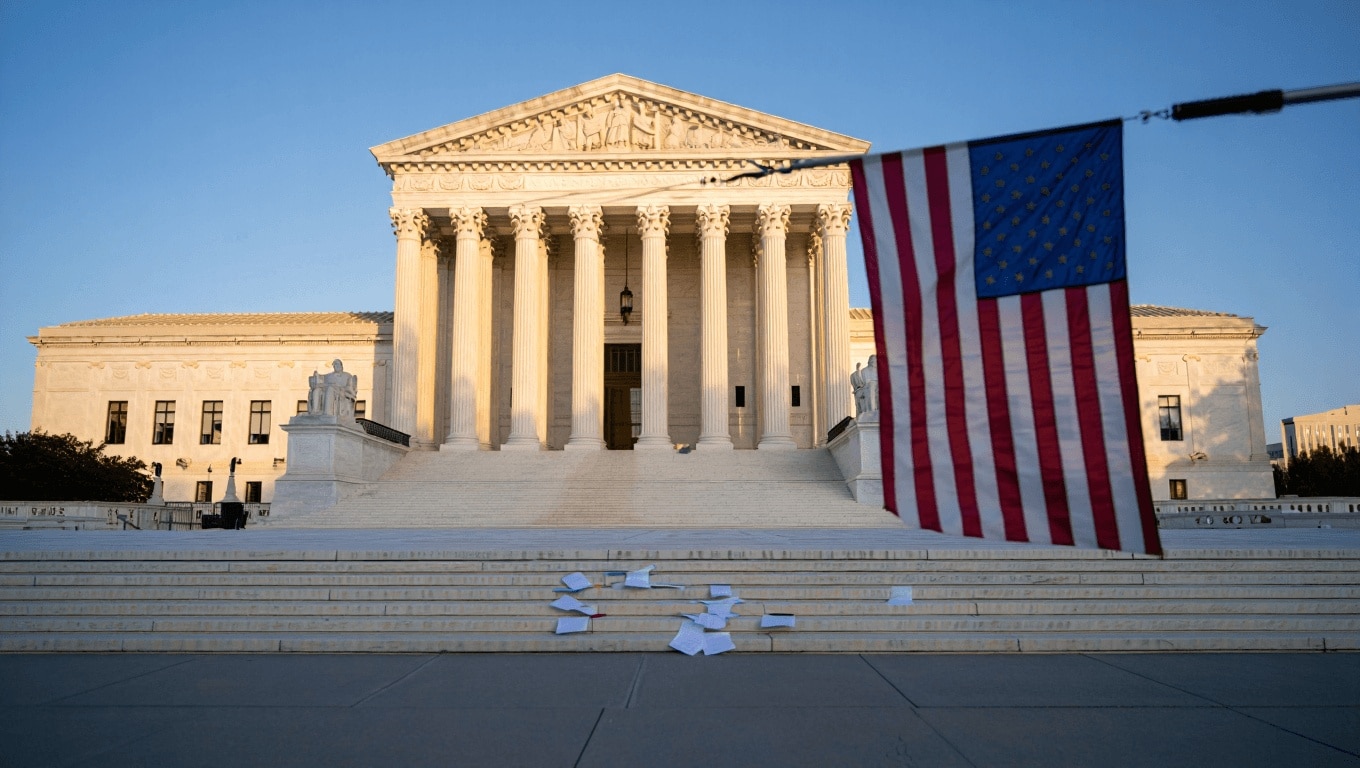
The U.S. Supreme Court issued two decisions Monday that reshape how Washington controls regulators — one that preserves the Federal Reserve’s independence for now, and another that increases presidential authority over independent agencies. The rulings could mean steadier monetary policy in the near term but a more unpredictable regulatory landscape for consumers and businesses going forward.
What the Fed decision does — and doesn’t
In a narrowly divided 5-4 decision, the court blocked President Trump’s attempt to remove Federal Reserve Governor Lisa Cook from her post, finding he did not meet the legal standard required to dismiss a governor “for cause.” That outcome keeps in place a long-standing protection that limits the president’s ability to replace Fed officials on a whim.
Legal observers said the ruling preserves both the reality and the perception of central bank independence — a quality many economists argue is essential to keeping inflation expectations anchored and monetary policy credible.
Still, the ruling left room for further action. The justices said Cook must be given an explanation of any charges against her and a chance to respond, meaning the dispute over her possible removal could continue in lower courts.
Financial policy analysts see immediate benefits: with the Fed less susceptible to short-term political pressure, decisions about interest rates are more likely to reflect economic data rather than election-driven objectives.
Why that matters to everyday Americans
Monetary policy affects mortgage rates, credit card APRs and the cost of borrowing for businesses and households. If the central bank loses its insulation from politics, experts warn, presidents tempted to push for lower rates before elections could fuel inflation over time — worsening affordability rather than improving it.
As one economist put it, the long-term risks of politicizing the Fed include faster price growth and a less stable economy, outcomes that typically hit consumers already facing high housing and living costs.
The ruling that expands presidential removal power
Separately, the court issued a 6-3 opinion permitting presidents to remove members of certain independent federal commissions. That decision followed the White House’s March 2025 dismissal of two Democratic appointees at the Federal Trade Commission, which the court found was consistent with the Constitution’s allocation of executive power.
By allowing presidents greater latitude to fire commissioners who serve fixed terms, the decision reduces a legal barrier that had insulated agencies such as the FTC from rapid leadership changes tied to political priorities.
Advocates for stronger executive control hailed the ruling as a restoration of presidential authority. Consumer advocates and some regulators warned the opposite: the decision could make agency policy swing widely with each new administration.
Practical implications — who and what could change
- Short-term stability at the Fed: Monetary policy may remain data-driven for now, protecting consumers from abrupt, politically motivated rate shifts.
- Regulatory volatility: Agencies that traditionally rely on bipartisan commissions — the FTC, SEC, FDIC and CFTC among them — could see faster and more frequent leadership and policy changes.
- Consumers and small businesses: Protections tied to consumer safety, labor rights and financial oversight could fluctuate depending on the administration in power.
- Markets and investors: Shifts in enforcement priorities may alter compliance costs and introduce uncertainty for companies operating across regulated sectors.
Reactions and the road ahead
Financial analysts described the Fed ruling as a win for economic stability. At the same time, several legal and consumer groups cautioned that the FTC decision undercuts safeguards that have enforced product safety, workplace protections and investor rules.
The White House reacted quickly on social media, calling the agency-removal ruling a major victory for presidential power and signaling an intent to act. Critics say that increased removal authority will encourage policy swings from one administration to the next, complicating long-term planning for businesses and consumers alike.
The two decisions will now shape how Washington governs monetary policy and federal regulation. While one opinion shores up the Fed’s protection against political interference, the other hands future presidents a sharper tool to remake independent agencies — a combination that legal experts say will produce both stability in interest-rate decisions and greater unpredictability in rulemaking and enforcement.
Similar Posts
- Student loan forgiveness limits blocked by judge: relief back on for millions
- IRS refunds: how millions can claim pandemic penalty relief
- Graduate loan limits raised by Trump administration: more degrees qualify for larger loans
- Trump urges Fed to cut rates: experts warn a hike could help consumers
- Trump to Freeze Social Security, SNAP, Medicare? Breaking Details Inside!

Jordan Keller specializes in analyzing the US financial markets. With concrete recommendations, he helps you secure and boost your investments by providing strategies that adapt to market fluctuations.