
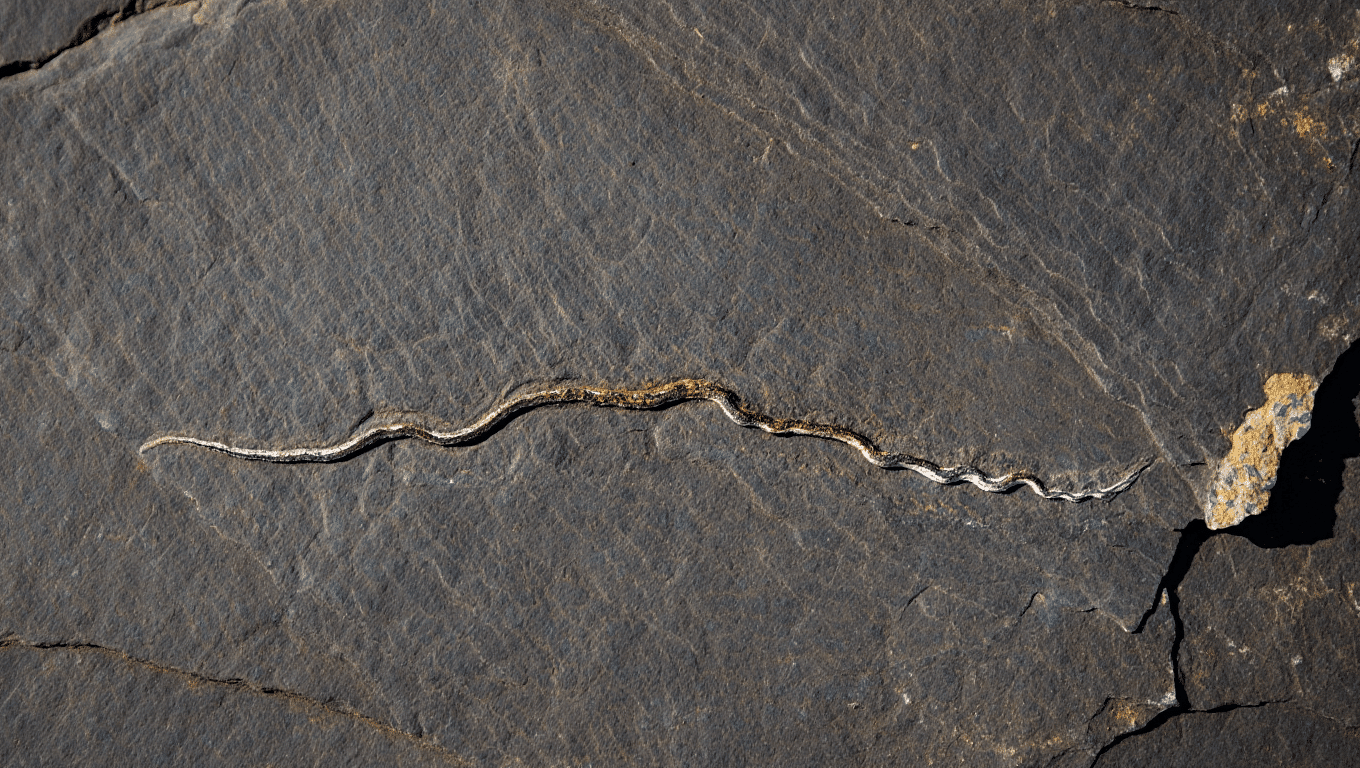
A pair of specks in Brazilian rock that once upended timelines for complex life have been reinterpreted by a new study, sharpening a debate about how scientists read the planet’s oldest traces. What looked in 2017 like wormlike creatures living more than 500 million years ago may instead be colonies of microbes, researchers report — a shift that narrows the window for when true animals first appeared and highlights how modern imaging can rewrite fossil stories.
The original specimens were excavated near Corumbá, in western Brazil, and quickly drew attention because their shapes and apparent trails suggested burrowing behavior. If those features truly belonged to animal bodies, they would push multicellular animal activity back before the widely recognized Cambrian explosion, the burst of diversity near 539 million years ago that marks the sudden appearance of many modern animal groups in the fossil record.
New analysis, new interpretation
In a paper published in the journal Gondwana Research, an independent team used high-resolution techniques — including nanoscale imaging and synchrotron-based scans (the latter conducted with a particle accelerator-style light source) — to reexamine the fossil fragments. Those methods revealed microscopic textures and preserved organic fabrics the researchers say are more consistent with layered microbial mats or colonies of algae and bacteria than with the anatomy or trace-making activity of worms.
The study’s authors point to features interpreted as preserved cell walls and filamentous organic structures. In their view, the markings that earlier investigators read as burrows can be explained by the growth patterns and decay of microbial communities, which can produce surprisingly complex impressions in sediment.
Luke A. Parry, lead author of the 2017 report, told Gizmodo in an email that he welcomes the advanced imaging but does not consider the new work definitive. Parry argues that the latest data do not fully rule out an animal interpretation, underscoring the difficulty of assigning behavior or anatomy to faint, half-billion-year-old markings.
Why the debate matters now
At stake is more than taxonomy. Reclassifying these structures as microbial reinforces a picture in which recognizable animal traces appear later in Earth’s history, preserving the Cambrian event as a sharper evolutionary boundary. It also serves as a reminder that as laboratory tools improve, earlier conclusions based on more limited evidence can — and often do — change.
For working paleontologists, the case is instructive about method as much as about history: different imaging resolutions can produce different readings of the same specimen, and organic residues sometimes mimic the shapes produced by living animals.
- What was found: Tiny, wormlike impressions in sedimentary rock from Corumbá, Brazil.
- Original claim (2017): Structures represented animal activity predating the Cambrian explosion.
- New claim: Features more likely result from colonies of algae and bacteria or microbial mats.
- Techniques used: Nanoscale scans and synchrotron imaging revealed preserved organic structures and cell-like textures.
- Implications: Potentially narrows the timeline for early animal behavior and underscores the limits of interpreting ambiguous fossils.
The disagreement is a valuable reminder for the public and the press: fossil discoveries often carry tentative weight, and initial headlines can overstep. Even when a reinterpretation reduces the biological novelty of a find, it still offers a detailed window into Earth’s deep past — in this case, into ecosystems dominated by microbes long before animals became widespread.
Ultimately, the exchange illustrates how paleontology advances through iterative scrutiny. New tools supply fresh data, rival readings sharpen questions, and our picture of early life is refined rather than replaced outright. Whether these tiny impressions turn out to be ancient worms or elaborate microbial relics, they remain important clues about environments that existed half a billion years ago.
Similar Posts
- Oldest octopus record overturned: specimen isn’t an octopus
- Giant Pre-Tree Organism Unveiled: Discover the Secrets of Prototaxites!
- Taxidermied rats sewn into underwear sold by Australian boutique spark backlash
- Shark fossils in Arkansas turn the state into a skeleton hotspot
- Dinosaur Mating Battles Unlock Gender Secrets: Discover How!

Miles Harper focuses on optimizing your daily life. He shares practical strategies to improve your time management, well-being, and consumption habits, turning your routine into lasting success.