
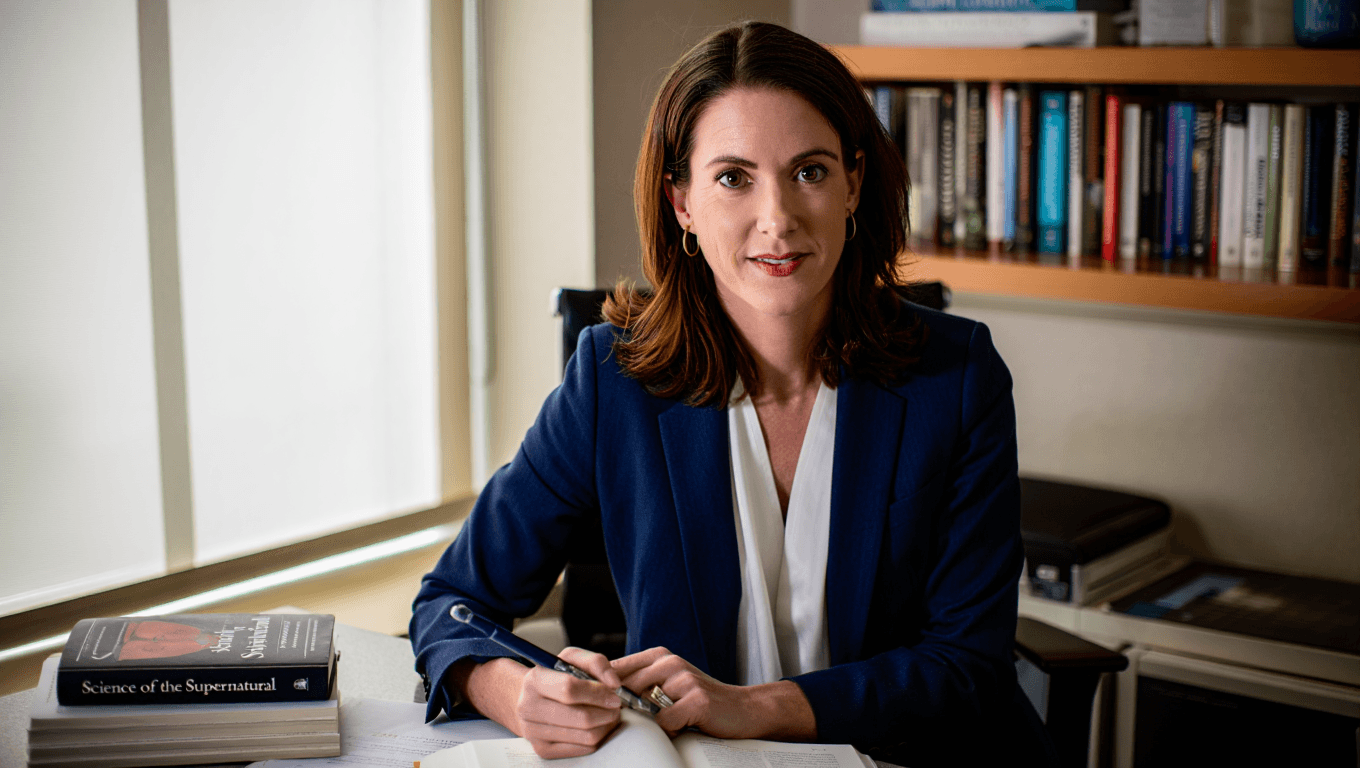
About one in five Americans reports encountering a ghost — but recent analysis by researchers and psychologists suggests many of those episodes have ordinary explanations. Wake Forest psychologist Melissa Maffeo, author of Science of the Supernatural, argues that a mix of brain wiring, personality traits and environmental factors can create powerful, convincing sensations of a presence, and understanding them matters now as paranormal claims spread rapidly online.
Odd readings, familiar physics
Paranormal investigators often point to spikes on EMF meters as evidence of spirits, and scientists have found unusual electromagnetic variability in locations tied to ghost stories — including Edinburgh’s South Street vaults and sections of Hampton Court Palace. Those findings do not prove spirits exist, but they do suggest that certain environments can produce physical signals people interpret as meaningful.
Laboratory tests that deliberately alter electromagnetic conditions have not reliably produced ghost sightings in people who are skeptical. When unusual sensations do occur under experimental conditions, they tend to appear in participants who already expect the supernatural. That pattern raises a practical question for anyone who feels unnerved in a place that registers odd EMF levels: is there a wiring, structural, or equipment issue worth checking?
How the brain builds presence
The brain maintains a continuous sense of being inside the body; a network centered on the temporoparietal junction plays a big role in that feeling. When activity in that area is disrupted — by mild electrical stimulation in clinical studies or by other neurological events — people report a range of experiences, from briefly feeling outside themselves to sensing a shadowy figure nearby.
Sleep physiology offers a more familiar route to similar encounters. During sleep paralysis, the mind wakes before the body fully resumes movement, leaving dream imagery and waking perception to clash. That mismatch, often accompanied by intense fear, can produce vivid, alarming hallucinations that feel entirely real.
Expectation and personality shape what we perceive
Personality traits related to unusual beliefs and perceptual openness, often grouped under the term schizotypy, make people more likely both to believe in the paranormal and to report spontaneous sensory experiences. These traits are not the same as clinical psychosis, but they overlap with some of the same neural systems involved in self-location and perception.
Belief itself acts like a lens. In a well-documented experiment, visitors who were told a derelict Illinois theater was haunted overwhelmingly reported odd sensations; those given no such suggestion did not. In short, what you expect to encounter can change how your senses and brain assemble incoming information.
- Check basic environmental risks first — faulty wiring or high EMF, carbon monoxide, and other physical causes can create symptoms and should be ruled out.
- Review your sleep and stress patterns. Poor sleep, irregular shifts, and anxiety increase the chance of vivid, waking-dreamlike experiences.
- If a place feels eerie after a story has been told, recognize the power of suggestion: cultural context can prime normal sensations to feel sinister.
- Keep a short diary of when episodes occur (time of day, fatigue, substances) to spot patterns worth discussing with a clinician.
- Seek medical or mental-health advice if experiences are frequent, disturbing, or accompanied by changes in memory, mood, or daily function.
These findings don’t strip away the emotional weight of a frightening experience, but they do change the response. Knowing that environmental factors, sleep physiology and expectation can combine to produce convincing sensations gives people concrete steps to investigate and, when appropriate, treatment paths to consider.
For readers, the takeaway is immediate: when the inexplicable happens, look first to the brain and the building — and then to the stories that might have primed you to feel something that isn’t there. Understanding those mechanisms helps separate cultural fascination from medical or safety concerns at a time when ghost stories travel faster than ever.
Similar Posts
- Haunted Las Vegas Hotel Offers $5K To Brave a Night With Ghosts: Dare to Try?
- Better sleep linked to specific dream type: study finds
- Why Time Flies As You Age: The Surprising Science Explained!
- Dating preferences: study finds most people stick to one type
- PMS Transformation Explained: Why You Feel Like a Different Person Every Month

Miles Harper focuses on optimizing your daily life. He shares practical strategies to improve your time management, well-being, and consumption habits, turning your routine into lasting success.