
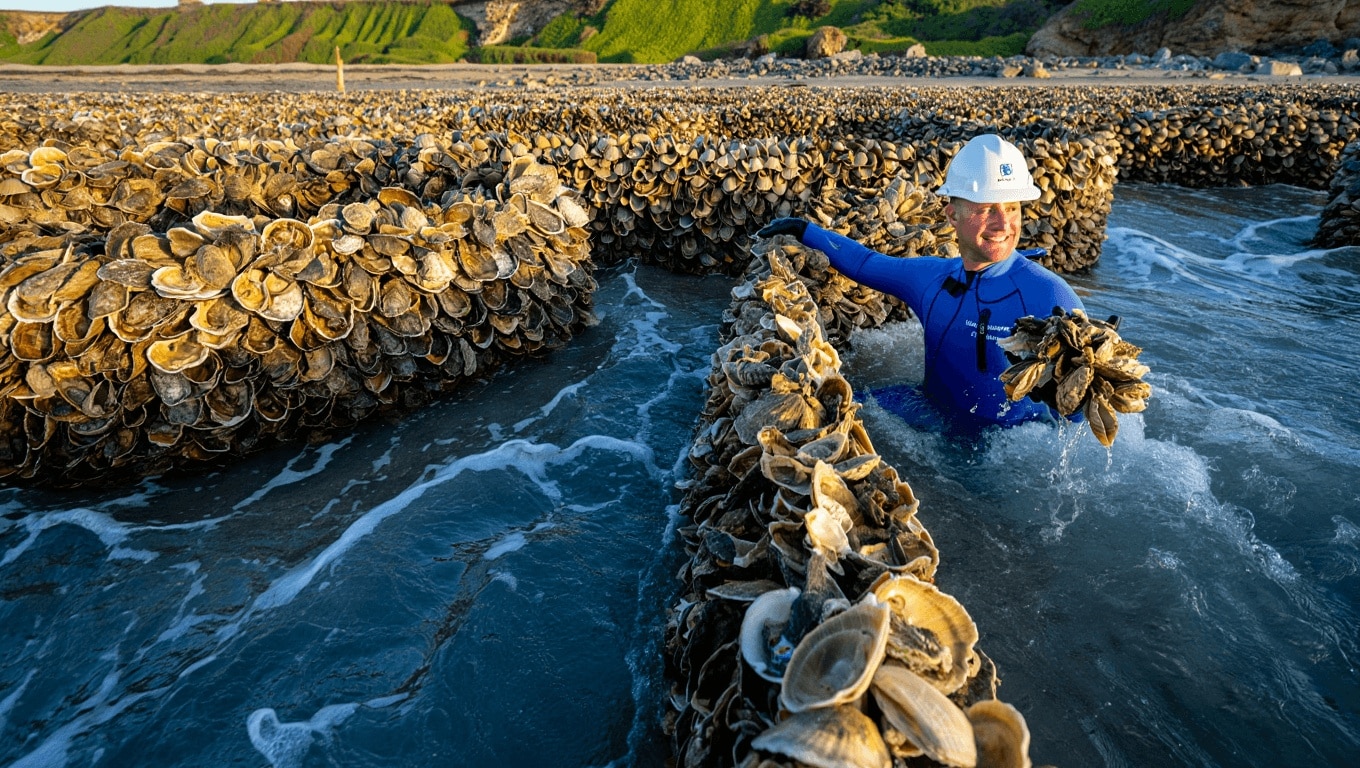
In Southern California, a marine scientist has repurposed restaurant waste into coastal defenses, collecting more than 24,000 pounds of used oyster shells, drying them in the sun, and placing them to rebuild reef structures that help shield the shoreline and improve water quality. The project turns a common urban discard into a low-cost nature-based tool for shoreline resilience.
The shells — roughly 12 tons — were sourced from local eateries and cured on shore to remove lingering organic material before being installed as reef substrate. Once positioned offshore, the cleaned shells provide a foundation for new oyster growth and create complex surfaces where marine life can settle.
How the process works
The sequence is straightforward but time-sensitive: collection, sun-curing, and deployment. Curing reduces disease and prevents contamination, while using shells as substrate encourages oysters to reattach and form living reef beds.
Living reefs perform several ecological functions simultaneously. They attenuate wave energy, trap sediment, and act as natural filters — one adult oyster can filter dozens of gallons of water per day under the right conditions — which helps reduce turbidity and improve coastal water quality.
Local benefits and broader implications
This work addresses two problems at once: restaurant waste that would otherwise enter landfills, and diminishing nearshore habitat. By recycling shells back into the seascape, the initiative supports habitat restoration while lowering disposal costs for businesses.
- Waste diversion: Keeps thousands of pounds of shells out of the trash stream.
- Shoreline protection: Reefs reduce wave impact and help stabilize sediments.
- Water filtration: Oysters and associated organisms improve local water clarity.
- Habitat creation: Reefs provide shelter and breeding grounds for fish and invertebrates.
- Community engagement: Collaboration with restaurants and volunteers builds local stewardship.
Projects like this are gaining attention because they are low-tech, scalable, and locally driven. For communities facing coastal erosion and declining water quality, shell recycling offers a complementary option to engineered seawalls and expensive infrastructure.
Still, experts emphasize that such efforts are not a cure-all. Restored reefs work best when paired with broader conservation measures — water-quality improvements, limits on destructive dredging, and monitoring to ensure oysters establish successfully.
For now, the Southern California initiative demonstrates a practical model: redirect a waste stream into ecological restoration and, in the process, create measurable benefits for shoreline communities and marine life. As coastal cities plan for rising seas and more frequent storms, nature-based strategies like this are increasingly relevant to local resilience planning.
Similar Posts
- 2026: Will Coral Reefs Face Total Collapse?
- Mysterious ‘Darkwaves’: How They Blanket the Ocean in Darkness for Months!
- Top 5 Unsafe Foods to Skip at Restaurants: Safety Experts Advise
- Giant Deep-Sea Volcano Eruption Delayed Until 2026: Scientists Reveal
- World’s biggest floating city resumes operations: homes, schools and helipads for 80,000

Calvin Baxter is an economic analyst specializing in the evolving US labor market. He leverages real data to provide you with concrete recommendations and help you adjust your professional strategies.