
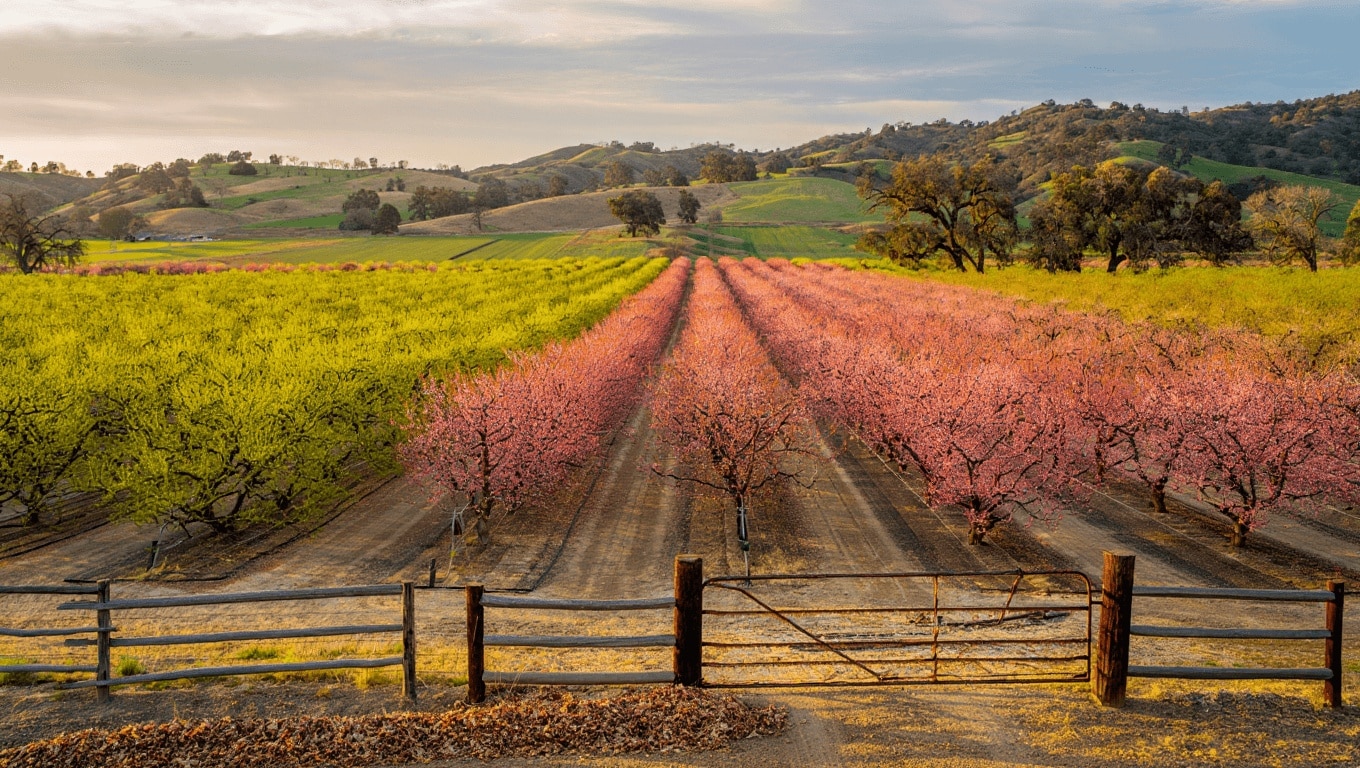
After Del Monte entered Chapter 11, a Central California peach grower is facing an abrupt and costly choice: pull out 20 acres of nine-year-old trees that were planted for processing, or watch a season’s crop go to waste. A closed canning facility in Modesto and sharply reduced processing capacity have left much of the harvest without a buyer — and growers with mounting financial risk.
Processing bottleneck leaves fruit without an outlet
Growers planted orchards of Ross cling peaches specifically for canning contracts. Those arrangements — valued at roughly $12,500 per acre in this case — depend on processors being able to take and preserve the crop on a predictable schedule.
But when Del Monte’s operations were disrupted by its Chapter 11 proceedings, the company’s Modesto canning hub shut down. Of about 74,000 tons of peaches expected for processing this season, only roughly 24,000 tons found available capacity elsewhere. The remainder faces an uncertain fate: spoilage in the fields, costly destruction, or rushed sales at deep discounts.
What growers are confronting now
For the owner of the 20-acre block, the math is stark. The trees are nearly a decade old and were intended to produce fruit for processors for many more years. But without reliable buyers, those trees represent recurring costs — labor, water, pruning and pest control — with little revenue to offset them.
Removing established orchards is not just a current-season loss; it erases future income streams and requires additional capital to replant if market conditions recover. Many growers do not have the cash reserves to wait out a prolonged processing shortage.
- Trees at risk: 20 acres of nine-year-old Ross cling peach trees
- Contract value: Approximately $12,500 per acre tied to processing agreements
- Processing capacity: 24,000 of 74,000 tons accommodated this season
- Main disruption: Closure of Del Monte’s Modesto canning operation
Local ripple effects
Beyond the orchards, the disruption touches packing and transport workers, local suppliers and the broader farm economy. Processors and distributors that had coordinated schedules, labor and logistics around Del Monte’s intake volume now face gaps that are expensive to fill at short notice.
Smaller processors may not have the scale to absorb large volumes, and shifting fruit to fresh-market channels often requires different handling, higher standards and new buyer relationships. Those hurdles make quick pivots difficult, particularly for mid-season fruit that must be processed or sold immediately.
What to watch next
Growers will be looking for several developments that could change the outlook: court decisions in Del Monte’s bankruptcy case, offers from alternative processors, or emergency buyer agreements that preserve some of the season’s value. Absent swift solutions, more orchards could be taken out of production, tightening supply for the canned-fruit market and harming family farms and local economies.
This episode highlights a larger vulnerability: when a single processor controls a substantial portion of a regional supply chain, its financial instability can quickly cascade into real, immediate losses for growers who planned around those contracts.
Similar Posts
- Rare earths: Sweden’s 2.2 million-ton Per Geijer find threatens China’s processing monopoly
- Vietnam frozen whitefish exports to U.S. rise 4% Jan-Apr 2026, easing supply crunch
- China finds 540 million-ton lithium deposit: global battery markets scramble
- Tomato prices surge: tariffs and conflict raise costs for BLTs and salads
- Chicago candy factory files bankruptcy: century-old maker at risk after massive losses

Calvin Baxter is an economic analyst specializing in the evolving US labor market. He leverages real data to provide you with concrete recommendations and help you adjust your professional strategies.