
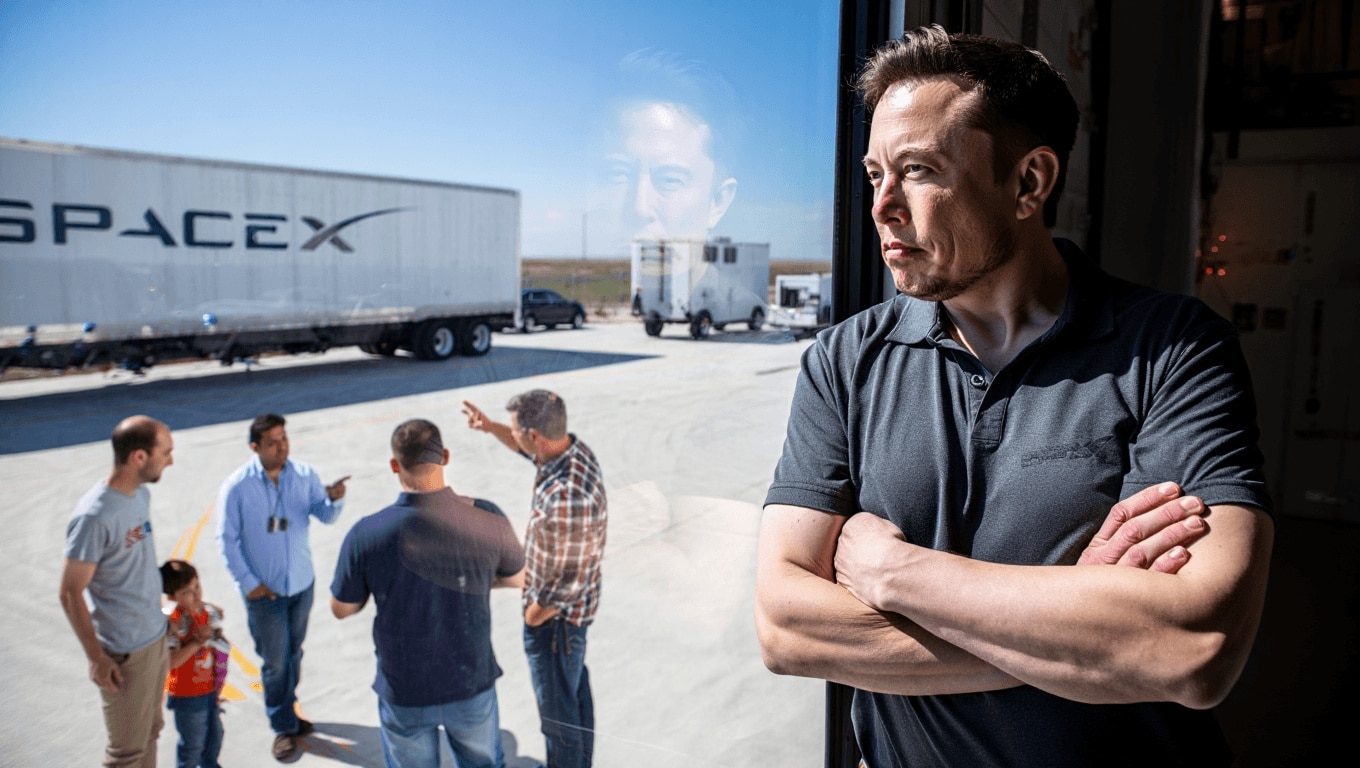
Elon Musk has acknowledged a growing personnel challenge at SpaceX: persuading married engineers and their families to relocate to Starbase, the company’s Texas rocket facility near the U.S.–Mexico border. That reluctance matters now because SpaceX is preparing for an intensified launch cadence and needs a steady influx of skilled staff to keep its Starship program on schedule.
Starbase sits on the Gulf Coast in southern Texas, about a 40-minute drive west of Brownsville. The site’s relative isolation and limited local infrastructure have become a practical barrier for recruits with partners, children, or other family obligations.
Why families hesitate
Engineers considering a move to Starbase often weigh several concrete concerns beyond the job itself. For many, the decision hinges on whether a partner can find comparable work, whether schools meet their expectations, and whether daily life offers the amenities they and their families want.
- Local services and amenities: Restaurants, cultural venues, healthcare options and other urban conveniences are scarcer than in larger metro areas.
- Employment for partners: Married hires frequently decline offers when their spouses face limited local job prospects.
- Housing and commutes: Rapid workforce growth has strained housing availability, and long commutes to nearby towns are common.
- Education and childcare: Access to quality schools and childcare is a recurring concern for employees with young children.
- Perceptions of isolation: Proximity to the border and the rural setting can feel unfamiliar or limiting to candidates used to coastal cities.
These issues don’t just affect recruitment; they shape retention. When a new hire’s family isn’t comfortably settled, turnover risk rises — and replacing a skilled engineer midstream can delay complex projects.
Options on the table
SpaceX has several levers it can use if it wants to reduce relocation friction. Some are already familiar in the tech and aerospace sectors; others would require larger investments.
- Relocation packages and spousal employment assistance to ease the transition.
- Temporary housing and family relocation stipends to bridge short-term gaps in local housing stock.
- Investment in local infrastructure — schools, clinics, retail — that improves quality of life over time.
- Hybrid staffing models that allow some work from other SpaceX sites or remote work where feasible.
Each option carries trade-offs: generous incentives raise costs, while slower, infrastructure-focused approaches delay benefits. The choice affects not just hiring but where SpaceX prioritizes long-term development and community partnerships.
Why this matters now
SpaceX’s near-term production and launch plans depend on a reliable pipeline of engineering talent. Bottlenecks in recruitment could constrain how quickly Starship iterations proceed and how rapidly launch tempo increases. For a company that aims to scale operations quickly, location-driven talent shortfalls are a strategic issue, not merely a human-resources headache.
Industry-wide, the situation illustrates a broader tension: advanced manufacturing and testing facilities often need to be sited where geography or regulation allow — but those places don’t always align with where skilled workers want to live. Companies that bridge that gap successfully combine incentives, community investment, and flexible work options.
The practical stakes are straightforward: without enough settled, committed staff, complex aerospace programs risk schedule slips, higher costs, and increased pressure on existing teams. How SpaceX responds will shape both the pace of Starship development and the economic footprint of Starbase in the coming years.
In short, convincing married engineers to move to Starbase is not just about pay or prestige; it’s about building the local conditions that let families put down roots. That’s why a personnel issue flagged in passing can quickly become a strategic constraint for a company racing to expand its launch capabilities.
Similar Posts
- Elon Musk faces major hiring snag at Starbase near Mexican border: married engineers won’t relocate
- Starbase relocation hits snag: married engineers reluctant to move, Musk says
- SpaceX faces Texas lawsuit over alleged launch debris damaging homes
- T. rex weighing 145,000 pounds needs new home: giant fossil up for relocation
- SpaceX now in retirement funds: savers could own shares without knowing

Calvin Baxter is an economic analyst specializing in the evolving US labor market. He leverages real data to provide you with concrete recommendations and help you adjust your professional strategies.