
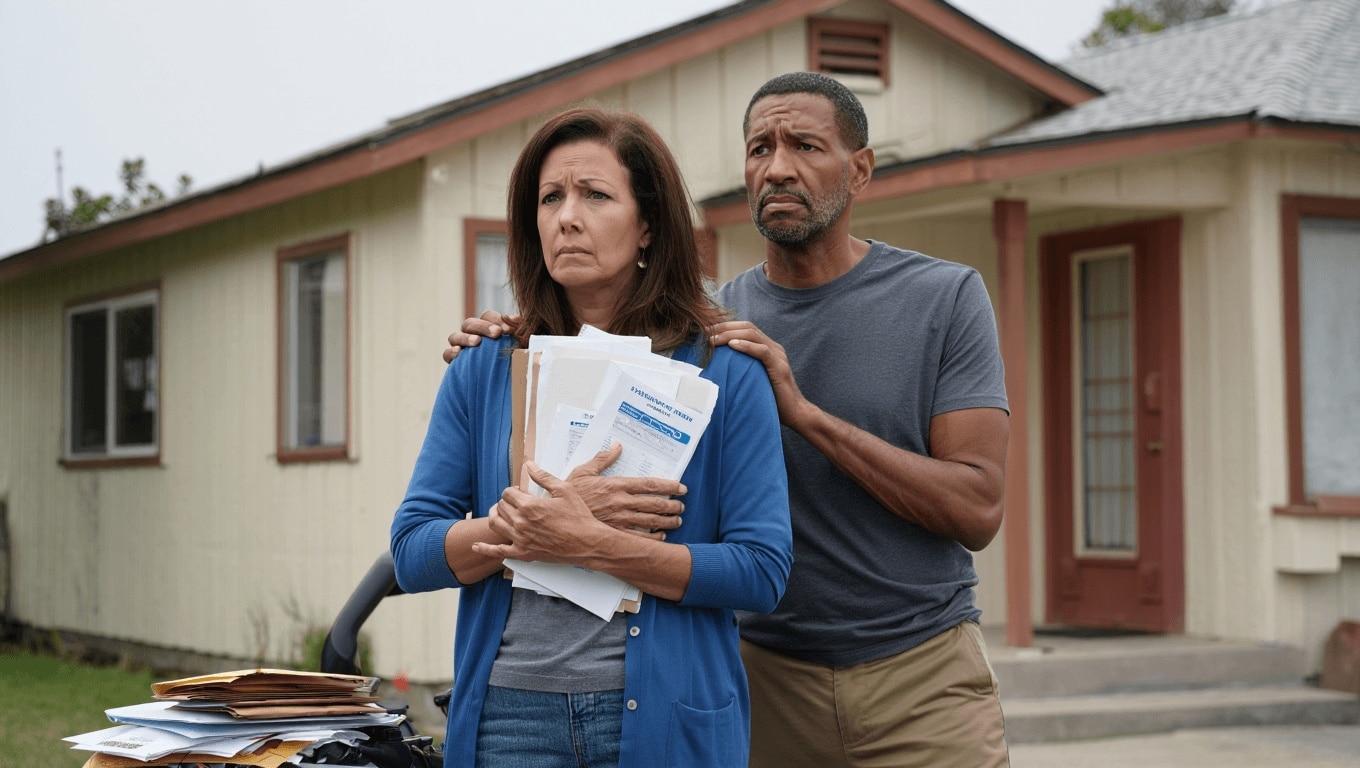
A fresh review by state insurance regulators finds that homeowners insurance is becoming both more expensive and less reliable for many Americans, with steep price increases and rising rates of insurer-initiated policy non-renewals. Those shifts, the report suggests, are already eroding housing affordability and could affect buying and rebuilding decisions across the country.
The National Association of Insurance Commissioners (NAIC) released a national analysis this week that tracks changes in the homeowners market from 2018 through 2024. Across every region, average annual premiums climbed faster than inflation — and insurers are increasingly choosing not to renew some policies when terms expire.
| Region | Inflation-adjusted premium increase (2018–2024) | Average annual premium (2024) |
|---|---|---|
| Northeast | +18% | $1,396 |
| Midwest | +25% | — |
| Southeast | +27% | $1,818 |
| West | +43% | — |
Insurers are tightening terms and walking away more often
NAIC data show a notable rise in company-initiated policy non-renewals. Since 2018, non-renewal rates per 1,000 active policies rose across the board — increasing roughly 96% in the Southeast and about 216% in the West. The report notes there were roughly 103 million homeowners insurance policies in force nationally in 2024.
Report co-authors Jeffrey Czajkowski and Paula Harms describe the market as operationally sound but under pressure, a condition that helps explain why consumers say coverage is getting both costlier and harder to maintain.
Why costs are accelerating
Several forces are combining to push up what households pay for protection.
Climate-driven losses: An uptick in severe storms, wildfires, floods and other weather events has raised the frequency and size of claims, tightening insurers’ loss forecasts.
Rising rebuild and repair expenses: Inflation in construction and replacement costs amplifies claim payouts. A U.S. Treasury analysis found replacement costs for property and casualty losses jumped about 45% on average between 2020 and 2023.
Policy and market responses: Insurers have trimmed coverage in some areas and narrowed limits on certain risks. Alongside that, changes in federal climate policy and regulatory approaches have reshaped the risk landscape insurers must price and manage.
- Producer price index: Shows about a 7% further increase in premiums since early 2025, providing a proxy for premium direction.
- Treasury Department: Found average premiums rose 8.7% faster than inflation from 2018–2022.
- Public sentiment: A recent Pew poll reported 42% of homeowners say their insurance costs have risen “a lot.”
What this means for households
Higher insurance outlays are already stretching household budgets. The National Association of Realtors estimates that if insurance costs had stayed at late-1990s levels, overall home affordability would be about 10% better today.
That burden tends to fall heaviest on lower-income families, who are more likely to reduce or drop coverage when premiums surge — a move that leaves a household exposed to major financial loss if disaster strikes. Insurance law expert Peter Kochenburger, a visiting professor at Southern University Law Center, warns this creates significant vulnerability for people whose home is their main asset.
Practical effects could ripple through the housing market: some buyers may delay purchases, lenders may tighten requirements, and communities facing repeated disasters could see shifting property values.
Where the numbers may understate the problem
The NAIC report aggregates data by broad regions, which can hide sharper local spikes. In some neighborhoods or states, premium growth and non-renewal activity may be well above the regional averages. The analysis also notes policyholders might be reducing coverage levels to control costs — a change that could register as flat or lower premiums in the data even as household risk rises.
Insurers’ decisions to narrow policy language or exclude certain perils can further change what a standard homeowners policy actually covers, leaving consumers with less protection for more money.
For now, the market picture is mixed: the system remains functional, but rising prices and shrinking availability are putting real stress on homeowners and the broader housing market. Regulators and industry analysts say watching regional and local trends closely will be important as climate and cost dynamics continue to evolve.
Similar Posts
- California’s Top Home Insurance Claim Deniers Revealed: Find Out Who’s Rejecting Most
- Car Insurance Rates Skyrocket in These States: Drivers Beware!
- ACA enrollment at risk: 5 million could lose coverage this year, analysis says
- Mortgage payments surge: fixed-rate borrowers hit with higher monthly bills
- Trump approves $500 Obamacare refunds for about 1 million people: who qualifies

Jordan Keller specializes in analyzing the US financial markets. With concrete recommendations, he helps you secure and boost your investments by providing strategies that adapt to market fluctuations.