
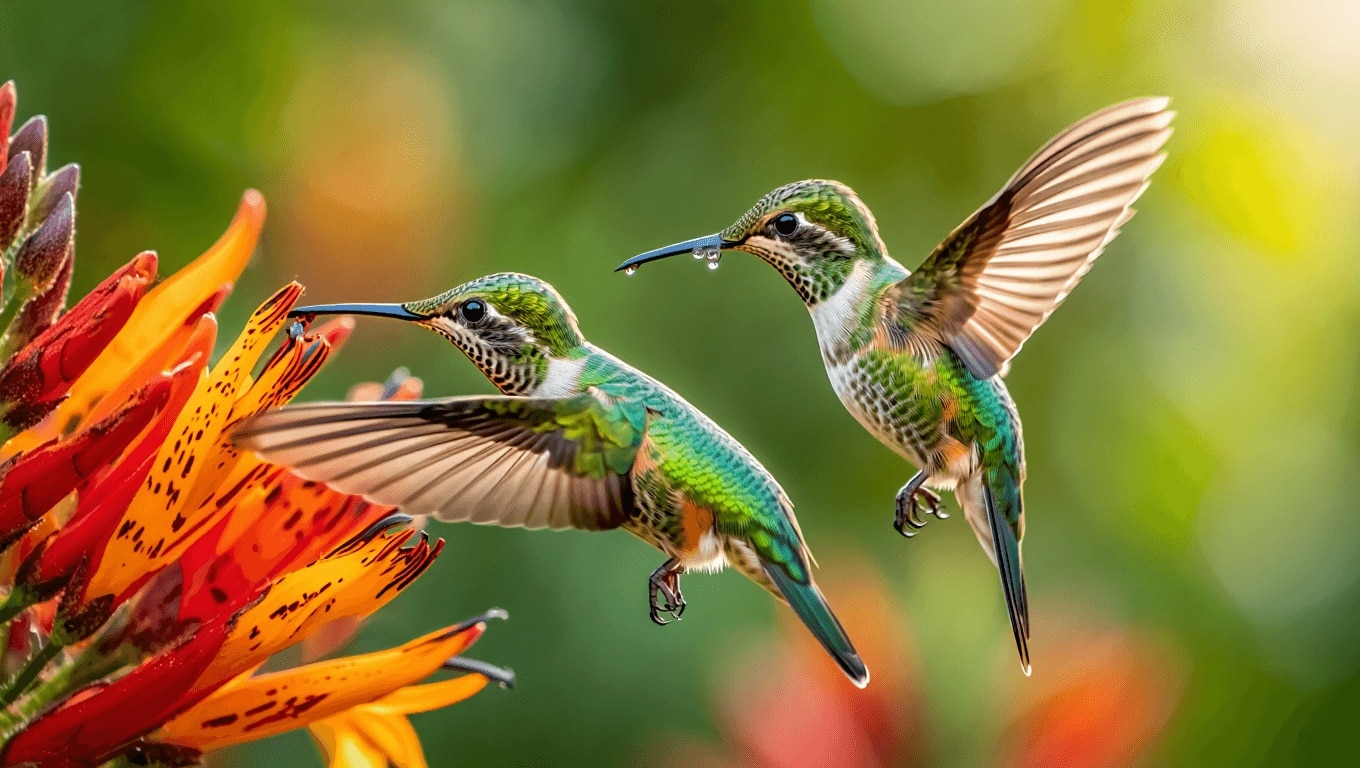
A new study in Royal Society Open Science finds that hummingbirds routinely consume tiny amounts of alcohol in their diets, drawn from naturally fermented nectar. That discovery matters because it shows pollinators encounter and metabolize ethanol in the wild — raising fresh questions about animal behavior, physiology, and how we study wildlife nutrition.
Evidence in the feathers
Researchers working with Anna’s hummingbirds presented birds with nectar of varying alcohol levels and tracked their choices. The birds preferred solutions with very low concentrations — under 1% ethanol — and avoided sweeter brews as the alcohol content rose.
Beyond behavior, the team confirmed ingestion biochemically. Tests of feathers detected ethyl glucuronide, a metabolite produced when animals break down ethanol, showing the hummingbirds were processing alcohol, not just sampling it.
Why tiny amounts still matter
Hummingbirds feed almost constantly to meet extreme energy demands. Some species can consume an amount of nectar comparable to their body weight every day, so even trace alcohol levels in flowers can accumulate into a measurable daily intake.
Put another way, researchers estimate the proportional alcohol intake of these birds is roughly similar to a human having a single small beer per day — scaled to body mass and metabolism rather than literal drinking behavior.
- Natural source: Fermentation inside nectar-producing flowers creates low levels of ethanol without any human involvement.
- Metabolic evidence: Presence of ethyl glucuronide confirms hummingbirds metabolize consumed ethanol.
- Behavioral response: Birds show a clear preference for very low alcohol concentrations and avoid higher ones.
- Open questions: The short- and long-term effects of chronic low-level alcohol exposure on performance, navigation, or reproduction remain unknown.
Implications for ecology and research
That hummingbirds regularly encounter and process ethanol changes how scientists think about pollinator diets. It suggests that alcohol exposure is an ordinary environmental factor for some species — not an oddity observed only around overripe fruit or human refuse.
There are practical consequences for future work: experiments testing foraging behavior, sensory perception, or metabolic rates should account for the possibility that animals have baseline exposure to fermented compounds. Conservationists and ecologists may also need to consider how habitat changes affect the prevalence of fermented nectar.
At the same time, the study is careful not to overreach. It documents exposure and preference patterns but does not claim that low-level ethanol is beneficial or harmful. Determining whether this steady trickle of alcohol creates trade-offs — foraging efficiency versus cognitive effects, for instance — will require targeted follow-up studies.
For now, the headline is simple: hummingbirds are part of a broader list of wild animals that regularly encounter and metabolize alcohol, and that fact opens up a new line of inquiry into how common environmental compounds shape animal lives.
Similar Posts
- Nanoplastics: study finds common food helps remove them in stool
- Black Bear Crashes California Zoo: Finds Companionship with Resident Bears!
- Chimps Catch On to Latest Craze: Butt Grass Is the New Trend!
- Parrots learn your name: scientists warn they’ll use it to demand attention
- Wolves Turned Into Dogs for Snacks: How Our Furry Friends Evolved

Miles Harper focuses on optimizing your daily life. He shares practical strategies to improve your time management, well-being, and consumption habits, turning your routine into lasting success.