
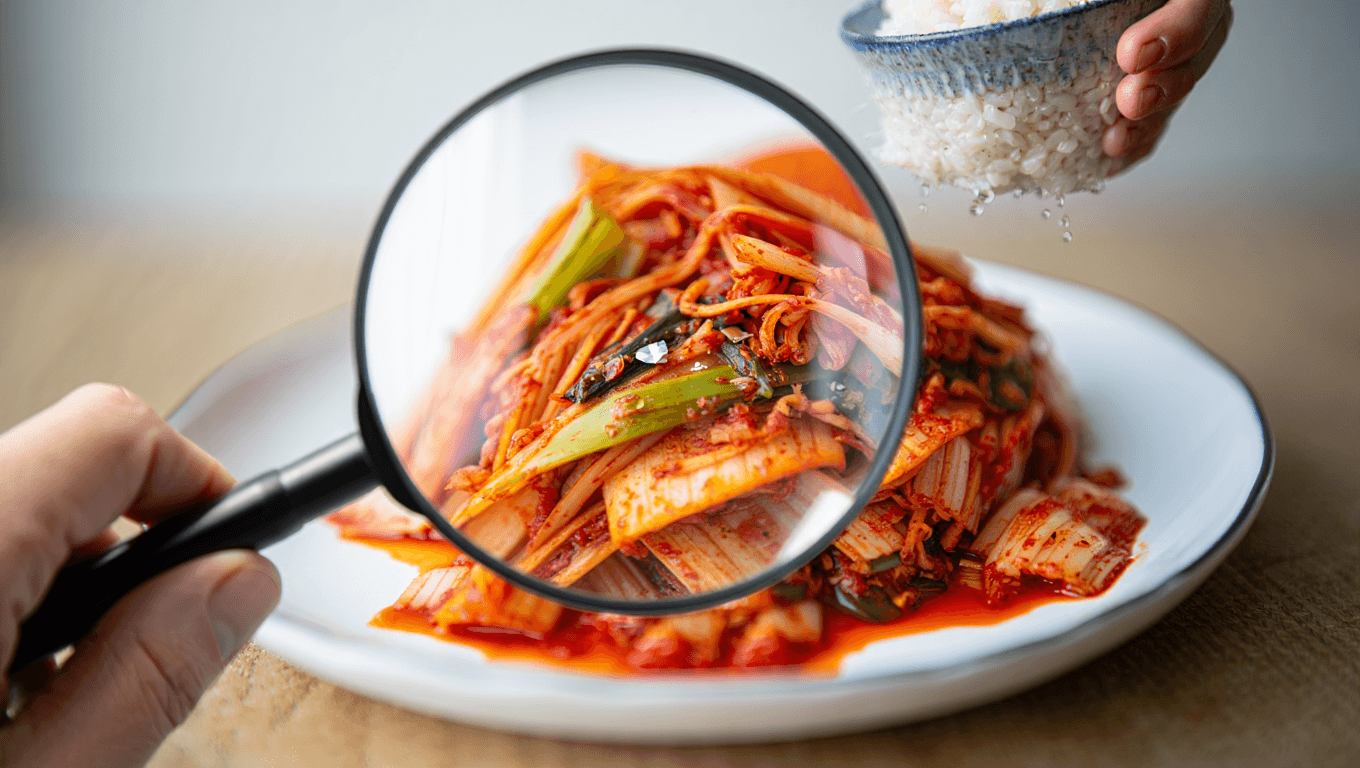
A new study suggests a probiotic strain isolated from kimchi may help the body expel tiny plastic particles — a finding that could matter now as researchers keep finding micro- and nano-sized plastics in food, water and human tissues. If confirmed in people, the result would point to a low-cost, food-based way to reduce the body’s burden of nanoplastics.
Scientists at the World Institute of Kimchi tested a bacterial strain from fermented cabbage and reported it can bind to polystyrene particles in lab and animal experiments, increasing the amount of plastic passed in stool. The work is early but provides a tangible direction for follow-up research on dietary strategies to limit internal plastic exposure.
What the experiments showed
Researchers focused on a probiotic species, Leuconostoc mesenteroides CBA3656, and its interaction with polystyrene nanoplastics.
Key results included:
- In controlled laboratory assays the strain achieved about 87% adsorption efficiency against polystyrene nanoparticles.
- Under conditions designed to mimic the human gut, adsorption dropped but remained substantial at roughly 57%, while a comparison strain retained only about 3%.
- In mice given the probiotic, levels of nanoplastic recovered in feces were more than double those seen in untreated animals, suggesting enhanced excretion.
The authors propose the bacteria may physically bind nanoscale plastic particles in the digestive tract and carry them out of the body instead of allowing them to remain in tissues or the gut lining.
Why this is significant — and what it isn’t
This line of research matters because it connects two growing concerns: the ubiquity of tiny plastic particles in the environment and the promise of microbes in fermented foods to alter gut chemistry and health. A strain that can capture and remove plastics would represent a novel, biological mitigation strategy rather than a technological or regulatory fix.
That said, the study has important limits. It was conducted in the lab and in mice, not in humans. The particles tested were nanoplastics — far smaller than most commonly discussed microplastics — and the tests used polystyrene as a model material, which does not represent the full range of plastics people encounter. Translating these findings into dietary recommendations will require human trials, dose-finding studies, and assessment of long-term safety and effectiveness.
Dr. Sehee Lee, the lead researcher, framed the work as an exploration of whether microbes from traditional fermented foods could offer a biological tool against plastic contamination ― not as an immediate cure. That measured perspective underscores the experimental stage of the research.
Practical takeaways and next steps for research
For readers wondering whether they should start eating kimchi to flush plastics from their bodies, the short answer is: it’s premature to assume direct benefits in people. But the finding does justify more targeted research and raises practical questions for scientists and public-health officials.
- Immediate implication: Fermented foods are worth studying as one possible route to reduce internal exposure to nano-sized plastics.
- Needed next steps: Human clinical trials, tests across different plastic types and sizes, and studies on how long any effect lasts after stopping the probiotic.
- Broader context: Even if probiotics help, reducing plastic production, improving waste management and limiting contamination remain essential to lower overall exposure.
Ultimately, this study adds a concrete hypothesis to a fast-moving research area: certain microbes may capture and escort tiny plastic particles out of the gut. It’s a hopeful lead, but one that requires careful human-focused follow-up before it changes what doctors or nutrition experts recommend.
Similar Posts
- Hummingbirds guzzle fermented nectar: study tests whether they become intoxicated
- Astronaut constipation explained: study links problem to microgravity
- Vitamin linked to when you go: research finds one nutrient may set your daily bowel clock
- Sperm counts fall after common habit: new study warns fertility may suffer
- Do Tattoos Harm Your Immune System? What the Latest Research Reveals!

Miles Harper focuses on optimizing your daily life. He shares practical strategies to improve your time management, well-being, and consumption habits, turning your routine into lasting success.