
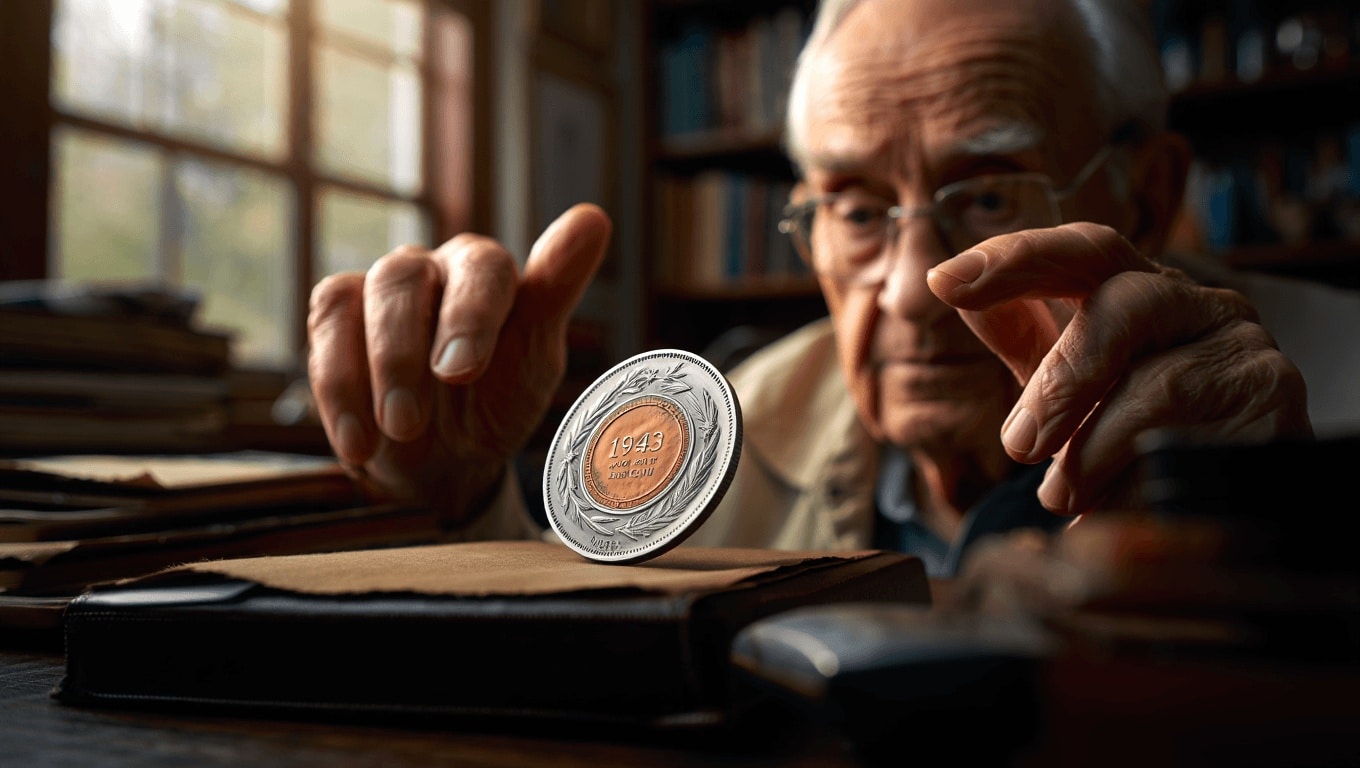
A highly sought-after relic from a wartime coin change has reappeared for sale, drawing renewed attention from collectors and the general public alike. The coin — struck in 1943 during a temporary shift in metal supply — revives questions about rarity, authenticity and the very real money on the line for anyone who discovers one in an old coin roll.
In 1943, the United States altered the composition of its one-cent piece to conserve copper for World War II efforts. Most pennies that year were struck on a zinc-coated steel planchet, making them easy to spot and widely circulated. But a small number of coins were mistakenly struck on the traditional bronze alloy, creating what has since become one of the hobby’s most legendary error pieces: the 1943 bronze cent.
Why collectors still care
These coins are rare both because of how and why they were produced. A bronze strike in 1943 required either a press operator using leftover bronze planchets or a mix-up at the mint — an accidental mismatch that created extraordinary collectible value. Over decades, stories of backyard discoveries and auction headlines fuelled ongoing searches through rolls, jars and estates. The recent appearance of another example on the market brings that hunt back into the spotlight.
- Origin: Wartime switch from bronze to zinc-coated steel for cents in 1943.
- What makes it rare: Only a very small number of 1943 cents were struck in bronze by mistake.
- Collector stakes: Known examples have drawn intense interest at auction and from private buyers.
- Authentication: Professional grading and metallurgical testing are essential to confirm a genuine bronze strike.
Authentication and the market
When a coin like this resurfaces, two immediate issues arise: proof of authenticity and clear provenance. Modern grading services use physical inspection, weight checks and spectrometric analysis to distinguish true 1943 bronze strikes from modern alterations or clever forgeries. Provenance — documented history of ownership — further affects both value and buyer confidence.
Auctions that handle such pieces often see brisk bidding, but the market also brings scrutiny. Misattributed or poorly documented coins have prompted legal disputes and buyer rescissions in the past, so reputable grading and transparent records are now standard practice.
What this means for the public
The resurfacing of a 1943 bronze cent matters for a few practical reasons. First, it reminds casual savers to check old change and coin rolls — particularly those dating from 1943 — before throwing them away or spending them. Second, it highlights the continuing demand for error coins, which can influence prices across related categories. Finally, it underscores the importance of using accredited experts: an unverified claim of rarity can be costly.
If you find a coin that looks unusual, document it carefully (photos, where it was found, surrounding paperwork) and seek evaluation from a recognized grading service rather than attempting to sell privately without verification. That approach protects sellers, buyers and the historical record.
As this newly offered example moves through the market, it will likely prompt fresh interest and scrutiny — the same two forces that have kept the 1943 bronze cent at the center of numismatic conversation for decades.
Similar Posts
- $840K 1943-D Bronze Cent Unearthed: Discover Its Astonishing Rarity and History!
- $840K 1943-D Bronze Penny: Secrets to Identifying This Rare Coin!
- $40K Reward Hidden in a Penny: Find the Clue on the Coin’s Front Side!
- Lincoln’s Face Could Mean Big Money: Check Your Coins Now!
- $11 Million Penny Discovered in Pocket: Could You Have a Fortune Hiding in Yours?

Calvin Baxter is an economic analyst specializing in the evolving US labor market. He leverages real data to provide you with concrete recommendations and help you adjust your professional strategies.