
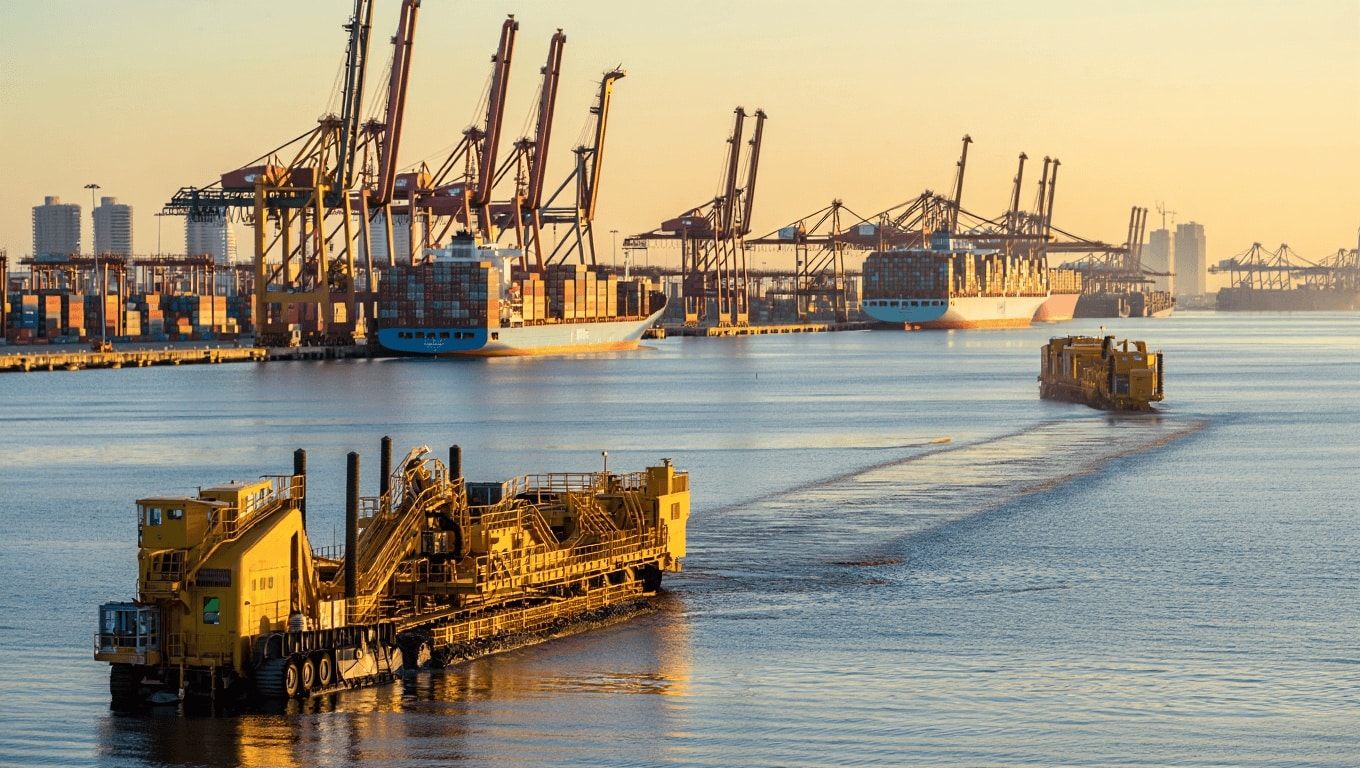
The Port of Recife has approved roughly $19.7 million in dredging work aimed at preparing its channels for vessels up to 689 feet long, a move that could reshape which coastal cities capture growing volumes of maritime trade. In a global shipping environment where a few upgrades can redirect cargo flows, this quiet infrastructure job carries outsized economic consequences for the region.
Dredging may sound technical, but its effects are immediate: deeper, wider approaches let larger ships call directly, cut transshipment stops and lower freight costs. For exporters, importers and logistics operators in Pernambuco and neighboring states, the upgrades could shorten supply chains and change routing decisions that now favor other ports.
What the work does — and what it won’t
At its core, dredging clears and deepens navigational channels. That allows longer, heavier vessels to enter safely and reduces the need for offloading cargo to smaller feeder ships. It also alters berth handling: terminals can accept more containers per call, improving efficiency and throughput.
But dredging alone doesn’t guarantee a surge in traffic. Terminal infrastructure, warehouse space, rail and road connections, and customs procedures all determine whether new vessel calls translate into sustained business. Ports that combine dredging with investments in terminals and hinterland links are the most likely winners.
Who could win — and who might lose
The likely beneficiaries are straightforward: exporters relying on containerized cargo, terminal operators who can offer larger ship services, and local businesses that face lower shipping costs. Smaller feeder ports or terminals that lack space and investment to handle bigger ships could see some calls diverted.
- Shippers: Potential for reduced freight per unit if direct calls replace transshipment.
- Terminal operators: Opportunity to attract larger liner services if berths and cranes match the capacity.
- Local economy: Short-term construction jobs and long-term gains for export-focused sectors, if trade increases.
- Competing ports: May lose transshipment or feeder traffic unless they, too, upgrade facilities.
These shifts are rarely instantaneous. Shipping lines decide routes based on global schedules, vessel availability and commercial volumes. Even after dredging, it can take months or years of commercial negotiation and investment alignment before traffic patterns change materially.
Environmental and operational trade-offs
Dredging projects also raise environmental questions. Disturbing seabed sediments can affect marine habitats and water quality, and disposal of dredged material must be managed to limit damage. Ports typically perform environmental assessments and propose mitigation measures, but those add time and cost to projects.
Operationally, deepening channels can require updated navigation aids, pilot training and revised safety protocols. These are necessary but sometimes overlooked steps that determine whether deeper access translates into safer, regular service.
Why this matters now
Global shipping is still concentrating around larger vessels and fewer direct calls. For mid-sized coastal cities, targeted investments like the Recife dredging are a strategic bet: attract bigger ships now and capture a larger share of trade as flows consolidate, or risk losing calls to better-equipped neighbors.
How Recife manages the next phase—aligning terminal capacity, road and rail links, and environmental safeguards—will decide whether the $19.7 million outlay becomes a catalyst for growth or a one-time technical fix with limited commercial payoff.
For businesses and residents in the region, the project is more than a harbor improvement: it’s a test of whether public investment can translate into lasting changes in trade patterns, jobs and local costs. The results will be worth watching for anyone with a stake in Brazil’s coastal supply chains.
Similar Posts
- Panama Canal rival emerges in Latin America: nation shifts millions of tons of earth
- China threatens Panama over canceled 1990s port deals: warns of severe political, economic fallout
- New interoceanic corridor sidelines Panama Canal: global trade faces major disruption
- Panama ports under new pressure from China: what it means for global trade
- China secures 200,000 tons from Africa’s largest secret iron reserve: geopolitics at stake

Calvin Baxter is an economic analyst specializing in the evolving US labor market. He leverages real data to provide you with concrete recommendations and help you adjust your professional strategies.