
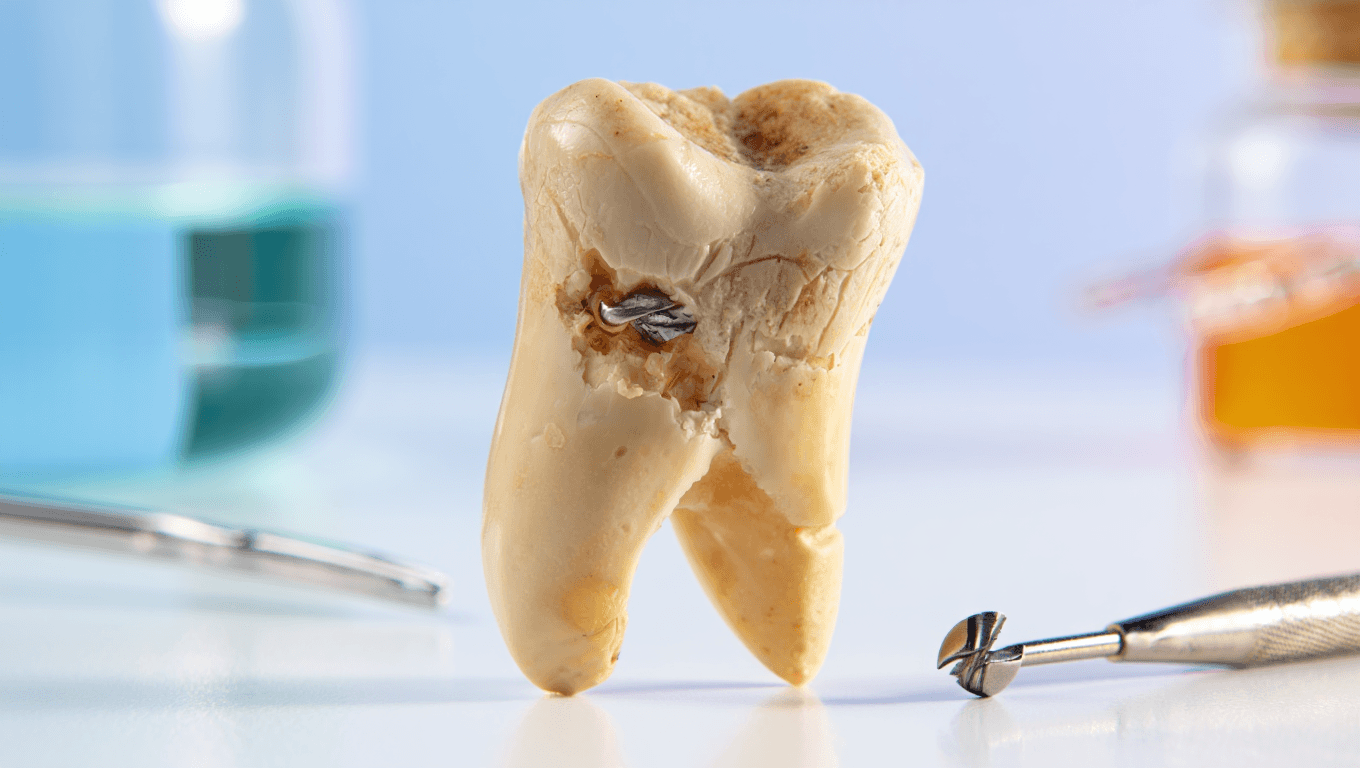
A fresh analysis of a 59,000-year-old molar from Siberia suggests Neanderthals performed deliberate dental work, a discovery that rewrites assumptions about their technical skill and social care. Published recently in PLOS One, the study offers direct physical evidence that prehistoric humans could diagnose severe tooth pain and attempt an invasive treatment long before modern medicine existed.
What researchers found
At a cave site in the Altai Mountains, scientists examined a molar labeled Chagyrskaya 64 and found a deep cavity that cut into the tooth’s pulp chamber — the nerve-rich core. Surrounding the damaged area were fine, directional scratches and grooves that did not match natural wear or accidental damage.
Using high-resolution scans and experimental comparisons with modern human teeth, the team concluded the marks are consistent with intentional work using a pointed implement. Nearby archaeological layers contained sharp fragments of jasper, which the authors suggest may have been employed to carve, scrape or rotate into the decayed tissue.
Because the lesion reached the pulp, the individual likely experienced intense pain before any intervention took place. With no anesthesia available in the Middle Paleolithic, such a procedure would have been brutal — and a clear indicator of caregiving or cooperative behavior within the group.
Why this matters now
The finding arrives amid a wave of recent studies showing Neanderthals had more complex behavior than long assumed. Taken together, these discoveries challenge a simple “modern human superior” narrative and force researchers to rethink how we map cognitive and cultural differences between Homo sapiens and Neanderthals.
- Tool sophistication: Evidence suggests Neanderthals could fashion and apply sharp stone implements with precision.
- Medical knowledge: Intentional removal of decayed tissue indicates a practical understanding of pain relief and cause-effect in disease.
- Social care: Performing an invasive procedure implies cooperation, caregiving and possibly knowledge transfer.
- Behavioral continuity: This adds to other signs of planning and cultural practice in Neanderthal groups.
How the team tested the hypothesis
Investigators combined micro-CT imaging with experimental archaeology: they reproduced scratches and cavities on contemporary teeth using stone tools to compare microscopic signatures. The wear patterns on Chagyrskaya 64 matched marks produced intentionally rather than those created by food abrasion or incidental contact.
That comparative approach strengthened the argument that the lesion was not coincidental. Still, the study remains cautious about attributing motive — whether the goal was to remove infection, relieve pain, or both.
Limits and open questions
One tooth can’t answer everything. The sample is singular and context-dependent, so scientists are careful not to generalize this as routine Neanderthal medical practice. Key uncertainties remain: Was this a one-off emergency, a learned procedure passed between groups, or part of a broader, systematic care tradition?
Future finds will be needed to trace whether such interventions were widespread and how knowledge of them moved through populations.
Still, the discovery narrows the behavioral gap between Neanderthals and modern humans. It suggests they could combine technical skill with social support — a mix of capacities that likely affected survival, group cohesion, and cultural transmission. For researchers and the public alike, the result is a prompt to reconsider long-held views about our close evolutionary cousins and the complex lives they led.
Similar Posts
- Ancient humans habitually sucked nuts 25,000 years ago: dental evidence
- Medieval skeleton unearthed with mysterious object clamped in jaw
- Neanderthals: inbreeding likely not the reason they vanished, large study concludes
- Neanderthal interbreeding reshaped human ancestry for hundreds of thousands of years
- Human chin explained: the surprising reason only our species has one

Miles Harper focuses on optimizing your daily life. He shares practical strategies to improve your time management, well-being, and consumption habits, turning your routine into lasting success.