
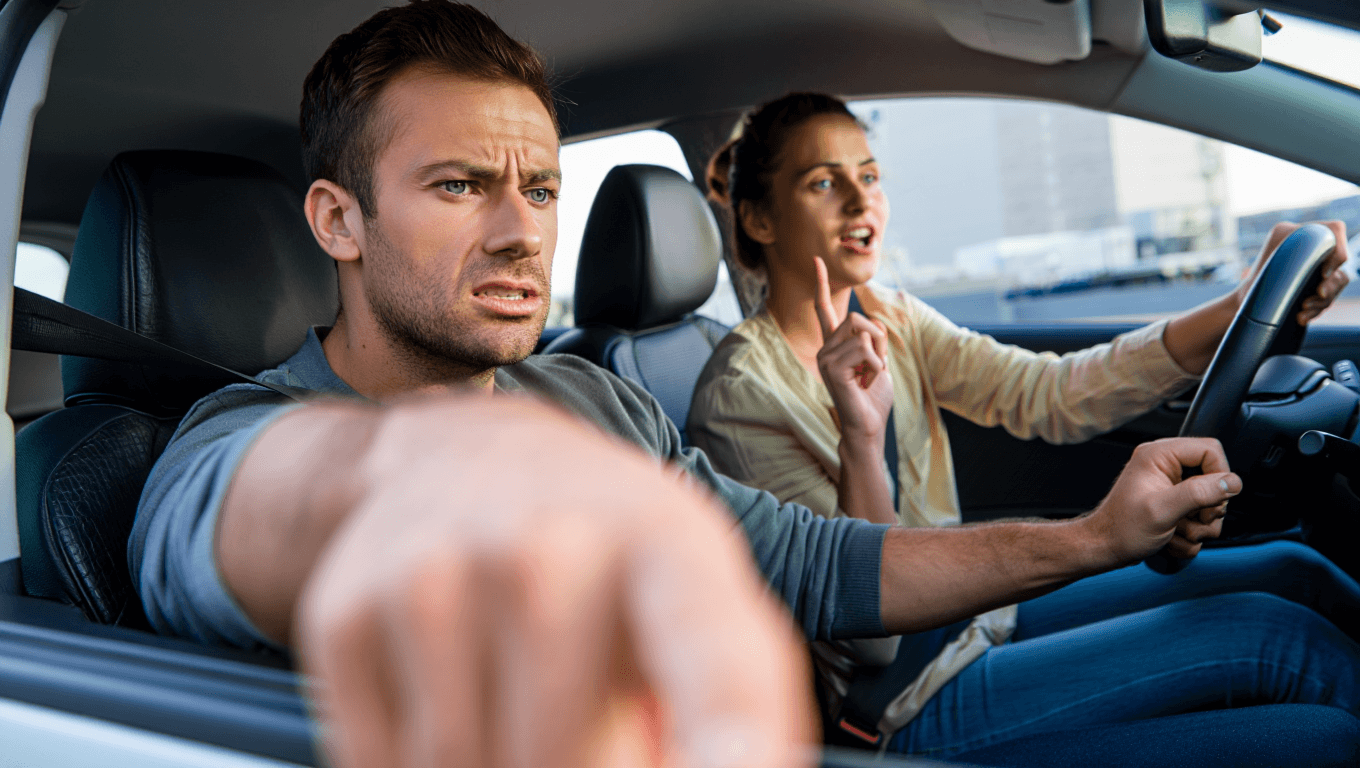
Drivers say a few small passenger habits are the quickest way to sour a ride — and one stands out above the rest. A recent national survey finds that unsolicited driving advice tops the list of pet peeves, a behavior that can distract drivers and strain otherwise ordinary trips.
The most aggravating passenger behaviors, by share of drivers
In a survey of 2,000 U.S. adults commissioned by Guessing Headlights and conducted by Talker Research, respondents ranked a set of common in-car actions that provoke irritation. Below are the behaviors that most frequently prompt eye-rolls — and sometimes, a confrontation.
| Rank | Passenger habit | Share of drivers citing it |
|---|---|---|
| 1 | Backseat driving (constant instructions or critiques) | 42% |
| 2 | Leaving trash behind | 41% |
| 3 | Complaining about the way the vehicle is driven | 38% |
| 4 | Eating messy or strongly scented food | 31% |
| 5 | Unnecessary “watch out!” warnings | 31% |
| 6 | Putting feet on the dashboard | 30% |
| 7 | Changing the music without asking | 29% |
| 8 | Slamming vehicle doors too hard | 28% |
| 9 | Yelling “brake!” when the driver is already braking | 26% |
| 10 | Talking loudly on a phone while in the car | 26% |
These are not legal violations, but drivers describe them as persistent annoyances that wear on concentration and mood. The survey suggests tension can build quickly: on average, drivers said they will tolerate an irritating passenger behavior for about 13 minutes before speaking up.
Reaction times vary. Roughly one in five drivers will respond within three minutes, and about half will voice a complaint within ten. A smaller group reports never calling out passengers — a stance some drivers portray as patience, though others in the survey said staying silent often leads to resentment.
Age and tolerance
Who speaks up first? The survey found younger drivers generally confront annoying habits sooner, while older drivers more often keep quiet. Participants attributed that partly to energy and partly to experience: seasoned drivers may choose to avoid short confrontations unless the situation affects safety.
The stakes are not only social. Repeatedly distracting passengers can reduce focus behind the wheel. Simple actions — keeping food contained, holding reactions until they matter, and asking before switching playlists — lower friction and reduce the chance of a pointed exchange middrive.
- Respect personal space: avoid feet on dash and loud phone conversations.
- Keep the car clean: carry out trash and avoid strong-smelling foods.
- Hold off on commentary: give the driver time to handle the road before offering critiques.
- Ask before changing settings: music, temperature, or navigation edits should be a quick check-in, not a takeover.
When a ride turns tense, the simplest remedy is clear boundaries delivered calmly. For drivers and passengers alike, small courtesies matter: they preserve focus, reduce arguments, and make the trip safer and more pleasant for everyone involved.
Similar Posts
- Waymo alerts police after teens drank and fired toy guns in its autonomous vehicle
- Cruise Nightmare: Passenger Trapped in Waterslide 150 Feet Over the Ocean!
- Speeding trims commute time by mere seconds, study finds
- Bear in parked SUV keeps horn blaring overnight: wildlife officials warn it’s common
- Flight Diverted in Mid-Air: Pilot’s Forgotten Passport Causes Chaos

Miles Harper focuses on optimizing your daily life. He shares practical strategies to improve your time management, well-being, and consumption habits, turning your routine into lasting success.