
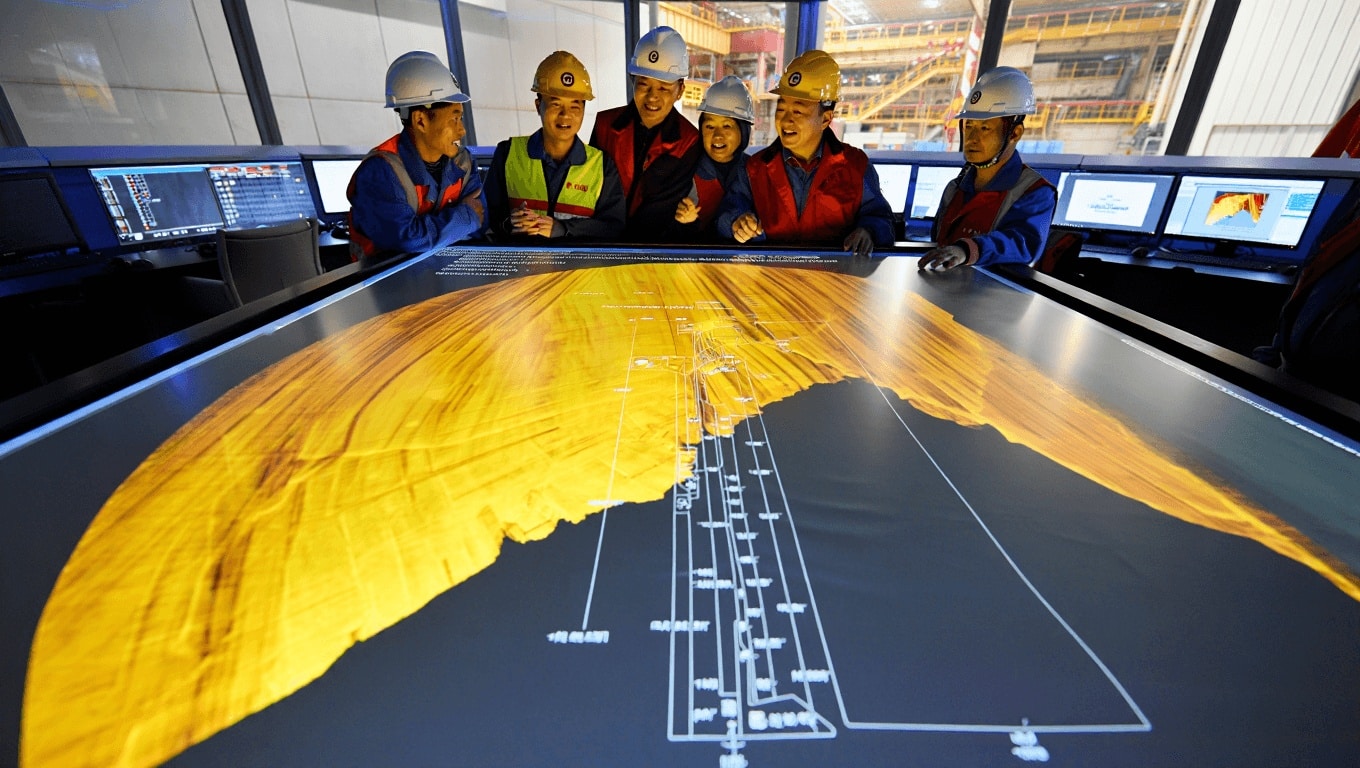
Chinese geological teams have announced the discovery of a massive underground gold accumulation located roughly 3,000 meters below the surface. If independent assessments confirm the estimate that the find contains more gold than South Africa’s documented reserves, the deposit could carry financial and strategic consequences that reach beyond the mining sector.
The research group responsible for the find said the target emerged from deep geophysical surveys and exploratory drilling. Chinese authorities have portrayed the discovery as a potential boost to domestic mineral resources, but experts caution that several technical and regulatory steps remain before the site can be classified as a mineable reserve.
Why this matters now
Large undeveloped gold deposits can affect national reserve planning, corporate investment, and long-term commodity expectations. A claim of this scale, even preliminary, draws attention because it intersects with China’s broader resource-security strategy and global metal markets that are already sensitive to supply signals.
Immediate market effects are unlikely. Major discoveries usually take years of feasibility studies, engineering work and permitting before any metal reaches the market. Still, the announcement will trigger scrutiny from miners, financiers and policy makers alike.
Technical hurdles and timeline
Depth is a defining constraint. Mining at three kilometers is feasible—some of the world’s deepest gold operations in South Africa reach similar or greater depths—but it raises high costs and engineering challenges. Deep heat, rock pressure, ventilation, groundwater control and safe haulage are all amplified at these depths and can make extraction economically marginal unless ore grades are especially rich.
Independent validation typically proceeds through internationally recognized reporting standards, which require detailed drilling, metallurgical testing and resource modeling. That process can take months to years, and a deposit’s headline tonnage often falls after rigorous appraisal.
Economic and geopolitical implications
At a conceptual level, the value of any new deposit depends on how much gold is actually recoverable and the prevailing price per troy ounce. For perspective: one metric tonne equals about 32,150 troy ounces; one thousand tonnes would translate into roughly 32 million ounces. At $2,000 per ounce, that equates to about $64 billion. Such sums are comparable to the annual output of many smaller economies and could influence national wealth calculations if the metal were monetized or added to reserves.
That said, conversion from “in-ground resource” to “economic asset” is neither immediate nor guaranteed. Domestic policy choices—whether the state controls development, how royalties or taxes are set, and environmental rules—will shape how and when the resource affects national finances.
Environmental and community risks
Deep mining projects carry significant environmental footprints: waste rock management, water use, subsidence risks and carbon emissions from long-term operations. Local communities and regional planners will be watching for early signals about environmental impact assessments and plans for mitigation, rehabilitation and benefit-sharing.
- Verification needed: Independent audits and published reports under formal resource standards are required to move from claim to certified reserve.
- Technical feasibility: Deep mining is costly and requires sustained capital, advanced engineering and long lead times.
- Market dynamics: Even a large deposit would likely be brought online gradually to avoid depressing global prices.
- Policy factors: State ownership, export controls and taxation will determine who benefits and how quickly.
- Environmental concerns: Deep extraction amplifies technical and ecological risks that must be managed.
Observers will be looking for three near-term follow-ups: detailed resource estimates published to international standards, feasibility studies showing recoverability and cost profiles, and clear statements from regulators about permitting and oversight. Until those appear, the claim remains a significant but provisional development.
For markets and policymakers alike, the discovery—if confirmed—underscores how advances in exploration and deep-drilling techniques continue to reshape what counts as a practical resource. The longer-term consequences will hinge on engineering realities, economics and the choices China and potential partners make about development and governance.
Similar Posts
- China gold discovery valued at $85.9B found 2,000m deep: geologists probe if it tops 1,000 tons
- China gold find tops 1,000 tons, valued at $86 billion: could redraw global supply map
- China uncovers 1,444-ton gold cache worth $150 billion: largest find since 1949
- Gold deposit 2,000 meters underground may hide one of the world’s largest reserves
- Gold and strategic minerals: 19 tons found, officials hiding a key detail

Calvin Baxter is an economic analyst specializing in the evolving US labor market. He leverages real data to provide you with concrete recommendations and help you adjust your professional strategies.