
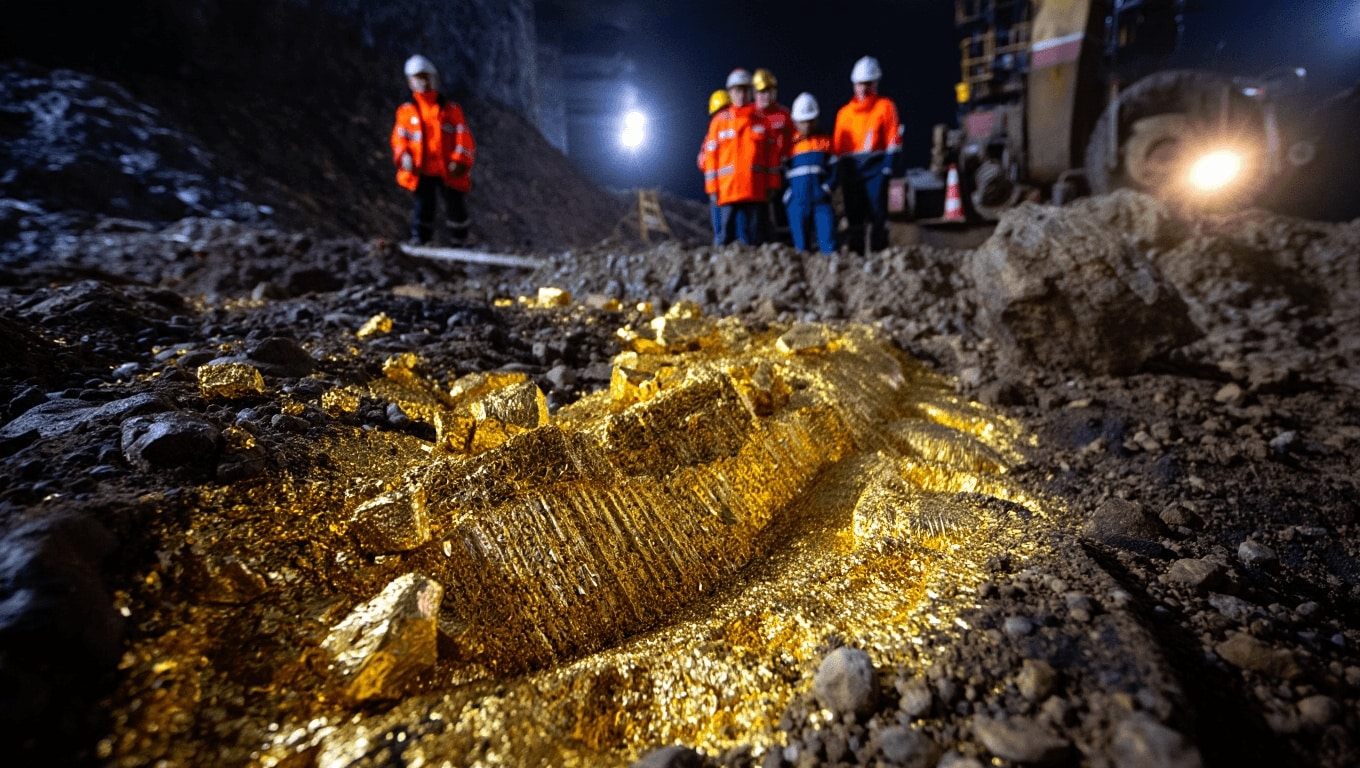
China has announced the discovery of more than 1,000 metric tons of gold buried underground—an amount currently worth roughly $85.9 billion. The find is significant not just for its headline value but for what it could mean for markets, national strategy and the long-term picture of global gold supply.
At first glance, the figure is striking. But experts caution that a resource estimate is only the start: turning an underground deposit into bullion in the market can take years and depends on geology, extraction costs and regulatory approvals.
How this could change the market — and how it might not
A discovery of this scale raises obvious questions about price and supply. If the gold is economically recoverable and brought to market, it could eventually increase global availability and put downward pressure on prices. Yet that outcome is far from certain.
Key obstacles include the ore’s grade (how concentrated the gold is), the location and depth of the deposit, infrastructure needs and environmental constraints. All of these factors determine whether mining is practical—and how long it would take.
- Timing: Exploration, permitting and construction often take many years; immediate increases in supply are unlikely.
- Cost: High extraction expenses can make even large deposits uneconomical at current prices.
- Policy: Government decisions on permits, land use and export rules will shape any commercial outcome.
- Market reaction: Traders and central banks may reposition based on the credibility and timeline of production, not just headline tonnage.
Strategic and geopolitical consequences
Beyond commodity markets, the discovery has strategic implications. Countries view gold as a reserve asset and a hedge against currency volatility. A sizable domestic find could influence how a government manages reserves, international trade policy and even mining-sector diplomacy.
For the mining industry, the announcement could trigger renewed investment interest, mergers or a reallocation of exploration budgets—particularly among companies with existing operations or development rights nearby.
Environmental and social costs will matter
Large-scale gold extraction often carries heavy environmental footprints. Open-pit operations, tailings management and water use can provoke local opposition and require costly mitigation. Communities living near proposed sites typically press for safeguards and benefits, adding another layer of uncertainty.
All these issues mean the socio-environmental debate could be as decisive as geology in determining whether the resource becomes an economic reality.
The simple headline—more than 1,000 metric tons valued at about $85.9 billion—captures attention. What will determine lasting impact are the technical details authorities and independent geologists publish next: grade, recovery rates, permitted mine plans and realistic timelines.
For readers and market watchers, the key items to watch in the coming weeks and months are official resource reports, independent technical evaluations and any statements from mining regulators or major companies. Those will clarify whether this find is a market-moving resource or a long-term strategic reserve that remains largely underground.
Similar Posts
- China gold discovery valued at $85.9B found 2,000m deep: geologists probe if it tops 1,000 tons
- China uncovers 1,444-ton gold cache worth $150 billion: largest find since 1949
- China gold deposit found 3,000 meters down could be worth more than a country’s entire GDP
- Pilbara high-grade iron deposit confirmed: 55 billion tons worth $6.52 trillion
- Gold and strategic minerals: 19 tons found, officials hiding a key detail

Calvin Baxter is an economic analyst specializing in the evolving US labor market. He leverages real data to provide you with concrete recommendations and help you adjust your professional strategies.