
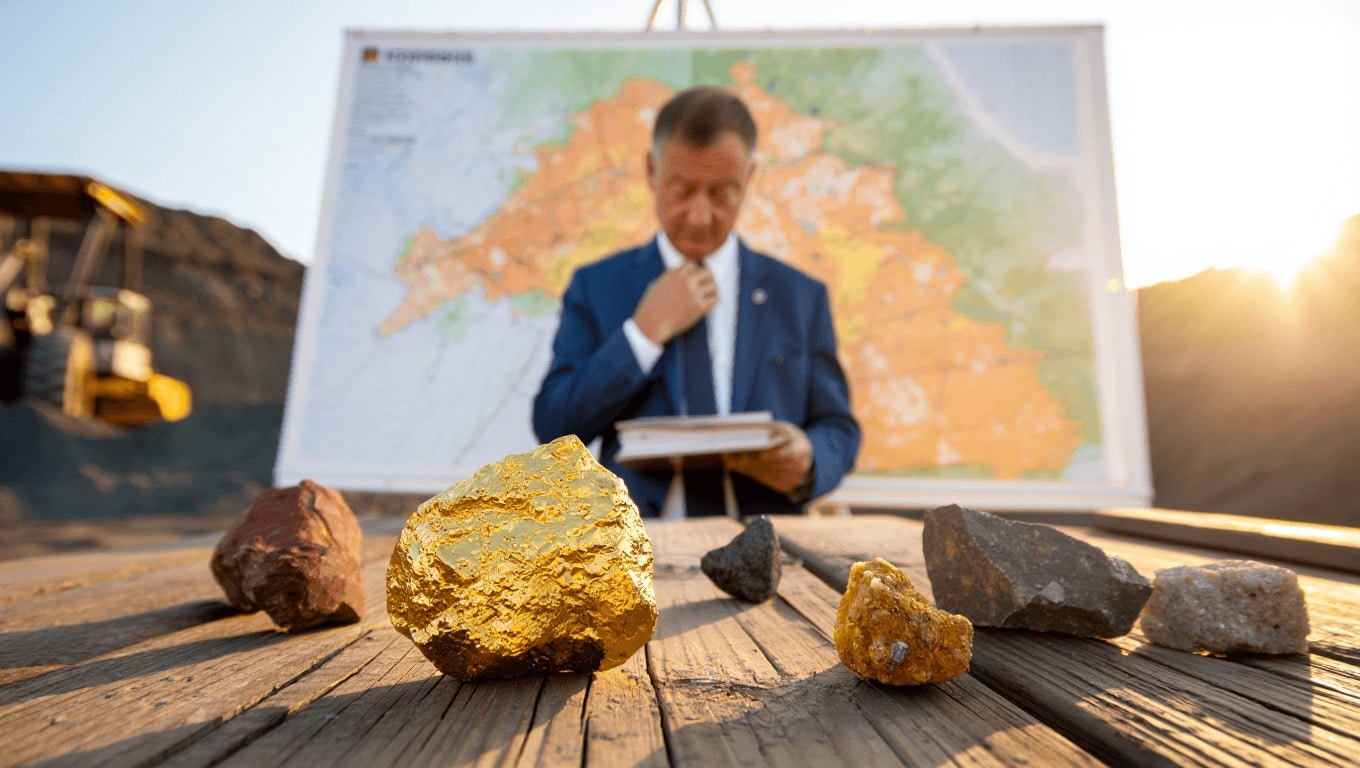
A government bulletin published this week says a newly surveyed deposit contains about 19 tons of gold alongside several strategic minerals — a finding that could reshape local economies and supply chains. But the release leaves out key facts that determine whether the discovery is an immediate windfall or a long, contentious process before any metal reaches markets.
The initial announcement emphasized the headline numbers and a provisional estimate of value. Officials framed the find as a potential boon for regional development, yet provided few details about sampling methods, legal ownership, or environmental safeguards — all the elements that decide how quickly and responsibly extraction can proceed.
What’s clear — and what isn’t
The figure of 19 tons is notable because it suggests a deposit large enough to attract international mining firms and state interest. Still, headline tonnage alone offers limited information: grade, recoverability, and the geological certainty behind the estimate are what determine commercial viability.
Missing information that will shape outcomes includes ownership claims, the presence of protected lands, and whether preliminary feasibility studies have been carried out. Without these pieces, investors, residents, and regulators are left guessing about timelines and risks.
- Geological certainty: Is the estimate based on preliminary sampling, or on a completed resource assessment compliant with international reporting standards?
- Mineral mix: The announcement cites “strategic minerals” but does not list them; such a mix typically refers to materials like lithium, cobalt or rare-earth elements, each with different market dynamics.
- Ownership and permits: Who holds mineral rights, and what legal or customary claims might complicate licensing?
- Environmental review: Has an environmental impact assessment been started, and will it meet national and international norms?
- Community consent: Are affected communities, including Indigenous groups if present, being consulted about potential mining activity?
Why these gaps matter now
Markets and policymakers pay attention to discoveries of gold and critical minerals because they can alter supply security and commodity prices. But premature optimism can create real costs: speculative investment, rushed permitting, and social tensions if local concerns are sidelined.
The speed of any development will depend on regulatory processes and the willingness of stakeholders to negotiate benefit-sharing. In some jurisdictions, large-scale mining moves from announcement to production in a decade; in others, disputes and environmental hurdles can stall projects indefinitely.
Potential consequences, depending on how things unfold
| Scenario | Likely timeline | Key risks | Potential benefits |
|---|---|---|---|
| Rapid development | 5–8 years | Insufficient environmental safeguards, rushed consultations | Investment, jobs, tax revenue |
| Measured, regulated approach | 8–12 years | Higher upfront costs for compliance and studies | Stronger social license, reduced long-term liabilities |
| Protracted dispute or moratorium | Indeterminate | Legal battles, reputational damage, lost investment | Time to negotiate community terms and restoration measures |
Local and global stakes
For the local area, the discovery raises questions about jobs, infrastructure, and long-term economic planning. For national governments, it raises fiscal questions: royalty regimes, export controls, and how to integrate new mineral wealth into broader development goals. On the global stage, new sources of strategic minerals can affect supply chains for industries such as electronics, clean energy, and defense.
Crucially, transparency will determine whether the find benefits a wide population or a narrow set of actors. Clear, public reporting on the resource estimate, ownership records, environmental impact studies, and community agreements would allow markets and citizens to evaluate the announcement on a fact-based footing.
What to watch next
- Release of a formal resource report meeting international standards (e.g., JORC or NI 43-101)
- Publication of an environmental and social impact assessment
- Details on mineral rights, existing concessions, and any contested claims
- Statements from local leaders and affected communities about consultations and benefit-sharing
- Expressions of interest or bids from mining companies with relevant technical track records
When a mineral discovery is billed primarily by its tonnage, the numbers tell only part of the story. The more consequential questions — who controls the resource, how the land and water will be protected, and how proceeds will be shared — will determine whether the announcement becomes a turning point for sustainable development or a source of prolonged conflict.
Similar Posts
- China gold find tops 1,000 tons, valued at $86 billion: could redraw global supply map
- China gold discovery valued at $85.9B found 2,000m deep: geologists probe if it tops 1,000 tons
- Copper deposit on Argentina-Chile border could upend markets: 84B lbs plus major gold and silver
- China gold deposit found 3,000 meters down could be worth more than a country’s entire GDP
- China uncovers 1,444-ton gold cache worth $150 billion: largest find since 1949

Calvin Baxter is an economic analyst specializing in the evolving US labor market. He leverages real data to provide you with concrete recommendations and help you adjust your professional strategies.