
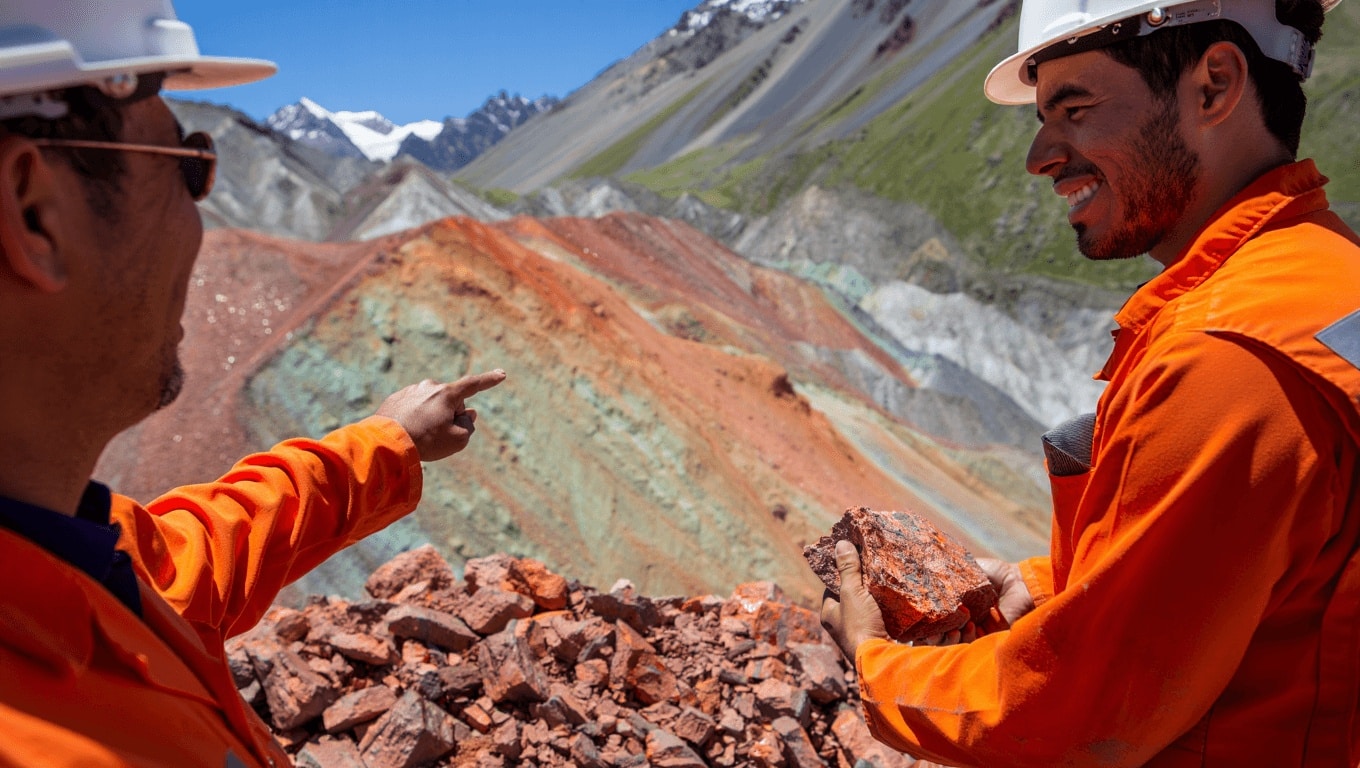
Explorers working high in the Andes between Argentina and Chile have uncovered a mineral deposit whose scale could reshape global metals markets: estimates point to as much as 84 billion pounds of copper together with tens of millions of ounces of gold and silver. The find matters now because copper is central to the clean-energy transition and persistent supply shortfalls could influence prices, investment and industrial planning worldwide.
What the discovery looks like
Preliminary reports describe a vast, concentrated body of copper with significant associated precious metals. While technical studies are still underway, the sheer size of the deposit — measured in billions of pounds of contained copper — places it among the largest known finds in the region.
Key figures at a glance:
| Item | Estimate / Note |
|---|---|
| Location | Andes, along Argentina–Chile border (general region) |
| Copper | Up to 84 billion pounds (contained) |
| Gold and silver | Tens of millions of ounces (combined estimate) |
| Development outlook | Requires extensive feasibility, permitting and infrastructure work; years to decades |
Why this changes the conversation
Global demand for copper has surged as governments and companies accelerate electrification: copper is essential for electric vehicles, power grids, wind turbines and solar arrays. A discovery of this magnitude could help alleviate long-term supply pressures, influence commodity markets and redirect capital toward mining and processing projects.
Investors and producers watch developments closely because even the prospect of a large new supply source can alter merger-and-acquisition strategies, exploration budgets and pricing expectations across the industry.
Local impacts, environmental risks and the politics of cross-border projects
Large-scale mining in high Andean terrain raises immediate questions about water use, glacier and watershed protection, biodiversity and the rights of nearby communities. Both Argentina and Chile have experience with major copper projects, but joint or adjacent operations across an international border introduce extra layers of consultation and regulation.
Environmental assessments, community agreements and transport and power infrastructure will determine whether the deposit can be developed responsibly — and whether it will win the social license needed to proceed. These are often the factors that slow projects far more than geology does.
- Economic potential: New jobs, regional investment and royalty revenues are possible but will be unevenly distributed.
- Environmental scrutiny: High-altitude hydrology and local ecosystems remain fragile and contentious.
- Timeline: Moving from discovery to production typically takes many years of studies, approvals and capital deployment.
Next steps and what to watch
Geologists and mining firms will need to complete detailed drilling programs, resource modeling and metallurgical testing to refine estimates. Those technical results feed feasibility studies that evaluate cost, expected recoveries and required infrastructure such as roads, power lines and processing plants.
Regulators in both countries, local communities and potential investors will all play defining roles. Market analysts will monitor how news about the deposit affects copper prices and investment flows, but any immediate market impact will depend on the clarity and credibility of follow-up data.
For policymakers and industry planners, the discovery underscores a broader challenge: ensuring new sources of critical minerals align with environmental safeguards and community expectations while supporting the global shift to low-carbon technologies. If developed responsibly, the find could be a significant supply-side response to rising long-term copper demand; if not, it risks sparking local conflict and international scrutiny.
Similar Posts
- Gold deposit 2,000 meters underground may hide one of the world’s largest reserves
- Pilbara high-grade iron deposit confirmed: 55 billion tons worth $6.52 trillion
- China gold find tops 1,000 tons, valued at $86 billion: could redraw global supply map
- China uncovers 1,444-ton gold cache worth $150 billion: largest find since 1949
- China finds 540 million-ton lithium deposit: global battery markets scramble

Calvin Baxter is an economic analyst specializing in the evolving US labor market. He leverages real data to provide you with concrete recommendations and help you adjust your professional strategies.