
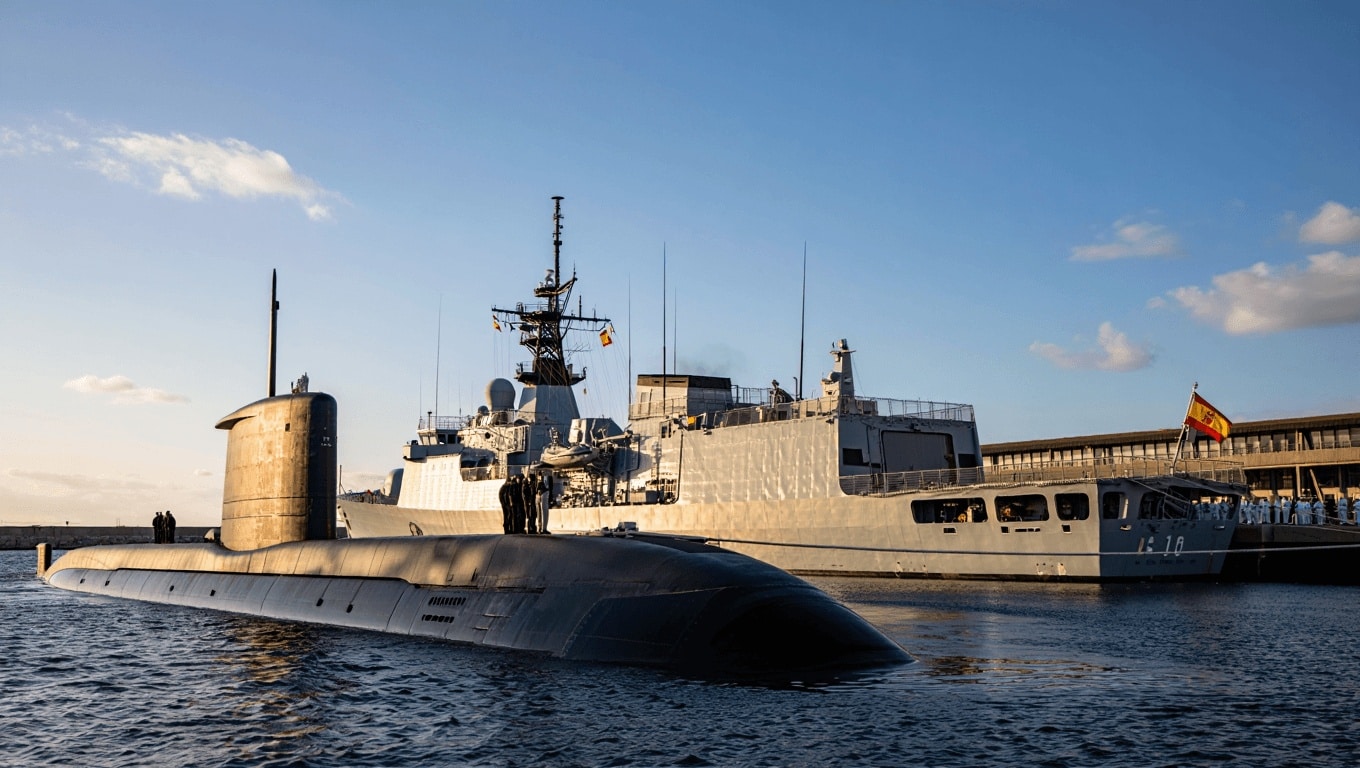
Spain has launched its largest naval modernization effort since the Cold War, announcing a plan that commits roughly $650 million to expand and upgrade its fleet with four advanced submarines and five F-110 frigates. The move signals a deliberate shift to strengthen maritime defenses and support NATO commitments as security concerns in and around the Mediterranean intensify.
What the package contains
- Investment: Approximately $650 million allocated to the naval program.
- Submarines: Four new, high-technology boats intended to replace or augment older hulls.
- Frigates: Five F-110 class warships designed for multi-mission tasks, including air defense and anti-submarine operations.
- Scope: A multi-year acquisition and construction timetable involving domestic shipbuilding capacity and supporting industries.
Spain’s announcement arrives against a backdrop of shifting regional dynamics. Governments across Europe have been reassessing naval capabilities after a decade of tight defense budgets and increasingly assertive maritime activity from state and non-state actors. For Spanish policymakers, expanding the fleet addresses immediate operational needs — from protecting shipping lanes and offshore resources to contributing to NATO deployments in the Atlantic and Mediterranean.
Operational impact
The addition of four modern submarines will expand undersea presence and surveillance capabilities, enhancing Spain’s ability to monitor sea lines of communication and to deter potential threats beneath the surface. The five F-110 frigates, meanwhile, are intended to serve as versatile surface combatants able to escort fleets, conduct maritime interdiction, and provide area air defense.
These assets will likely extend the navy’s reach for sustained operations, allowing longer missions farther from home ports and improved interoperability with allied navies. The new ships and submarines are also expected to incorporate contemporary sensors, communications, and electronic warfare systems that reflect lessons learned from recent naval operations and exercises.
Industry and jobs
The program is set to be a boon for Spain’s shipbuilding sector and its subcontractor network. Building multiple warships and submarines typically involves years of continuous work for yards, engineers, and suppliers across mechanical, electronic, and weapons systems fields. That has economic as well as strategic implications: sustained production can protect skilled jobs, foster technological upgrades, and maintain national industrial know-how.
At the same time, large defense procurements require careful oversight. Cost controls, timely funding, and clear schedules will be critical to avoid delays and overruns — issues that have affected similar programs elsewhere.
Political and alliance implications
Domestically, the plan is likely to attract cross-party attention as lawmakers weigh defense spending against other priorities. Internationally, Spain’s fleet expansion should be welcomed by NATO partners that seek greater burden-sharing in regional maritime security.
The investment also positions Spain to play a more active role in collective deterrence and in crisis response missions, whether humanitarian, counter-smuggling, or high-end combat operations alongside allied forces.
What to watch next
– Delivery timelines and construction milestones for both submarines and frigates.
– The role of domestic shipyards and the extent of foreign technology or subcontracting.
– Budgetary reviews in parliament that could accelerate or constrain the program.
– Integration and training schedules for crew and joint exercises with NATO partners.
Spain’s naval commitment reflects a broader European trend toward bolstering maritime forces after years of relative decline. For citizens and policymakers, the key will be translating the announced funds and platforms into timely, sustainable capabilities that address near-term risks and long-term strategic needs.
Similar Posts
- Spain rare-earth mine could meet 33% of Europe’s demand: reshaping green geopolitics
- Spain rare-earth discovery could supply 33% of Europe’s needs: upends green-energy geopolitics
- Secret Service Uncovers Underground Network: Could Cripple NYC’s Infrastructure!
- Ancient Skulls Reveal Iron Age Rituals: Mysterious Nailed-Head Ceremonies Uncovered!
- War elephants unearthed in Spain: bones tied to 2,200-year-old conflict

Calvin Baxter is an economic analyst specializing in the evolving US labor market. He leverages real data to provide you with concrete recommendations and help you adjust your professional strategies.