
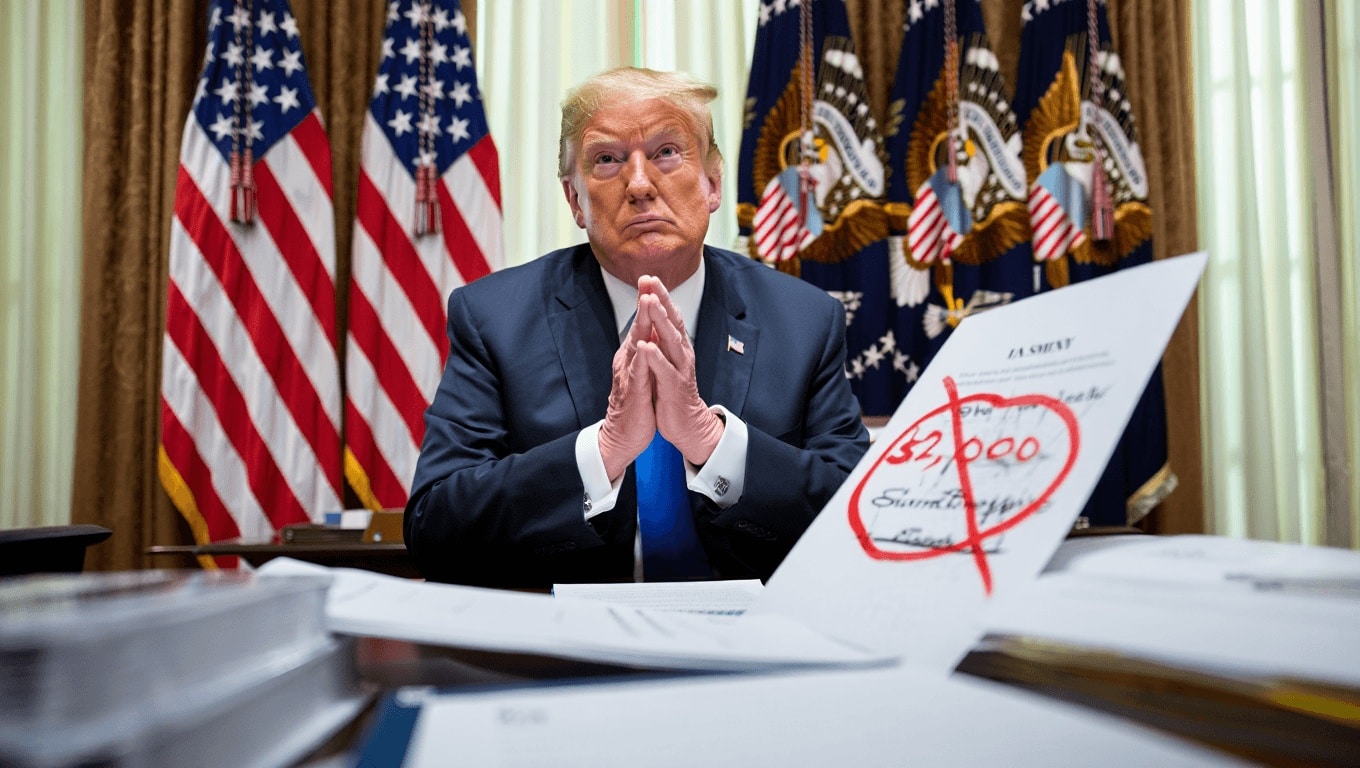
After publicly pushing for larger stimulus checks, former President Donald Trump has since stepped back from that position, creating fresh uncertainty for millions counting on pandemic relief. The reversal has left lawmakers and households scrambling to figure out whether the promised $2,000 payments will ever materialize.
In late December, Trump amplified calls for boosting direct payments after Congress approved a smaller package, briefly accelerating momentum for larger checks. But in later remarks he seemed to downplay his role in promoting the increase, a shift that undercut the political energy behind the proposal and stalled action in Washington.
What happened and why it matters now
The public flip-flop matters because many families had hoped an upgraded payment would bridge a funding gap as unemployment and pandemic-related expenses continued to pile up. When senior political figures change course quickly, the result is often legislative paralysis — and that prolongs economic strain for people who rely on stimulus aid to pay rent, utilities and other essentials.
Lawmakers in the House did move to approve larger checks, but the effort failed to gain traction in the Senate. With no clear champion in the White House and Congress occupied with other business, prospects for immediate relief are dim.
- Who’s affected: Low- and middle-income households, unemployed workers, gig economy contractors, and families with urgent bills.
- Legislative status: House support was not matched by the Senate; no binding law approving the higher payments has been enacted.
- Short-term outlook: Additional federal payments are unlikely without renewed bipartisan momentum or a change in White House posture.
Behind the headlines are concrete consequences. For people living paycheck to paycheck, even a temporary pause in promised assistance can prompt eviction notices, missed medical care and greater reliance on local charities. For lawmakers, inconsistent signals from leaders complicate negotiations and reduce the odds of a swift compromise.
Politics, messaging and the road ahead
The episode highlights how political signaling can shape economic outcomes. When a president or prominent elected official vocally supports a relief measure, it can accelerate congressional action. When that support evaporates or becomes ambiguous, momentum can stall just as quickly.
Congressional calendars, competing priorities and partisan divisions mean any renewed push for more generous direct payments would face uphill battles. Stakeholders to watch include Senate leaders, the incoming administration’s economic advisers, and House members who have pushed hardest for larger checks.
For now, millions remain in limbo. Observers say the clearest route forward would be either a decisive White House endorsement and bipartisan Senate cooperation, or a narrowly targeted bill that could attract swing votes. Without one of those developments, households expecting a quick infusion of cash are likely to wait longer.
What to watch next: statements from White House officials, any new congressional procedural moves, and reports from aid agencies and state governments about demand for social services.
Similar Posts
- Tariff dividend checks now more likely: economists point to new data
- Trump approves $500 Obamacare refunds for about 1 million people: who qualifies
- Trump $5,000 election payout could spike inflation, economists warn
- Tariff refunds won’t trickle down to shoppers: CFO Council survey
- $5,000 Stimulus Checks Disappoint: Experts Weigh In on Latest Developments After DOGE Shift

Calvin Baxter is an economic analyst specializing in the evolving US labor market. He leverages real data to provide you with concrete recommendations and help you adjust your professional strategies.