
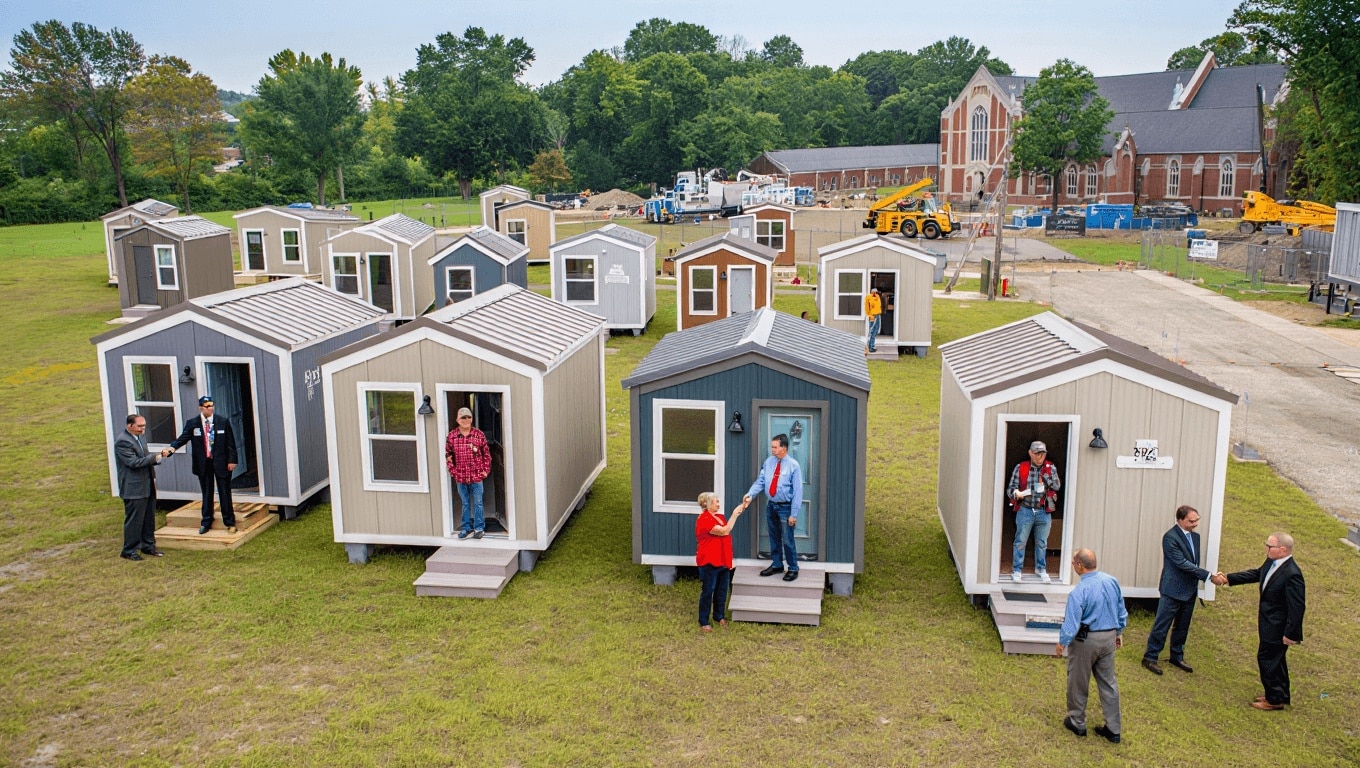
Cincinnati officials and community leaders are moving ahead with plans for a new housing project aimed at veterans: a compact “Veterans Village” of 14 tiny homes on church-owned land intended to help people leave temporary shelters for private residences. The proposal centers on modest, fully equipped units that organizers say will offer a stable next step for veterans transitioning out of short-term housing.
The development would sit on property owned by a local congregation and is being pitched as a low-footprint, cost-conscious approach to providing long-term housing options for veterans. Backers describe the plan as focused on privacy and selfsufficiency rather than congregate shelter living.
What the units will include
- Number of homes: 14 small houses
- Size: 276 square feet per unit
- Key features: porch, kitchen, dining area and full bathroom
- Estimated cost: $70,000 per unit
- Site: church-owned land in Cincinnati
Each unit is designed to be a self-contained residence with basic amenities for independent living. The $70,000 figure covers construction of the unit itself; additional site work such as utilities, parking and common infrastructure will affect total project costs and scheduling.
How this matters now
Even a small development can change the short-term outlook for veterans who currently rely on temporary arrangements. Moving someone from transitional housing into a private dwelling can reduce instability and give residents more control over daily life—factors that often matter for employment, health care access and long-term planning.
City planners and the congregation will still need to address zoning, permits and utility hookups before construction can begin. Those logistical steps often shape the timeline for projects like this, and funding for site work or ongoing services will be decisive.
Broader context and likely challenges
Communities across the country have experimented with compact-house clusters and small-home villages as one piece of a broader strategy to reduce homelessness and improve housing options for vulnerable populations. Such projects can be faster to build and less costly per unit than traditional apartments, but they are not a turnkey solution.
Key questions that typically arise include how residents will access support services, who will manage maintenance, and how the units will be financed over the long term. Local approval processes and neighborhood concerns can also shape or delay projects.
Proponents say the Cincinnati plan aims to strike a balance: provide affordable, private housing while keeping the footprint and price tag lower than conventional development. If the project clears permitting and secures any needed additional funding, construction could follow a typical municipal timeline—though organizers have not announced firm dates.
For now, the proposal marks a concrete local effort to expand housing options for veterans by pairing modest, well-appointed units with community-owned land—an approach intended to move residents out of temporary housing and into permanent, independent homes.
Similar Posts
- Day-built micro-home could shelter homeless and cut emissions: 18-year-old to live in it 12 months
- Prince William to sell 20% of Duchy of Cornwall: money to back housing and conservation projects
- Floating city resumes life: home to 80,000 with stadium, schools and 8 helipads
- Zuckerberg funds $30M hardened compound: 30 rooms, 95,000L tanks, 13-meter walls and 8-ton doors
- World’s biggest floating city resumes operations: homes, schools and helipads for 80,000

Calvin Baxter is an economic analyst specializing in the evolving US labor market. He leverages real data to provide you with concrete recommendations and help you adjust your professional strategies.