
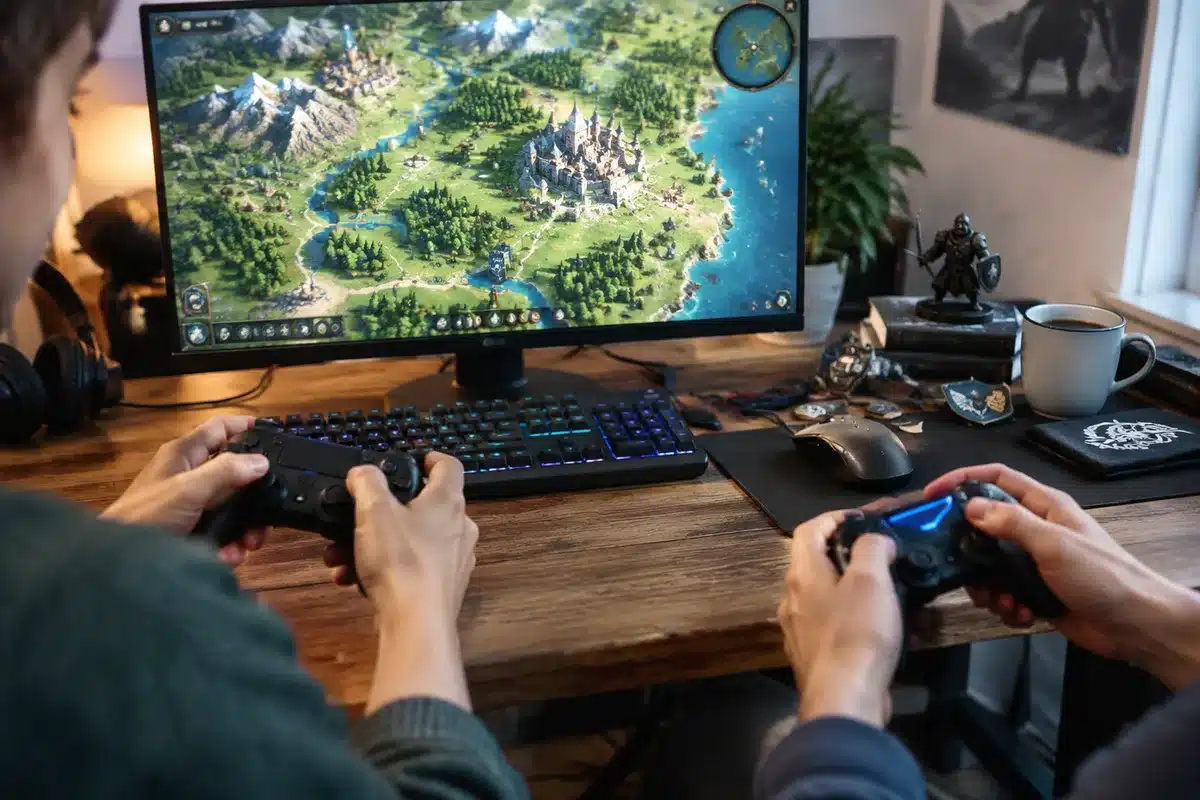
More people are finding romantic partners in unexpected digital spaces, and video games are emerging as one of them. Known as playting, the practice—meeting and dating through in-game interactions—offers a different path than swiping right, with potential consequences for how younger adults form relationships today.
Defining playting
The term refers to romantic connections that begin inside games rather than on traditional dating platforms. In practice, players meet while collaborating, competing, or simply chatting, and sometimes those interactions turn into offline relationships.
OneState, a mobile social role-play game, reports that a sizeable share of its users have experienced this firsthand: in a recent survey, 34% of respondents said they began a romantic relationship with someone they met in the game. The company also found that 75% of players logged on initially because they wanted someone to talk to, and 22% feel more outgoing or confident while playing than in their day-to-day lives.
Why it resonates now
Playting matters because it changes the context in which people evaluate one another. Unlike profile-driven apps, games create a shared activity and a backdrop for personalities to emerge over time. That can reduce the pressure of first impressions and give people more opportunities to connect through common interests.
Prudence Leung, a registered psychotherapist and coach, told OneState that gaming provides richer context than typical dating apps: players observe behavior during teamwork and problem-solving, which reveals interpersonal qualities that a photo and a short bio do not.
What players get from gaming relationships
- Shared experiences: cooperative play builds rapport faster than isolated messaging.
- Lower stakes: interactions often start with casual chat or teamwork, not romantic intent.
- Emotional safety: some users report greater confidence or willingness to open up while in character.
- Natural pacing: relationships can unfold gradually as players log on together over weeks or months.
A real-life example
OneState highlights a couple who met in-game and later married. She traveled roughly 800 miles to meet him face to face; they became engaged within about 18 months. In the game, their avatars occupied complementary roles during events—she led a SWAT exercise while he commanded an army—while in real life they worked very different jobs, a construction supervisor and a special-education assistant. The pair says the time spent building a bond online helped deepen their commitment before meeting offline.

They still play together weekly, a reminder that shared hobbies can remain a pillar of a relationship even after it moves into the real world.
What this means for online dating
For people frustrated by endless app browsing, gaming offers an alternative route: one where identity, teamwork and casual conversation replace curated profiles and short bios. That doesn’t mean games are a quick fix—meeting someone compatible still requires time and mutual effort—but for many, the environment makes authentic connection more likely.
As more social activity migrates into virtual spaces, observers say researchers and platforms should pay attention to how these environments shape relationship formation. For now, players who haven’t had luck on dating apps might consider whether their next meaningful connection is waiting in a lobby, a raid, or a role-play session.
Similar Posts
- Scared of Solo Dates? Discover the App That’s Changing the Game!
- Still Single? Relationship Expert Reveals Why: Find Your Answers Here!
- Exploring Love-Loreing: Why Dating for the Lore Is the New Trend!
- AI-Powered Flirting on Dating Apps: Users End Up Disappointing Their Dates!
- Why Men Quit Dating: 5 Shocking Reasons Revealed!

Miles Harper focuses on optimizing your daily life. He shares practical strategies to improve your time management, well-being, and consumption habits, turning your routine into lasting success.