
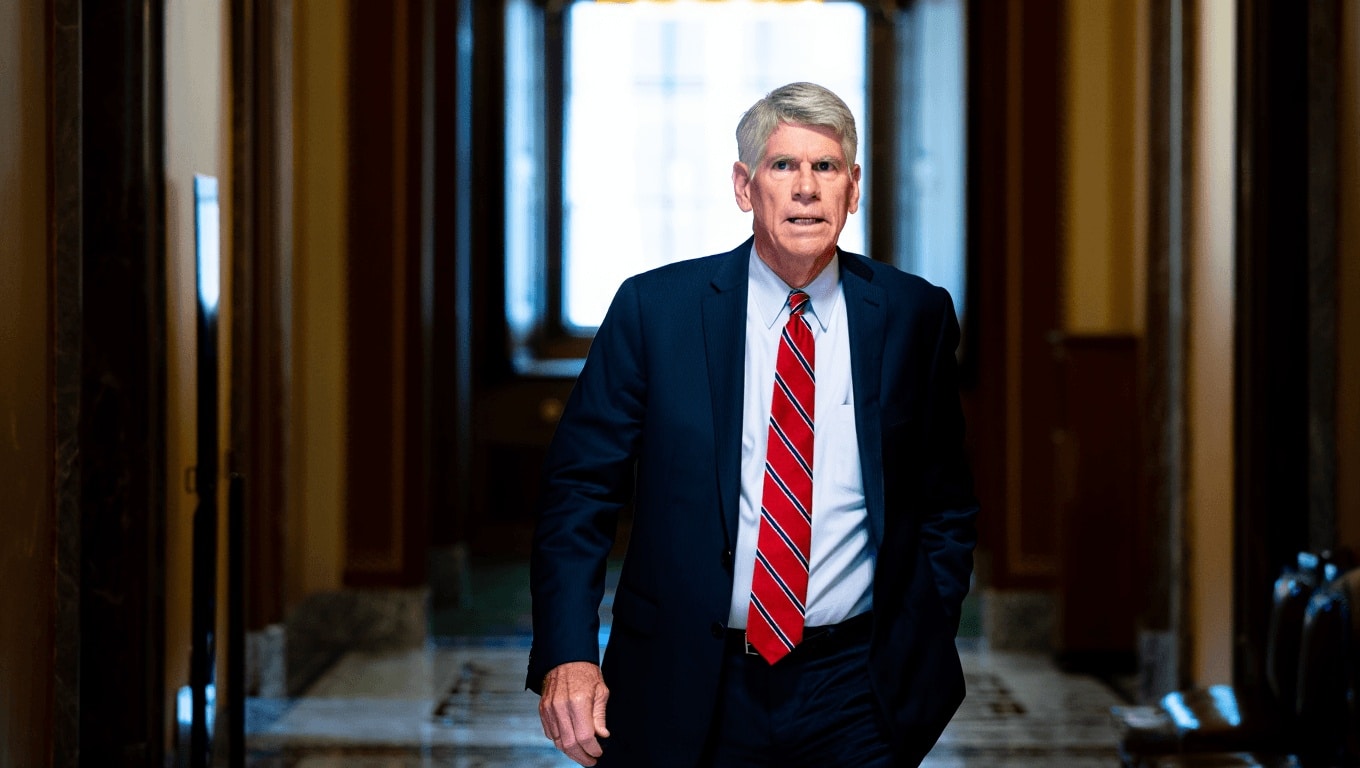
Sen. Bill Cassidy, facing the final stretch of his Senate term after losing a Republican primary, has made one policy goal his focus: a meaningful overhaul of Social Security. With the program’s trustees warning of a looming shortfall, Cassidy says he wants to pass a fix before he leaves office in January 2027.
Cassidy’s end-of-term push
Cassidy’s determination comes after a bruising primary loss in May to Rep. Julia Letlow and former Rep. John Fleming. The defeat followed President Trump’s endorsement of Letlow and came after Cassidy was among seven GOP senators who voted to convict the former president in his 2021 impeachment trial — a factor Cassidy himself acknowledges influenced his political standing.
Now, as his term winds down, Cassidy plans to press a bipartisan effort to shore up the program millions of Americans depend on monthly.
The trustees’ wake-up call
The latest trustees’ report, released June 9, escalated the urgency. It projects that the Social Security trust fund that pays retirement and survivors benefits — the OASI fund — could be exhausted in the fourth quarter of 2032 unless Congress acts.
If that depletion occurs, beneficiaries would face automatic, across-the-board cuts: the trustees estimate only about 78% of scheduled OASI benefits would be payable at that point. Combining the retirement and disability trust funds could push that date to the third quarter of 2034 and make roughly 83% of scheduled benefits payable.
The implications are immediate for more than 71 million Americans who receive retirement or disability payments.
What Cassidy’s “big idea” proposes
Cassidy’s plan seeks a middle path between raising taxes and reducing benefits. Rather than choosing direct tax increases or immediate benefit cuts, the proposal would create an investment vehicle funded with $1.5 trillion borrowed over five years and held in an escrow account.
The money would be invested, largely in equities, and Cassidy argues that over a 65–70 year horizon it would grow to cover roughly 60–65% of Social Security’s unfunded accrued liability. He cites reforms to the federal Railroad Retirement system under President George W. Bush — which allowed some pension assets to be invested in private securities — as evidence that such an approach can strengthen solvency.
- Escrow investment: $1.5 trillion borrowed and invested over five years
- Projected horizon: 65–70 years
- Estimated coverage: 60–65% of unfunded liability
- Legislative hurdle: Social Security changes would require 60 votes in the Senate
Skepticism, debt concerns and market risk
Policy analysts have pushed back on the plan’s assumptions. A Boston College Center for Retirement Research review of a similar Cassidy-Kaine proposal concluded the strategy is “unlikely to work” on its own, warning the government could be more indebted by year 75 and face large interest obligations unless paired with immediate tax increases or benefit changes.
The Bipartisan Policy Center also flagged worries about how markets would respond to a large uptick in federal borrowing, and cautioned that future stock returns are inherently uncertain; leveraged investment approaches can magnify losses as well as gains.
Cassidy responds that the proposed structure would force the fund to absorb investment risk and that simulated historical scenarios show an investment premium that outpaces borrowing costs. He argues beneficiaries would still receive promised benefits under the fund’s design.
Can it win bipartisan support?
Any workable solution will need bipartisan backing to clear the Senate. On June 10, Cassidy joined Sens. Dick Durbin (D-Ill.), Tim Kaine (D-Va.) and Thom Tillis (R-N.C.) in a joint statement calling for action, urging Congress to “protect this lifeline program for our kids and grandkids.”
Durbin, who also plans to retire at the end of his term, has called for bringing competing proposals to the floor and allowing them to be amended — a step he said would mark a return to substantive legislating on a major entitlement issue.
Cassidy says the immediate next steps are more hearings and drafting the proposal into bill language. He acknowledges a major open question: how to cover the roughly 35% of Social Security’s shortfall that his investment fund would not address.
Why this matters now
Delaying action narrows policymakers’ options and raises the long-term cost of fixing the program. If Congress waits until trust fund depletion nears, benefit reductions or steeper tax increases could become harder to avoid.
“We need to put the politics aside for the good of the country, for at least a little bit,” Cassidy has said, framing the debate as a practical responsibility for lawmakers who will shape retirement security for current and future beneficiaries.
Quick facts
- Trustees’ report date: June 9
- Projected OASI depletion: Q4 2032 (78% of benefits payable)
- If funds combined: Q3 2034 (83% payable)
- Cassidy’s term ends: Jan. 3, 2027
- People affected: More than 71 million Social Security recipients
Whether Cassidy’s proposal can attract the votes and expert confidence needed to become law remains uncertain. But with the trustees’ clock ticking, the debate over how to preserve Social Security’s promises is set to be a defining fiscal conversation in the coming months and years — and one with direct consequences for retirees and workers across the country.
Similar Posts
- Social Security alert: bipartisan senators propose fast-track reforms to avert funding crisis
- AARP pushes back on Congress: don’t rush changes to Social Security
- Social Security at risk: Warren demands answers from Trump on raising retirement age
- Social Security trust fund could outlast government estimates: new Wharton forecast
- Social Security shortfall may cut benefits: lawmakers eye taxes on top earners

Jordan Keller specializes in analyzing the US financial markets. With concrete recommendations, he helps you secure and boost your investments by providing strategies that adapt to market fluctuations.