
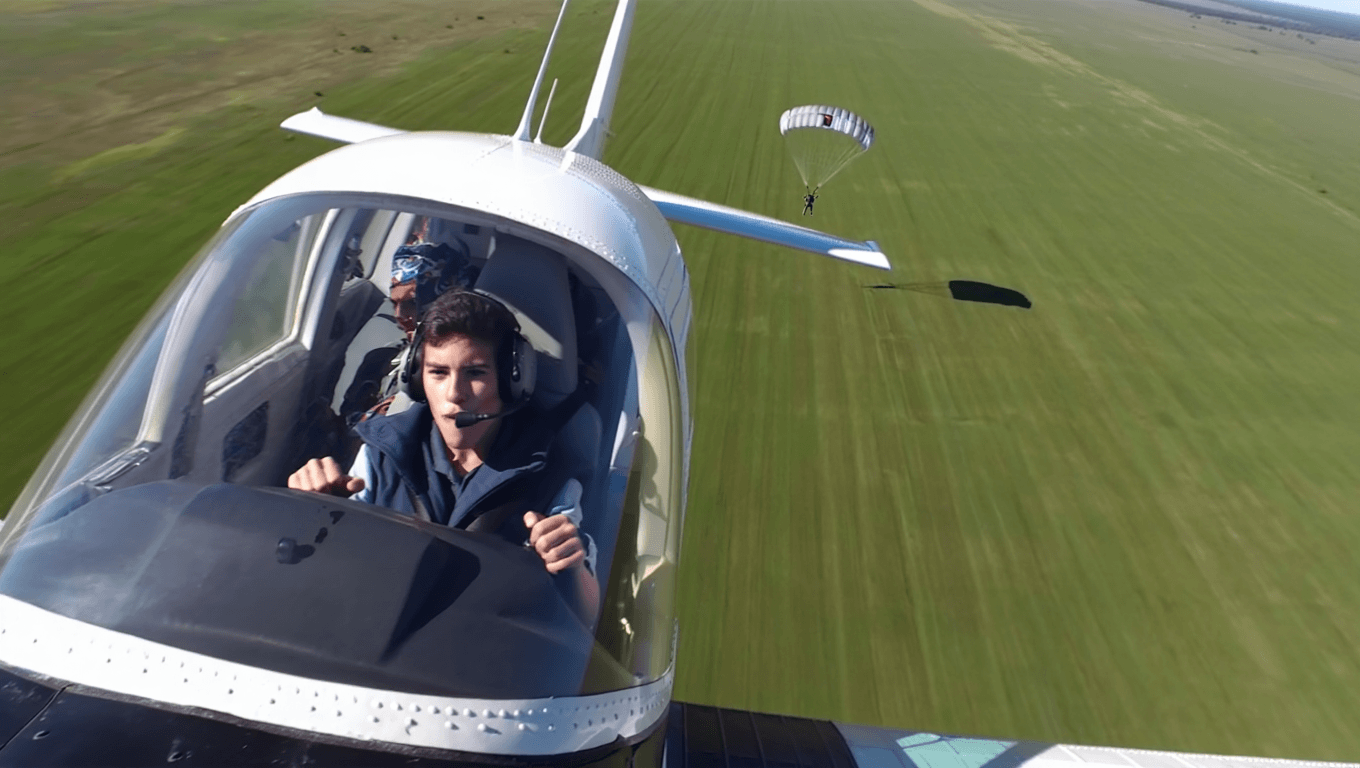
On July 4, a routine training flight out of central Argentina ended with an instructor leaping from the aircraft and a young student landing the plane alone — an episode now prompting criminal inquiries and fresh questions about pilot mental health and safety oversight. The shocking sequence, captured in reports from local outlets, has immediate implications for training standards and how aviation programs track and respond to signs of distress.
The flight took off from Coronel Olmedo Airport with 22-year-old student Rosario and 42-year-old instructor Leandro Andrés Bertazzo aboard a two-seat Cessna. According to local reporting, partway through the session near Toledo, Bertazzo told his student to continue flying and then removed his headset, stowed personal items, unfastened his harness, opened the cockpit door and jumped from the aircraft.
How the flight unfolded
Aircraft telemetry and eyewitness accounts place the incident at roughly 850 feet above ground. Emergency responders recovered the instructor’s body in a nearby field about 20 minutes after the jump, and Rosario radioed the airfield to explain what had happened.
With only a few hours of flight time logged, she guided the Cessna back and landed without incident. Staff at the training school later described her handling of the situation as composed and technically sound despite obvious shock.
Flying Parrot Córdoba, the flight school where both were affiliated, told local media that colleagues had no clear indication Bertazzo was struggling. His father, speaking to national outlets, said his son had recently sought psychiatric help — a development the school said it had not been made aware of.
- Date: July 4
- Location: Coronel Olmedo Airport, Córdoba province
- Aircraft: Cessna C-150, two-seat trainer
- Instructor: Leandro Andrés Bertazzo, 42 (deceased)
- Student: Rosario, 22 (landed aircraft safely)
- Altitude at incident: Reported ~850 feet
- Status: Local prosecutors investigating; no charges or formal complaints reported
Investigation, aviation rules and the questions that follow
Prosecutors in Argentina have opened an inquiry into the episode. The aircraft was not damaged and there are no public records of formal complaints tied to the flight.
Under common aviation policy, pilots are expected to be removed from flying duties if they have conditions that might impair performance; how such conditions are identified and acted upon is under scrutiny in this case. Authorities and the flight school are examining what, if anything, could have flagged the instructor’s condition beforehand and whether existing reporting mechanisms were followed.
The incident highlights several practical concerns for flight training operations: how schools monitor instructors’ fitness for duty, how mental-health disclosures are handled, and what emergency training students receive to deal with unexpected incapacitation of an instructor.
Observers say the event, while rare, underscores the need for clear channels that allow colleagues and family to report safety concerns without stigma — and for training programs to regularly review fitness-for-duty protocols. Any policy changes would aim to balance privacy, support for mental health, and the paramount need for safety in the cockpit.
Authorities continue to collect statements and review evidence; the family of the instructor and the student have not released extended public comments beyond initial local reporting. For the young pilot who landed the plane, the physical outcome was fortunate — the emotional and psychological impact of what she experienced in flight is likely to be long-lasting and may require sustained support.
Similar Posts
- Pilot Hurt as Mystery Space Object Hits Plane: Shocking Mid-Air Collision!
- Air Force cadets under investigation after tracing explicit images across the sky
- Boeing jet found at airport after 14 years: airline had no record
- Flight Diverted in Mid-Air: Pilot’s Forgotten Passport Causes Chaos
- Cruise Nightmare: Passenger Trapped in Waterslide 150 Feet Over the Ocean!

Miles Harper focuses on optimizing your daily life. He shares practical strategies to improve your time management, well-being, and consumption habits, turning your routine into lasting success.