
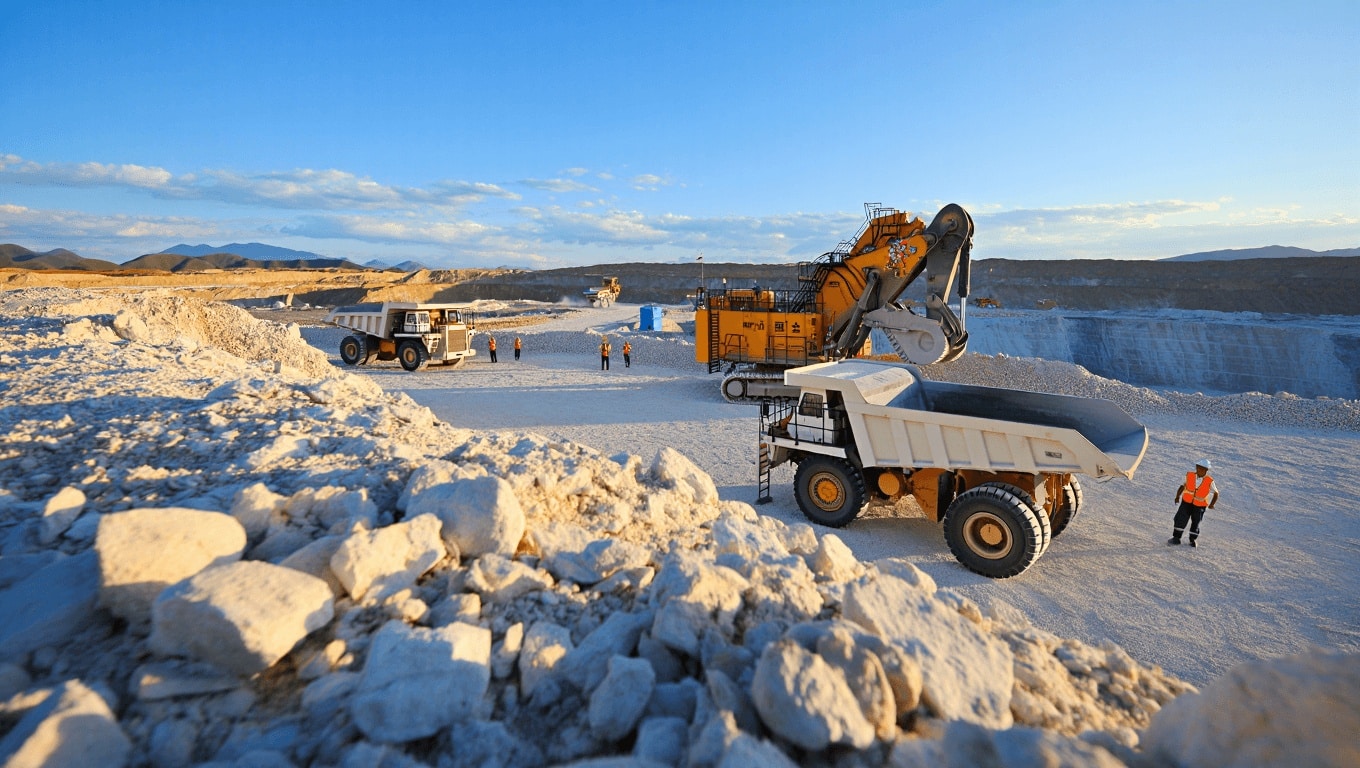
China’s reported find of roughly 540 million U.S. tons of lithium ore has grabbed global attention because of one clear question: what does this mean for the fast-moving shift to electric vehicles and grid-scale batteries today? The headline number promises a potential supply shock, but experts caution that discovery alone does not instantly translate into usable lithium or lower prices.
The significance of lithium is simple: it is a core ingredient in the rechargeable batteries that power most electric vehicles and many large energy-storage systems. That makes any large deposit strategically important for manufacturers and for countries racing to secure clean-energy supply chains.
How a discovery translates to usable material
Mining announcements often cite ore tonnage, not refined lithium. Ore must be processed, concentrated and converted into commercial chemicals such as lithium carbonate equivalent (LCE), and recovery rates depend on ore grade, mineralogy and processing technology. Until assays and feasibility studies are released, estimates about how much battery-grade material this site will yield remain uncertain.
What this could mean for markets and policy
Short-term market response may be muted. Lithium prices are driven by current production shortfalls, processing capacity, and immediate demand from automakers and battery plants. A large new resource can weigh on investor expectations and strategic planning, but turning resource into supply usually takes years and heavy capital investment.
Longer term, a proven, economical deposit inside China could strengthen the country’s position across the battery value chain—from raw material access to cell production—potentially alleviating some supply tension for domestic manufacturers and altering trade dynamics with major producing countries.
Immediate uncertainties to watch
– Grade and recoverable fraction: high ore tonnage does not guarantee high concentrations of extractable lithium.
– Processing capacity: refining ore to battery-grade chemicals requires specialized facilities that may not exist at scale nearby.
– Timeline: exploration, permitting, environmental review and construction of processing plants typically take several years.
– Environmental and social approvals: large-scale mining can face local resistance and regulatory hurdles that slow development.
Table: likely impacts, near term vs. longer term
| Area | Near-term effect | Long-term effect |
|---|---|---|
| Battery supply chain | Minimal immediate change; market reaction mostly speculative | Potential easing of raw material bottlenecks if commercialized |
| Prices | Volatility as markets price in prospects and uncertainty | Downward pressure possible if large volumes reach market |
| Automakers / EV adoption | Planning adjustements by procurement teams | Lower supply costs could accelerate EV rollouts and cheaper batteries |
| Geopolitics | Investor and trade attention shifts to domestic supply resilience | Redistribution of leverage among producing nations and manufacturers |
| Environment & communities | Heightened scrutiny and early-stage local concerns | Long-running debates over land use, water and remediation commitments |
What stakeholders are likely to do next
– Mining companies: move to confirm assay results and publish feasibility studies.
– Battery and auto firms: re-evaluate sourcing strategies and long-term contracts.
– Investors: reassess positions in miners, refiners and battery-makers.
– Policymakers: weigh strategic stockpiling, export controls and environmental rules.
Bottom line
This find, if validated and economically recoverable, could reshape parts of the battery industry over the next decade. That said, the path from discovery to mass-market impact is complex and slow—measured in years of testing, permitting and investment. For now, the announcement is a significant data point that will influence planning and markets, but not an overnight solution to lithium supply challenges. Watch for official assay reports, pilot plant results and regulatory filings to gauge how quickly the discovery moves from headline to hard supply.
Similar Posts
- Rare earths: Sweden’s 2.2 million-ton Per Geijer find threatens China’s processing monopoly
- China gold find tops 1,000 tons, valued at $86 billion: could redraw global supply map
- Pilbara high-grade iron deposit confirmed: 55 billion tons worth $6.52 trillion
- Copper deposit on Argentina-Chile border could upend markets: 84B lbs plus major gold and silver
- China gold discovery valued at $85.9B found 2,000m deep: geologists probe if it tops 1,000 tons

Calvin Baxter is an economic analyst specializing in the evolving US labor market. He leverages real data to provide you with concrete recommendations and help you adjust your professional strategies.