
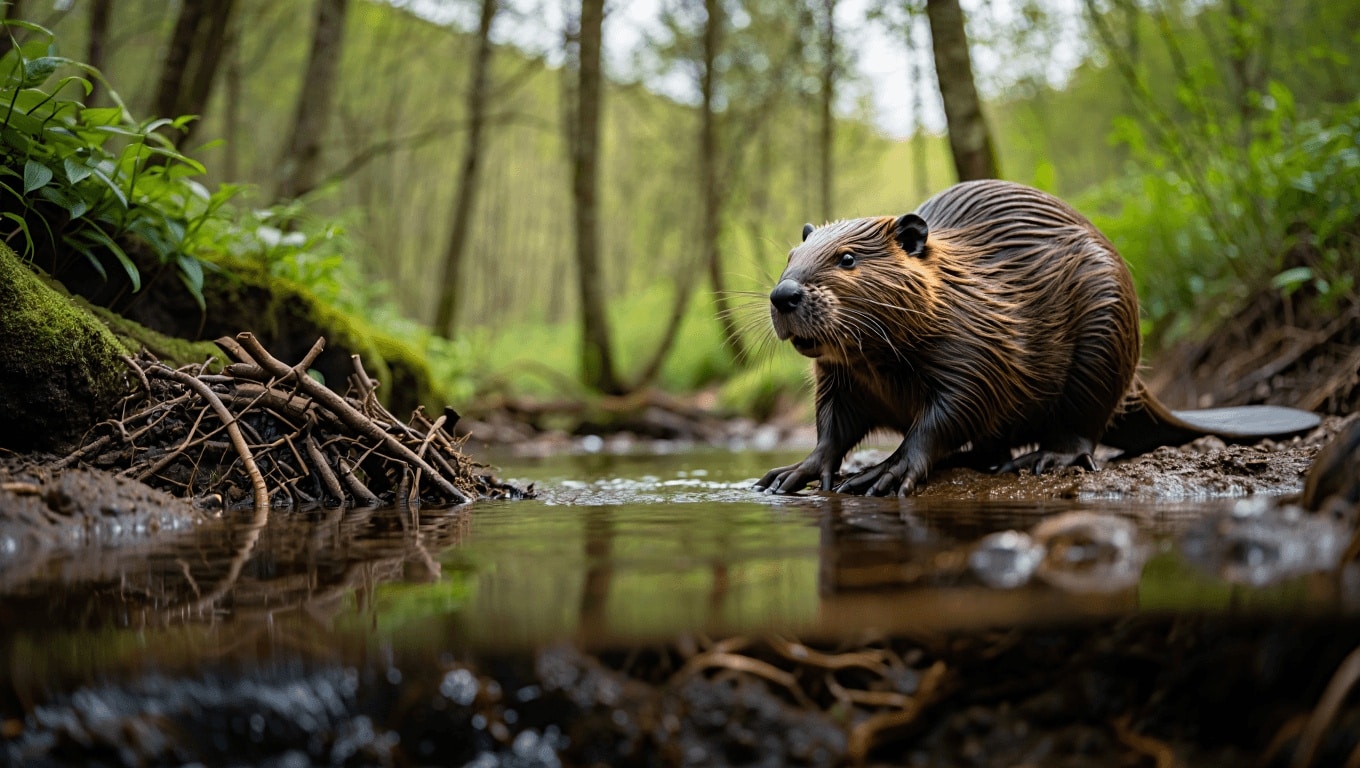
New research shows European beavers are storing considerably more carbon in waterways and wetlands than climate models have accounted for — roughly 26% more, according to the study’s estimates. That gap matters now: it changes how we think about the climate benefits of rewilding and wetland restoration, and it suggests current carbon accounting may be missing a significant natural sink.
How beavers trap carbon
When beavers build dams, they transform flowing streams into ponds and wetlands. Slower water drops out sediment and organic material that can become buried and preserved for decades or longer.
These newly formed wetlands also create low-oxygen conditions that slow the breakdown of wood and plant debris. Over time, that process locks organic carbon into sediments rather than releasing it back into the atmosphere.
Why models underestimated the impact
Most climate models and national carbon inventories emphasize plant growth and soil processes on land, but they often simplify or omit the fine-scale hydrology and sediment dynamics that follow beaver engineering. The new findings indicate those omissions can lead to undercounting of stored carbon.
In short, the physical restructuring of waterways — not just increased vegetation — appears to be a major reason beaver activity boosts long-term carbon storage.
Trade-offs and remaining questions
Beaver-created wetlands are not a one-way climate fix. Flooded soils can emit methane, a potent greenhouse gas, and the balance between methane release and carbon burial varies by site, climate and management.
Researchers caution that the net climate benefit depends on local conditions and timeframes. Longer records and broader monitoring are needed to determine when and where beaver activity produces a net cooling effect.
- Policy implications: Countries may need to revise carbon accounting frameworks to include engineered wetland sinks.
- Conservation planning: Reintroduction and protection of beaver populations could become a recognized nature-based climate strategy in some regions.
- Land management: Farmers, foresters and water managers will need guidance to balance flood, land-use and greenhouse gas considerations.
- Research priorities: Systematic, long-term monitoring of carbon and methane fluxes across beaver landscapes is essential.
Across Europe, beaver numbers and ranges have recovered in recent decades because of active reintroductions and legal protections. That expansion increases the potential cumulative effect of their wetlands on regional carbon budgets, making it urgent to understand their role precisely.
Integrating the complex ecology of beaver-engineered landscapes into climate models will require collaboration among hydrologists, ecologists, carbon accountants and local stakeholders. Doing so could refine projections and identify where beaver-driven restoration delivers reliable climate benefits.
The headline takeaway: small ecosystem engineers can have outsized effects on carbon dynamics. Recognizing and measuring those effects better could alter how policymakers and land managers use nature-based actions in the fight against climate change.
Similar Posts
- Oyster shells repurposed into SoCal reefs: 24,000 lbs diverted from restaurants
- Prince William to sell 20% of Duchy of Cornwall: money to back housing and conservation projects
- Rewilding Chaos in the UK: Bootleg Beavers, Feral Pigs, DIY Lynx – What’s Going Wrong?
- Coast Guard cocaine bust exposes deforestation, poisoned rivers and jungle airstrips
- Mysterious ‘Darkwaves’: How They Blanket the Ocean in Darkness for Months!

Calvin Baxter is an economic analyst specializing in the evolving US labor market. He leverages real data to provide you with concrete recommendations and help you adjust your professional strategies.