
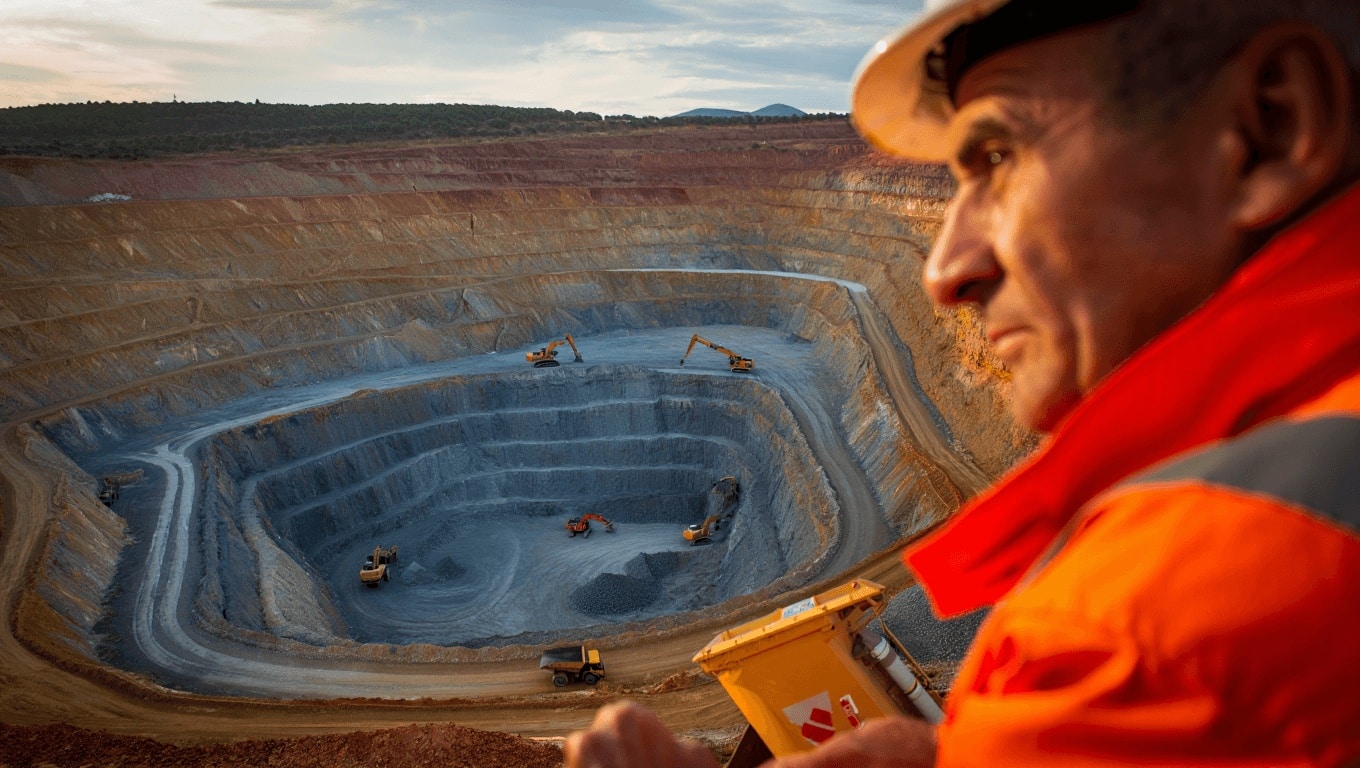
Spain has announced the discovery of a sizeable rare-earth deposit that analysts say could supply roughly one-third of the European Union’s demand for critical minerals used in electric vehicles, wind turbines and other low-carbon technologies. If developed, the find could reshape supply chains that today rely heavily on distant suppliers and sharpen the strategic balance of the continent’s green transition.
The deposit — reported by regional authorities and early-stage geological surveys — arrives at a moment when Europe is racing to secure reliable sources of minerals essential to decarbonization. The prospect of a homegrown supply raises immediate questions about how quickly the resource can be mined and processed, who will control the value chain, and what environmental and social costs will follow.
Why this matters now
Europe’s clean-energy rollout depends on a steady stream of rare-earth elements and other critical minerals. Shortages or geopolitical disruptions can delay projects, drive up costs and hand leverage to exporting countries. A major domestic deposit could lower those risks, but only if extraction and refining are built responsibly and at scale.
At the same time, investors and policymakers are watching closely because transforming a deposit into usable material is a long, capital- and technology-intensive process. The discovery does not mean immediate shipments of components — it starts a multi-year chain of approvals, investment decisions and infrastructure planning.
Potential benefits and practical obstacles
On the upside, a European source could reduce dependence on a handful of global suppliers, bring manufacturing opportunities closer to end markets, and support industrial jobs. For countries trying to secure their own net-zero supply chains, that’s a strategic win.
But several hurdles remain. Rare-earth mining and refining involve complex chemistry and significant environmental risks if not handled with modern safeguards. Processing capacity in Europe is limited today, meaning raw ore might still need to be exported for refining unless new facilities are built.
- Supply security: Could lower import exposure and strengthen bargaining power for European industries.
- Industrial development: Opportunities for downstream manufacturing, from magnet production to battery components.
- Environmental concerns: Waste management, water use and biodiversity impacts will be central to permitting debates.
- Timeframe: Exploration, feasibility studies, permitting and plant construction often take several years to a decade.
- Processing bottlenecks: Refining rare-earth elements requires specialized plants that are currently few in Europe.
Geopolitics of the green transition
Much of the discussion around rare-earths has centered on China’s dominant role in mining and processing. A sizeable deposit in Spain changes the narrative by introducing a European-based alternative, but it does not automatically displace existing producers. Instead, it creates leverage that policymakers could use to negotiate supply agreements or to foster regional processing capacity.
European Union strategy documents already prioritize critical minerals and aim to diversify sources. This discovery could accelerate those initiatives, prompting new incentives for domestic refining or partnerships with like-minded countries. Yet geopolitical shifts are rarely immediate; market reactions, trade policy and industrial investment will determine whether this find becomes a genuine pivot point.
Local impacts and regulation
Communities near prospective mining sites typically weigh potential jobs and economic activity against environmental disruption. Expect public consultations, environmental impact studies and local political debates to feature prominently as the project advances.
Regulatory frameworks in Spain and the EU give authorities tools to demand high environmental standards, but implementing them requires funding, technical expertise and robust oversight. How fast regulators move—and how strict their conditions—will shape both the community response and project timelines.
What to watch next
Key milestones that will determine whether the deposit becomes a practical game-changer include:
- Completion of independent resource assessments and feasibility studies
- Decisions on whether to build European refining capacity or export ore
- Permitting outcomes and the scale of required environmental mitigations
- Investment commitments from private firms or public-private partnerships
- EU-level policy responses on strategic reserves, subsidies or trade rules
For now, the discovery is best viewed as an opportunity with caveats: it offers the potential to shore up Europe’s supply of critical components for the green transition, but turning geology into industry will require years of work, significant capital and sustained regulatory oversight. How Spain, the EU and private investors navigate those trade-offs will determine whether the find becomes a cornerstone of Europe’s clean-energy future or a long-delayed asset with limited impact.
Similar Posts
- Spain rare-earth discovery could supply 33% of Europe’s needs: upends green-energy geopolitics
- Rare earths: Sweden’s 2.2 million-ton Per Geijer find threatens China’s processing monopoly
- Victoria antimony boom: state now supplies 5% of world output
- Electric cars and wind power costs driven by rare-earth magnets: AI unveils magnet-free fix
- China finds 540 million-ton lithium deposit: global battery markets scramble

Calvin Baxter is an economic analyst specializing in the evolving US labor market. He leverages real data to provide you with concrete recommendations and help you adjust your professional strategies.