
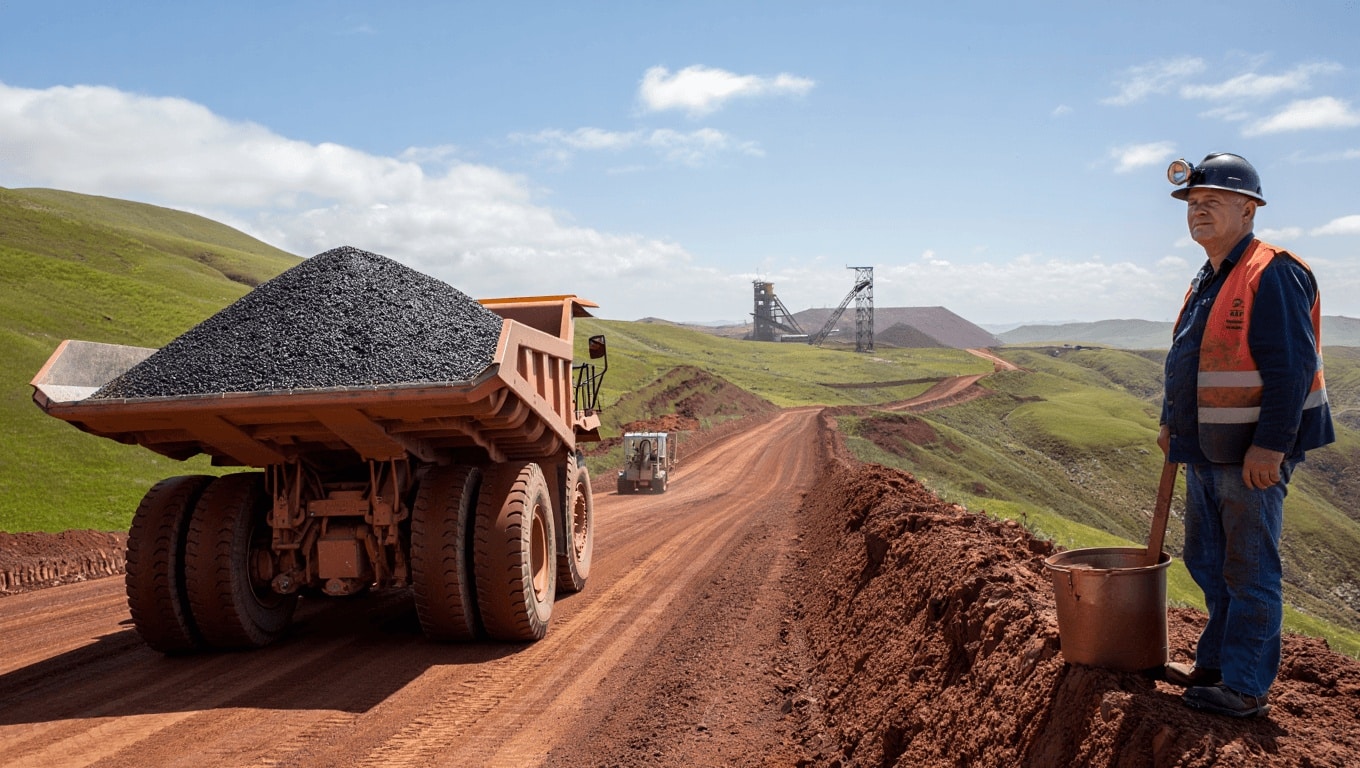
Victoria’s mining landscape is shifting from its 19th-century image of feverish gold digs to a quieter but strategically important extraction era. Recent developments have placed the state among the world’s notable suppliers of a less familiar metal — antimony — with implications for local economies and global supply chains.
A new chapter after the gold rush
When the 1850s gold rush put Victoria on the map, prospectors and steamers reshaped towns and trade routes. Today’s change is subtler: smaller-scale operations, advanced processing and a focus on minerals tied to modern industries rather than raw treasure hoards. The state’s mining activity now includes a growing role in producing critical minerals valued by manufacturers and energy-transition firms.
Antimony, once an obscure commodity, is becoming a headline player. Mines in Victoria now contribute roughly five percent of global supply, marking a notable shift in where key inputs originate and who controls them.
Why antimony matters now
Antimony has a range of industrial uses: it strengthens lead alloys, acts as a flame retardant in plastics and electronics, and plays a part in certain battery technologies. That makes it an ingredient in everyday products from construction materials to consumer electronics. As demand for resilient supply chains and diversified sources grows, new producers such as Victoria become strategically significant.
Supply concentration has been a concern: a handful of countries historically dominate production and refining. Additional output from Australian sources can affect global market dynamics, influence price stability and offer manufacturers alternative sourcing options — all without dramatic headlines.
On-the-ground effects
Local communities are seeing a mix of outcomes. Exploration and development bring jobs, renewed investment in rural infrastructure and new revenue streams for regional councils. At the same time, communities and environmental groups are pressing for strict rehabilitation standards and careful oversight of water, soil and habitat impacts.
- Economic boost: Mining projects typically create direct employment and secondary services in supply chains.
- Supply security: Additional antimony output can reduce reliance on a small number of global suppliers.
- Environmental scrutiny: Concerns around waste management and land rehabilitation are central to public debate.
Modern mining looks different
Technological advances separate today’s projects from Victorian-era digs. Remote sensing, geological modeling and more efficient processing reduce exploratory footprint and improve yield per tonne of ore. Companies are also under tighter regulatory requirements for environmental management and community consultation, though critics argue oversight still needs strengthening.
Investors and policy makers are watching how projects are permitted and monitored. Permit timelines, rehabilitation bonds and export controls will shape how quickly new supplies reach markets and how communities benefit.
Policy and market watchpoints
Several dynamics will determine whether Victoria’s role grows or plateaus:
- Global demand for metals tied to electronics and energy systems.
- Changes in international trade and how countries secure strategic materials.
- State and federal regulation affecting approvals, environmental standards and post-mining land use.
- Market prices and the economics of refining and transport for antimony versus other minerals.
These factors together affect investment decisions and the pace of development. For residents, the immediate questions are about jobs, environmental protection and how revenues will be distributed.
Perspective: continuity and change
There’s an irony in the comparison: the rush that poured migrants into Victoria in the 1850s reshaped society through a single commodity — gold. Today’s transformation is driven not by one headline metal but by the broader reordering of resource needs. Antimony’s rise is illustrative rather than definitive; it signals how regional mining economies can evolve in response to global technological and policy shifts.
Watching how industry, government and communities negotiate the trade-offs — economic opportunity versus environmental risk — will determine whether this quiet mining revolution creates long-term benefits for Victoria or new challenges that require careful management.
What to watch next: permit approvals for new projects, announcements on local investments and any federal moves to classify, stockpile or restrict strategic minerals. Those developments will make clear whether Victoria’s contribution to global antimony supply is a short-term blip or the start of a lasting shift.
Similar Posts
- China gold find tops 1,000 tons, valued at $86 billion: could redraw global supply map
- Gold and strategic minerals: 19 tons found, officials hiding a key detail
- Copper deposit on Argentina-Chile border could upend markets: 84B lbs plus major gold and silver
- China uncovers 1,444-ton gold cache worth $150 billion: largest find since 1949
- Spain rare-earth mine could meet 33% of Europe’s demand: reshaping green geopolitics

Calvin Baxter is an economic analyst specializing in the evolving US labor market. He leverages real data to provide you with concrete recommendations and help you adjust your professional strategies.