
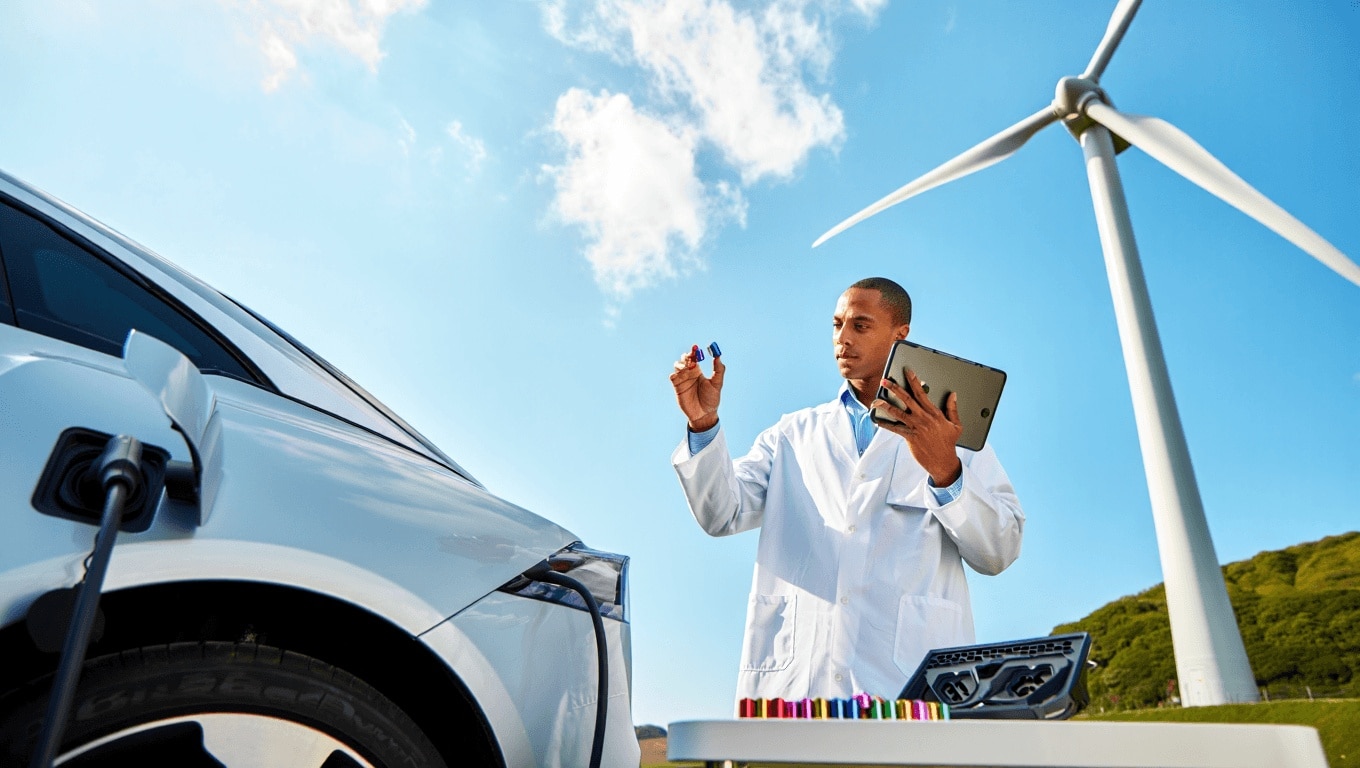
Electric cars and modern wind turbines may be getting pricier for a reason most consumers never see: the tiny permanent magnets inside their motors rely on scarce metals. Now, researchers using advanced artificial intelligence say they’ve identified practical ways to ditch those rare-earth magnets, a shift that could lower costs and ease supply-chain pressure if the findings scale up.
Permanent magnets made with neodymium and related elements are compact, powerful and ubiquitous in traction motors and direct-drive turbines. But refining and securing those metals has become a bottleneck: prices spike with geopolitical tension, and production is concentrated in a handful of countries. That makes what might look like a small component a major hidden cost in the clean-energy transition.
Why a tiny magnet matters
Magnets are the heart of many electric motors and generators. In an EV, they help convert electrical energy into motion with high efficiency and torque in a compact package. In offshore wind, big permanent magnets allow turbines to be simpler and more reliable by eliminating gearboxes.
Because neodymium, praseodymium and dysprosium deliver exceptional magnetic strength, engineers have long relied on them. But supply constraints and volatile prices add to manufacturing costs and strategic vulnerability—factors that can slow vehicle rollouts, raise consumer prices, and complicate planning for large-scale wind projects.
What the AI found — and what it didn’t
Machine-learning tools are now being used to search for new magnetic materials across millions of possible combinations of elements and crystal arrangements. Rather than iterating in the lab, algorithms can predict properties such as magnetic strength, thermal stability and manufacturability in hours or days. According to the teams reporting early results, that computational sweep has already singled out several promising magnet chemistries that do not rely on rare-earth elements.
These alternatives include strengthened iron-based alloys, manganese‑aluminum compounds and other compositions that, in simulation, approach the performance of neodymium magnets without the same supply risks. In parallel, AI-driven motor designs are showing how to get comparable performance with less magnetic material by rethinking rotor geometry and electromagnetic control.
Important caveat: promising computational candidates still require lab validation, durability testing, and pilot-scale manufacturing. Performance on paper does not always translate to long-term reliability in automobiles or wind farms, where heat, vibration and corrosion matter.
What this could mean for consumers and industry
- Lower production costs: If validated at scale, non-rare-earth magnets could reduce material costs and price volatility for EVs and turbines.
- Supply-chain resilience: Diversifying away from concentrated rare-earth supply would ease geopolitical risks and improve manufacturing predictability.
- Faster deployment: More stable component pricing could accelerate adoption of electric vehicles and renewable energy installations.
- Environmental trade-offs: New alloys still need lifecycle assessment—mining and processing impacts could change depending on the replacement elements.
Researchers caution that the pathway from AI prediction to production-ready magnet is neither quick nor guaranteed. The industry faces several technical and commercial hurdles, including scalable synthesis, cost-effective manufacturing, standardization, and integration into existing motor and turbine lines.
Next steps before these discoveries affect prices
Several pragmatic stages stand between today’s AI-led findings and cheaper consumer products. Labs must synthesize candidate materials, test them under real-world stresses, secure patents and supply agreements, and then retool factories if needed. Regulators and original equipment manufacturers will want multi-year performance data before approving design changes at scale.
- Laboratory synthesis and prototype testing
- Long-term durability and thermal performance trials
- Cost modeling and lifecycle environmental assessments
- Pilot manufacturing runs and supply-chain certification
- Integration into vehicle and turbine designs with field validation
The discovery highlights a broader shift: AI is moving from an experimental tool to a practical accelerator for materials science. For consumers and clean-energy planners, the immediate takeaway is cautious optimism—these advances could blunt one of the energy transition’s thornier cost problems, but only if engineering challenges and industrial scaling are handled successfully. If the next few years deliver reliable, affordable magnet alternatives, the ripple effects could be felt in lower EV prices, more competitive wind projects, and a less fragile supply chain for critical clean-technology components.
Similar Posts
- Spain rare-earth discovery could supply 33% of Europe’s needs: upends green-energy geopolitics
- Rare earths: Sweden’s 2.2 million-ton Per Geijer find threatens China’s processing monopoly
- Spain rare-earth mine could meet 33% of Europe’s demand: reshaping green geopolitics
- Japan rare earths push: Chikyu drills nearly 20,000 ft under ocean to challenge China
- Largest U.S. rare earth deposit in Wyoming coal mine: production pushed to 2031

Calvin Baxter is an economic analyst specializing in the evolving US labor market. He leverages real data to provide you with concrete recommendations and help you adjust your professional strategies.